
Hillsboro and Sunset Corridor Commercial Real Estate: What Tenants and Investors Need to Know in 2026
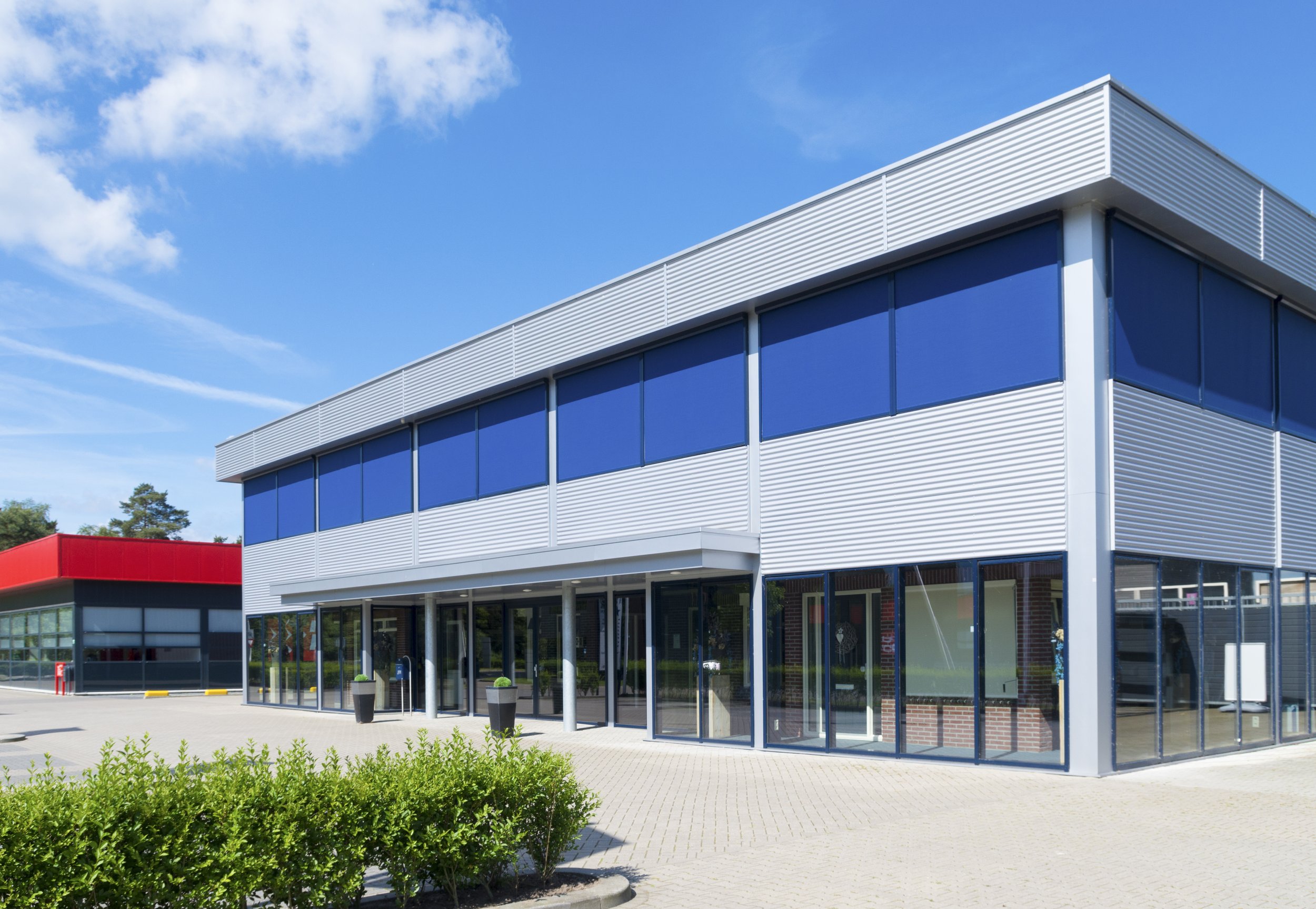
Hillsboro Sunset Corridor Commercial Real Estate FAQ
Q: What are commercial lease rates in Hillsboro Oregon in 2026?
A: Office space in Hillsboro averages around $24.45 per square foot. Industrial and flex rates vary by building class and proximity to the US-26 corridor, but generally range from $0.85 to $1.35 per square foot NNN for warehouse and flex space, with premium R&D and data-center-adjacent properties commanding higher rates.
Q: How is Intel's CHIPS Act investment affecting Hillsboro commercial real estate?
A: Intel received $1.86 billion in CHIPS Act funding for its Hillsboro campus and announced plans for up to $36 billion in expansion. However, Intel is also consolidating its real estate portfolio, potentially selling the Hawthorne Farms campus. The net effect is more construction jobs short-term, continued demand for flex and support space, and some large parcels potentially returning to market.
Q: What is the data center vacancy rate in Hillsboro in 2026?
A: Hillsboro's data center vacancy rate was 0.2% in the first half of 2025 — essentially zero. Operators like Flexential and NTT are building aggressively, but demand continues to outpace supply. This has spillover effects on industrial land availability and power infrastructure across the Sunset Corridor.
Q: Is the Hillsboro Urban Growth Boundary expanding for commercial development?
A: No. Senate Bill 1586, which would have added 373 acres of land south of US-26 to Hillsboro's Urban Growth Boundary for advanced technology and industrial use, was pulled in March 2026 due to opposition from residents and agricultural advocates. This means the land supply constraint in the Sunset Corridor remains unchanged for the foreseeable future.
The Hillsboro and Sunset Corridor submarket is unlike anything else in the Portland metro. Anchored by Intel's semiconductor operations, a fast-growing data center cluster, and a deep bench of advanced manufacturing and bioscience firms, this corridor has its own demand drivers, its own tenant profile, and its own trajectory — one that's increasingly disconnected from the challenges facing downtown Portland office or even the broader industrial market.
For tenants evaluating industrial or flex space in Hillsboro, the calculus is shifting. Data center operators are absorbing land and power capacity at a pace that's squeezing availability for traditional users. Intel's CHIPS Act investment is reshaping the employment base. And a failed attempt to expand the Urban Growth Boundary in early 2026 means the land supply constraints that have defined this submarket aren't going away anytime soon.
Here's what the numbers look like right now and where things are headed.
Hillsboro Sunset Corridor Industrial and Flex Market Overview
The Sunset Corridor stretches along the US-26 highway from Beaverton through Hillsboro, running roughly parallel to the MAX Blue Line. It's home to more than 4.2 million square feet of commercial space for lease across approximately 327 listings, ranging from small flex suites to large-format warehouse and R&D buildings.
The industrial and flex market here is tighter than the broader Portland industrial market, which saw overall vacancy climb to 6.6% in Q4 2025. In the Sunset Corridor, the flex submarket has been tightening since the mid-2010s, driven by demand from high-tech manufacturers, semiconductor supply chain companies, and the growing cluster of data center operators that call Hillsboro home.
Many tenants in this submarket directly service Intel and Nike — the two largest private employers in Washington County — making proximity to their campuses a non-negotiable for a significant share of demand. That concentration of anchor tenants creates a floor under occupancy that other Portland submarkets don't have.
Hillsboro Office Market: Vacancy, Rates, and Tenant Mix
Hillsboro's office market contains approximately 7.1 million square feet of inventory. Class B properties make up the largest share at roughly 66% of total inventory, with Class A at about 28% and Class C at 6%.
Average asking rents sit around $24.45 per square foot full-service gross, which is competitive relative to Portland's CBD (where Class A space is priced significantly higher but vacancy exceeds 34%) and even the neighboring 217 Corridor. For tenants who need to be in the west-side tech ecosystem but don't need a downtown address, Hillsboro offers a strong value proposition — especially with MAX light rail providing a direct connection to downtown Portland.
The office tenant base here skews heavily toward technology, engineering, and professional services firms supporting the semiconductor and advanced manufacturing sectors. That's a different profile from downtown Portland's government, legal, and financial services mix, and it's proven more resilient to remote work disruption because many of these roles involve lab work, testing, or classified projects that require on-site presence.
Data Center Demand Is Reshaping Hillsboro Commercial Real Estate
The biggest story in Hillsboro commercial real estate right now isn't traditional industrial or office — it's data centers. Hillsboro has emerged as one of the Pacific Northwest's primary data center markets, and the pace of development is accelerating.
Flexential currently operates four data centers in Hillsboro with a fifth facility (358,000 square feet, 36 megawatts) under construction and expected to come online in 2026. They've already acquired land for a sixth facility — a 350,000-square-foot, two-story building at 3935 NE Aloclek Place supporting 27 megawatts of capacity. NTT is expanding its Hillsboro footprint with plans for 354 megawatts of total capacity, adding 216 megawatts to its current development pipeline.
In the first half of 2025, Hillsboro's data center vacancy rate was 0.2% — effectively full. The market absorbed 48.4 megawatts of new capacity during that period, roughly 10% of total inventory, and immediately filled it.
For traditional industrial and flex tenants, this matters. Data centers consume large parcels, draw significant electrical capacity, and drive up land values in their vicinity. If you're a 10,000-square-foot flex user looking for space near the US-26 corridor, you're now competing for land against operators willing to spend hundreds of millions on a single facility. That dynamic is pushing some smaller tenants further west toward Cornelius and Forest Grove or south into the 217 Corridor.
Intel CHIPS Act Investment and Hillsboro Real Estate Impact
Intel's presence in Hillsboro is hard to overstate. With 22,300 employees across three campuses, Intel is by far the largest employer in the city and a gravitational force for the entire Sunset Corridor economy. More than 26,000 jobs in Hillsboro are in computer and electronics manufacturing.
The CHIPS and Science Act has amplified Intel's local footprint. Intel received $1.86 billion in direct federal funding specifically for its Hillsboro operations, part of a broader $7.86 billion national CHIPS Act award. The company announced plans to invest up to $36 billion in expanding and modernizing its Hillsboro chipmaking and R&D facilities, with estimates of over 10,000 manufacturing jobs and nearly 20,000 construction jobs across its U.S. expansion sites over the next five years.
But the picture is more complex than a simple expansion story. Intel is simultaneously consolidating its global real estate portfolio, and the Hawthorne Farms campus in Hillsboro — a 50-acre property — is among the holdings being evaluated for potential sale. If that parcel hits the market, it would be one of the largest commercial land transactions in recent Hillsboro history and could significantly alter the supply picture for the submarket.
For tenants and investors, the net effect of Intel's moves is a mix of tailwinds and uncertainty. Construction activity generates demand for flex, warehousing, and support space. But Intel's workforce reductions in the manufacturing sector (down 5.6% year-over-year in the Portland MSA) and potential property dispositions add complexity to the outlook. Monitoring Intel's real estate decisions should be part of any serious due diligence in this submarket.
Urban Growth Boundary Failure: What SB 1586 Means for Hillsboro Land Supply
One of the most consequential policy developments for Hillsboro commercial real estate in 2026 happened in March — and it was a non-event. Senate Bill 1586, sponsored by Sen. Janeen Sollman, would have brought 373 acres of rural land directly south of US-26 into Hillsboro's Urban Growth Boundary, designated specifically for advanced technology and industrial use. An additional 1,400 acres were earmarked for future industrial development.
The bill was pulled after opposition from residents, farmers, and land-use policy groups. For now, Hillsboro's UGB stays where it is.
For commercial real estate, this has real consequences. The Sunset Corridor already faces a constrained land supply, and the data center boom is consuming available parcels at an unprecedented rate. Without UGB expansion, there's a finite ceiling on new large-format development in Hillsboro proper. That constraint supports rents and property values for existing buildings, but it also means tenants requiring 50,000+ square foot footprints may have limited options without looking outside the city limits.
Investors should view this as a supply-side tailwind for existing Hillsboro industrial and flex assets. Tenants with large-space requirements should plan further ahead and consider pre-leasing in developments that haven't broken ground yet.
Hillsboro 2026 Development Pipeline and Major Projects
Beyond data centers and Intel, several other projects are reshaping Hillsboro's commercial landscape in 2026. A mixed-use development in Downtown Hillsboro is moving into construction with workforce housing, age-restricted housing, and commercial spaces including a grocer or food co-op. The new Hillsboro Hops ballpark opens in April 2026, adding a sports and entertainment anchor to the city. And a new Hillsboro Police Department headquarters near the Hillsboro Airport and NE Evergreen Road is breaking ground.
The former Nike office buildings on a 12-acre NE Aloclek Drive site are being repurposed into a women's sports performance center — a signal that some of Hillsboro's older office stock is finding adaptive reuse rather than sitting vacant.
For commercial tenants and investors, these projects reflect a city that's diversifying beyond its tech-corridor identity. Downtown Hillsboro is adding density and walkability, which supports the retail and service tenants that follow rooftops. The airport-area development corridor continues to attract institutional investment. And the adaptive reuse trend suggests that creative approaches to older properties — rather than waiting for new construction — may be the path forward in a land-constrained market.
Hillsboro Sunset Corridor Lease Rates and Investment Metrics
Here's where commercial lease rates in Hillsboro sit in 2026:
Office space averages approximately $24.45 per square foot full-service gross, with Class A properties in the $28 to $35 range and Class B in the $18 to $26 range. These rates are competitive with other suburban Portland submarkets and significantly below CBD pricing, which partly explains why the west side continues to attract tenants who need quality space without downtown overhead.
Industrial and flex rates are harder to pin down precisely because the product mix varies so widely — from basic warehouse to high-spec R&D suites with lab infrastructure. Generally, standard warehouse and distribution space in the Hillsboro area runs $0.85 to $1.10 per square foot NNN, while flex and R&D buildings with office finishes can range from $1.10 to $1.35 per square foot NNN or higher depending on TI condition and power availability. The flex and R&D segment has been the tightest product type in the corridor for several years running.
On the investment side, Hillsboro benefits from what Portland's broader market sometimes lacks: strong institutional demand drivers. The combination of Intel, data center operators, and advanced manufacturing firms creates a tenant base that institutional investors can underwrite with confidence. For property owners considering a sale or refinance, a broker opinion of value benchmarked to recent Sunset Corridor transactions will give you a realistic picture of where pricing stands.
Hillsboro Commercial Real Estate Outlook: What to Watch
The Sunset Corridor is going to look different in three to five years than it does today, and several factors will determine whether that's good or bad for your position:
Intel's real estate decisions will be the single biggest variable. If Hawthorne Farms sells, the buyer's intended use — redevelopment, data center, or industrial — will ripple through the entire submarket. If Intel proceeds with its full $36 billion expansion, the construction and operational workforce demand will sustain flex and industrial absorption for years.
Data center development will continue to pressure land supply and power infrastructure. Tenants who need significant electrical capacity for manufacturing or lab operations should factor power availability into their site search early — it's no longer a given in Hillsboro.
The UGB constraint is structural, not temporary. Don't expect an expansion vote in the near term. If you're evaluating whether to lease or buy in this submarket, the supply constraint argues for ownership if the right asset comes available — replacement cost is going up, not down.
And finally, watch the spillover. As Hillsboro tightens, tenants and developers will look harder at adjacent markets — the 217 Corridor to the south, Cornelius and Forest Grove to the west, and even Clark County across the river. The Sunset Corridor's gravity is strong, but every market has a price point where tenants start exploring alternatives.
If you're evaluating space in the Hillsboro and Sunset Corridor market — whether for a lease, acquisition, or portfolio decision — having current submarket data matters. Reach out for a conversation about what's available and where the opportunities are right now.