
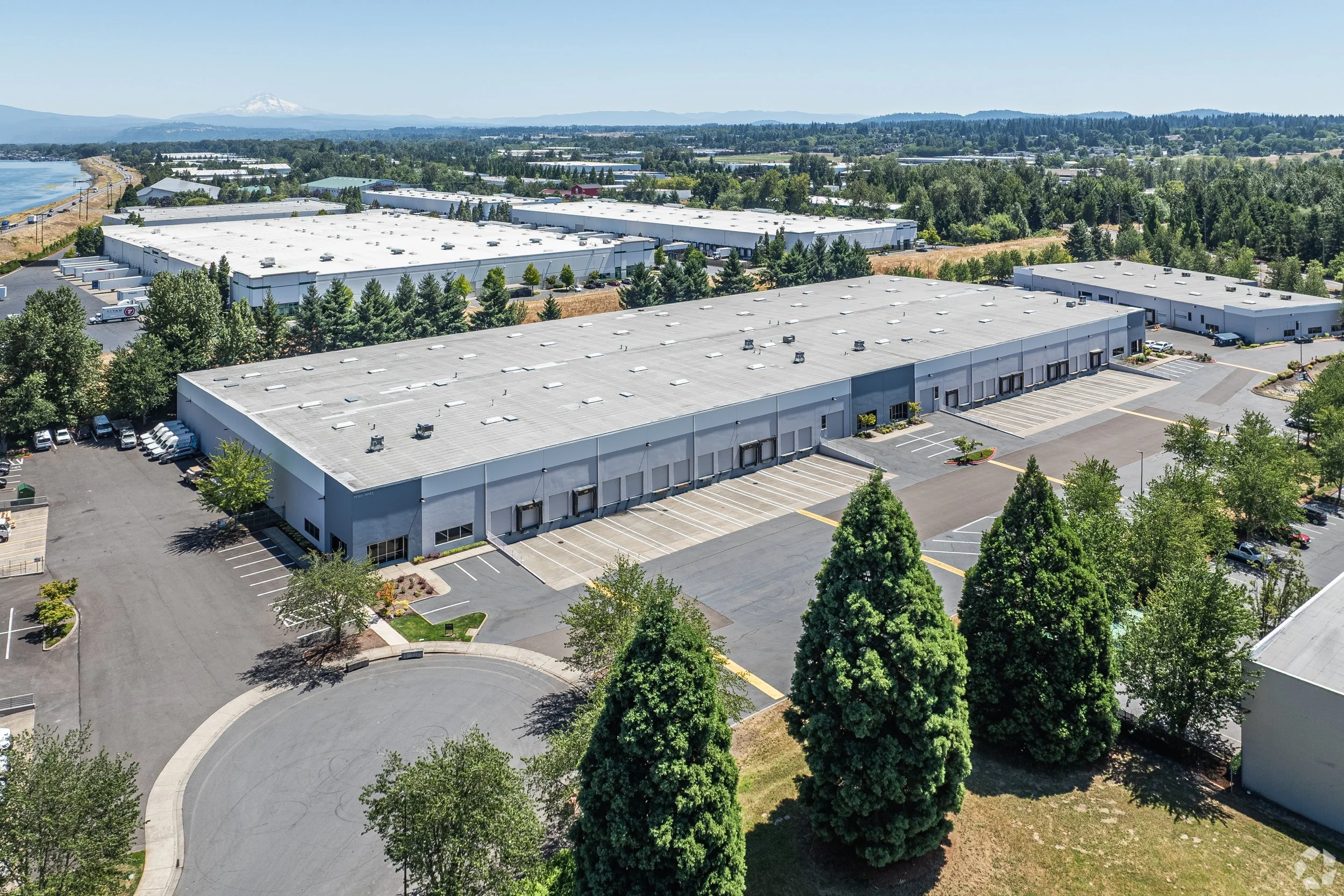
Gresham & East Columbia Corridor
East metro industrial guidance for warehouse and service users who need I-84 access, practical parking, and functional logistics.
ABOUT GRESHAM & EAST COLUMBIA CORRIDOR
Gresham and the East Columbia Corridor are often evaluated as the east metro alternative to close-in Portland—especially for users who need functional warehouse space, workable circulation, and value relative to the core. Inventory ranges from contractor/service and light industrial product to distribution-oriented facilities tied to I-84 access. This page covers what typically fits here, how to screen options quickly, and the deal terms that most affect total occupancy cost.
WHAT’S DIFFERENT ABOUT THIS SUBMARKET
This corridor is driven by function and access more than presentation. Decisions tend to hinge on grade vs dock loading, truck circulation, and parking/fleet utility, plus whether a site can handle real delivery patterns without friction. Inventory varies widely in condition and infrastructure, so outcomes are often determined by power, sprinkler adequacy, and maintenance scope rather than headline rent. The fastest way to narrow options is to confirm loading/circulation and parking first, then diligence systems and expense language.
LOCATION INFORMATION
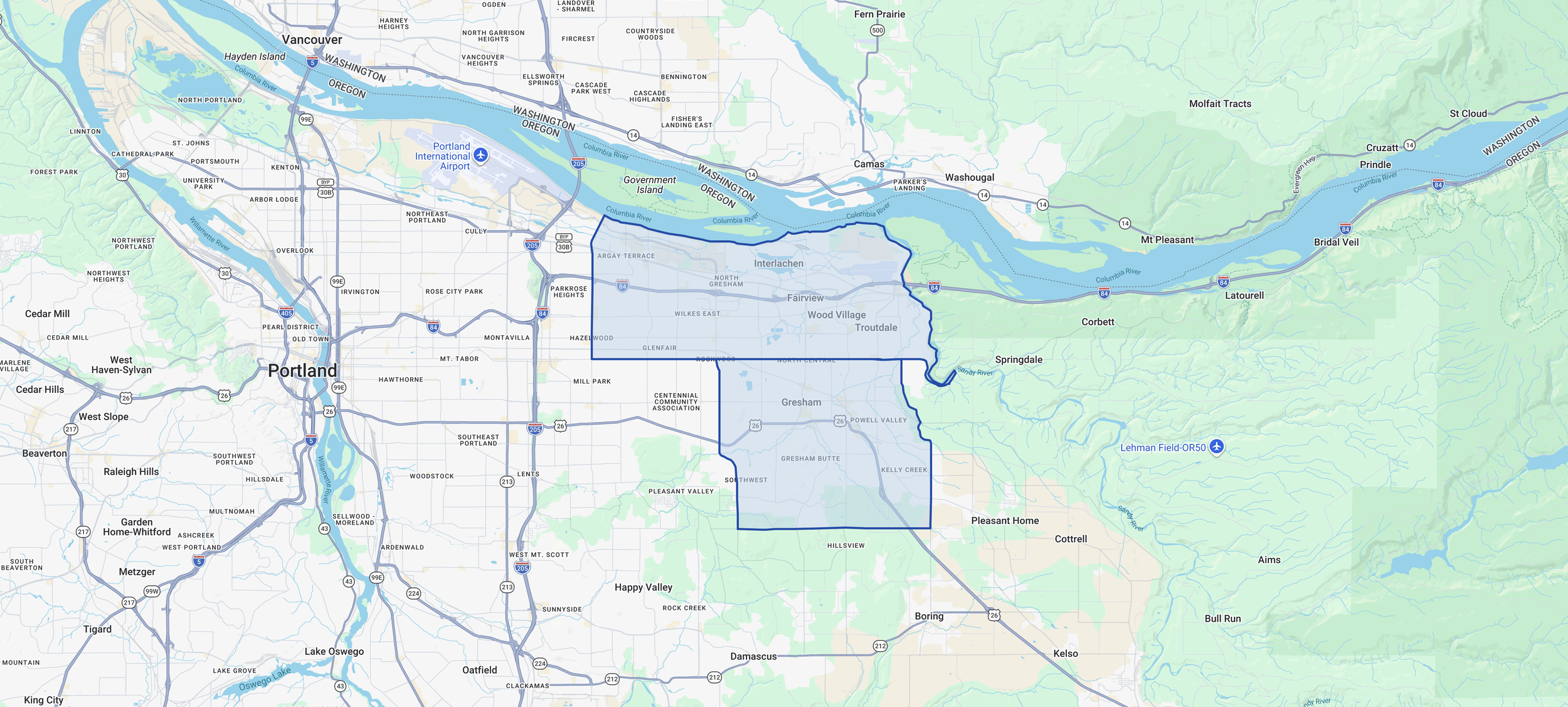
Gresham and the East Columbia Corridor generally refer to the east metro industrial pockets around Gresham and nearby nodes along the I-84 route through East Multnomah County. Boundaries vary by listing; the practical focus is eastside industrial inventory with strong regional connectivity and a broad mix of building sizes and site layouts that serve distribution and service operations.
QUICK SNAPSHOT
Known For
East-metro value and functional industrial inventory
Practical logistics tied to I-84 access
Mix of warehouse, contractor/service, and light industrial users
Typical User Profiles
Regional service and contractor fleets
Distribution and last-mile operations serving the east metro
Light manufacturing and assembly users
Best Fits
Users prioritizing functional layouts and parking utility
Operations that need predictable delivery access and circulation
Tenants seeking flexible size options and lower effective costs vs close-in
Common Constraints
Condition and systems vary—diligence on roof/HVAC/power matters
Circulation can be site-specific—verify turning and staging early
Yard/outdoor use assumptions can be wrong—confirm permitted use in writing
Expense and maintenance language can materially change effective economics
RENT, PRICING, AND DEAL TERMS
Negotiation Levers
Concessions: free rent, TI, phased improvements, delivery condition clarity
NNN/CAM language: inclusions/exclusions, admin fees, capital items, management fees
Expense controls: caps on controllables, audit rights, reconciliation clarity
Maintenance scope: roof/structure/HVAC/lot standards and responsibility
Options: renewal and expansion rights for growth planning
Comparing Proposals
Compare total occupancy cost using effective economics: base rent + operating expenses + concessions amortized over term + tenant costs (improvements, moving, downtime). In functional industrial product, maintenance scope, expense definitions, and infrastructure often drive the real outcome.
Typical Deal Terms
Gresham/East Columbia deals often require diligence on infrastructure (power, sprinklers, condition) and on site utility(parking, circulation). Concessions frequently show up as free rent for move timing, TI for functional upgrades, and clear maintenance scope for older assets.
Deal Killers
A light industrial user needed practical loading, parking, and reliable systems. The shortlist was screened for infrastructure first (power/sprinklers), then by circulation. Negotiations tightened maintenance scope and operating expense definitions to stabilize effective cost.
Mini Case Example
Power/sprinklers inadequate for the intended use.
Yard/staging expectations aren’t permitted or aren’t documented.
Circulation limitations create delivery friction that’s discovered too late.
SUBMARKET FAQ
-
Often, yes—especially on a cost-per-square-foot basis. The right comparison is total occupancy cost plus logistics and staffing realities.
-
Functional warehouse and contractor/service space is common, with distribution-oriented product in certain nodes depending on site layout and access.
-
Very. Site access and staging can vary dramatically. Confirm turning, delivery paths, and any constraints early.
-
Sometimes, but it must be verified. Confirm permitted use, exclusivity, screening, and lease language before relying on it operationally.
-
Gresham and East Columbia typically run 10-25% below Airport Way asking rates for comparable building specs, with more negotiation room on concessions and terms. The discount varies by building quality — newer functional product closer to I-84 interchanges prices closer to Airport Way, while older inventory farther from freeway access can run significantly below. The trade-off is last-mile time to PDX and the central city, plus a smaller pool of competing availabilities if you need to relocate quickly.
-
Gresham and East County have a different labor shed than close-in Portland. For warehouse, production, and service operations that draw from the east metro workforce, the commute works well. For operations that need employees from inner Portland or the westside, the reverse commute can be a challenge. Evaluate where your workforce lives before committing — a building that's $0.15/SF cheaper doesn't save money if it increases turnover or limits your hiring pool.
-
Yes. East Columbia Corridor inventory closer to I-84 and the Airport Way interchange tends to be more logistics-oriented — distribution, 3PL, and high-throughput operations. Gresham proper has more mixed inventory: contractor shops, small manufacturing, storage, and multi-tenant flex. Building specs, site sizes, and access quality differ accordingly. Don't treat them as one market — tour both areas if your requirements could work in either.
WHAT’S YOUR PROPERTY WORTH?
Whether you're benchmarking against recent warehouse and distribution sales, evaluating a hold-vs-sell decision, or preparing for a refinance conversation, a broker opinion of value gives you a clear, comp-based pricing range for your Airport Way or Columbia Corridor industrial property. I'll deliver a 50–80+ page report covering comparable sales, lease comps, vacancy analytics, and a pricing summary with conservative, probable, and optimistic values — at no cost and no obligation.
ARE YOU PAYING THE RIGHT LEASE RATE?
Whether you're negotiating a new warehouse lease, approaching a renewal in the Columbia Corridor, or evaluating whether your current rate reflects today's market, a lease rate analysis gives you the data to negotiate from a position of strength. I'll pull recent lease comps, concession packages, and vacancy trends for Airport Way and Columbia Corridor industrial space — so you know exactly what tenants like you are paying and where there's room to negotiate.
RELATED

GET IN TOUCH
Contact Matt Lyman at Norris & Stevens about leasing or buying industrial space in Gresham and the East Columbia Corridor. Whether you're looking for value-positioned warehouse space, a larger footprint than close-in corridors can offer, or a site with outdoor storage potential, share your situation and Matt will follow up with current availability and comps.
Include your space requirements — size range, loading, yard, power, and timeline — and Matt will respond with Gresham and East Columbia options that match.