
Small-Box Office Spaces Are Outperforming Mega-Towers in Portland
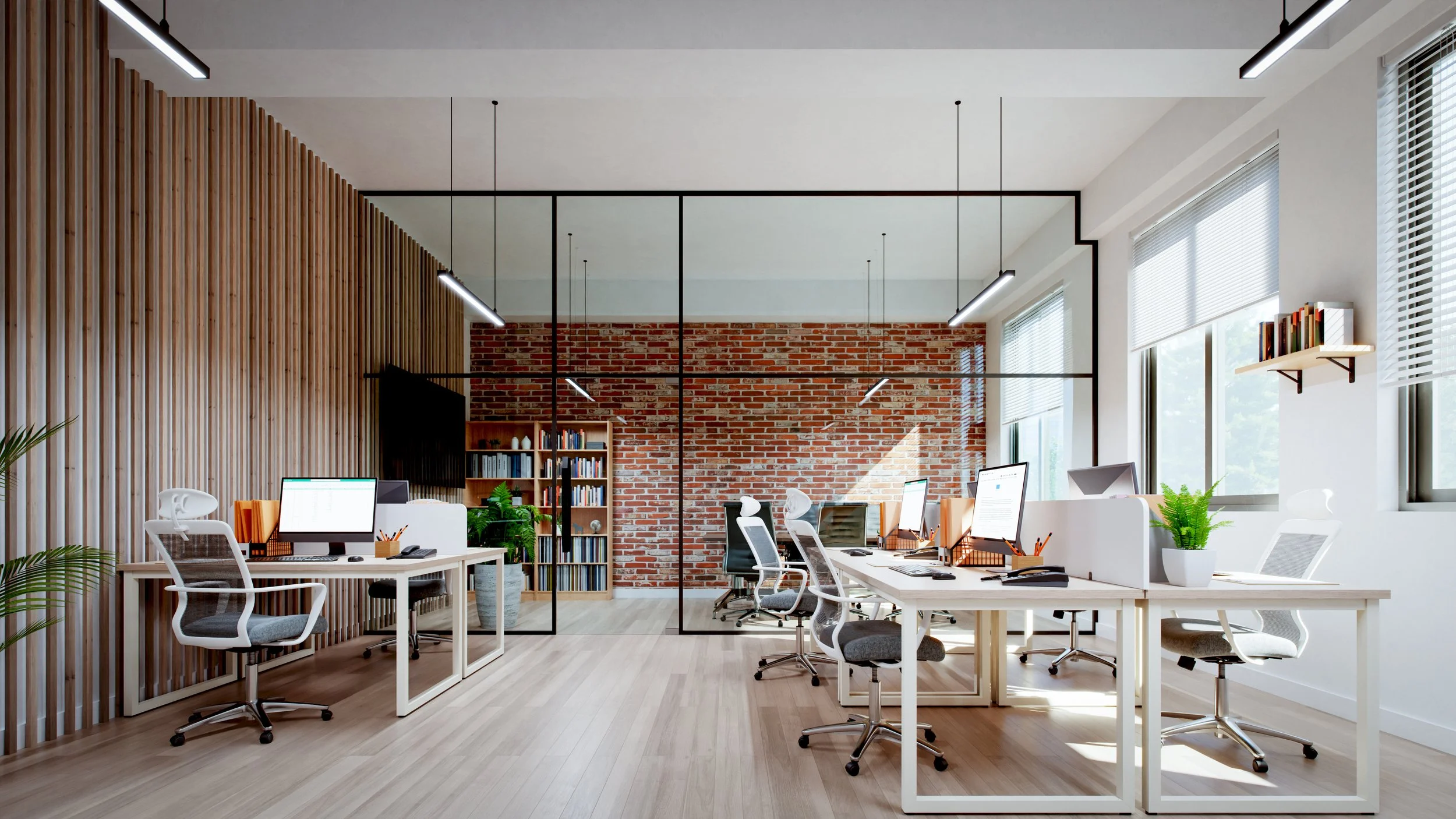
While downtown Portland’s mega-towers struggle with a 27.3% vacancy rate, a quiet shift is reshaping the office market. Tenants are abandoning sprawling floor plates in favor of right-sized, efficient spaces under 10,000 square feet. This trend isn’t a temporary correction. It reflects fundamental changes in how companies work and occupy real estate.
Small-box office spaces in Portland are leasing faster, commanding better economics, and attracting tenants that traditional towers can’t fit. For landlords and tenants alike, understanding this dynamic is essential to making decisions in 2026.
FAQ: Small-Box Office Space in Portland
Q: What counts as a “small-box” office space in Portland?
A: Small-box office typically ranges from 1,500 to 10,000 square feet on a single floor plate. The defining characteristic is efficiency—minimal wasted common area, quick turnaround, and no forced block leasing. These spaces work for teams of 15 to 80 people.
Q: Why are small office spaces tighter than large towers right now?
A: Hybrid work killed demand for massive open floors. Companies downsized headcount but still need professional office. A 20-person firm doesn’t need 15,000 square feet. It needs 3,000. Those small efficient spaces are scarce; large blocks sit empty. Nationally, small-bay and micro-flex spaces under 50,000 SF are pre-leased before construction completes.
Q: Is this trend sustainable in Portland?
A: Yes. The shift reflects permanent changes in work patterns, not cyclical demand. Tenants have proven they’ll pay premium rates for the right space rather than accept large blocks at discounts. That preference isn’t reversing.
Q: Where in Portland should we look for small office space?
A: Suburban nodes—especially Sunset Corridor near Kruse Way and Central East Side corridors—are seeing renewed demand. These locations offer older, smaller floor plate buildings naturally suited to small tenants. Downtown still has options, but availability clusters in Class B and C properties.
The Market Reality: Small Office Spaces Are Scarce in Portland
Portland’s overall office vacancy sits at 27.3% as of Q4 2025. That number conceals a critical detail: the vacancy is concentrated in large downtown towers. Spaces under 10,000 square feet operate in a completely different market.
Small-box office buildings maintain vacancy rates in the single digits. When space becomes available, it leases in weeks, not months. Landlords report pre-leasing activity even before tenant improvement periods conclude. This scarcity has shifted pricing power entirely to building owners.
The contrast is stark. A 25,000-square-foot block in a downtown tower might sit vacant for months, while a 5,000-square-foot suite two floors down moves within days. Tenants are voting with their pocketbooks, and they’re choosing right-sized spaces over forced abundance.
Why Hybrid Work Killed the Open Floor Plate
Hybrid schedules have fundamentally rewritten space economics. When a company runs on three days in-office, every square foot must justify its existence. Wasted conference rooms, underutilized circulation, and oversized kitchens become liabilities instead of amenities.
A 50-person company in a full-time office model might lease 12,500 square feet (250 SF per person). That same company in a hybrid model often needs just 5,000 to 6,000 square feet. The reduction isn’t small—it’s transformational. And it cascades across entire industries.
This change happened slowly between 2021 and 2023, but by 2026 the pattern is undeniable. Companies that still sign large leases do so in regional hubs where talent concentration justifies it. Portland’s smaller firms—and there are many—have no such pressure. They downsize, pick leaner spaces, and improve their balance sheets.
Portland’s average office rent of $28.99 per square foot makes efficiency even more critical. Paying that rate for space nobody uses becomes impossible to justify to leadership. Small, well-designed floors eliminate that burden.
Small Floor Plates Attract Quality Tenants Faster
Landlords of small-box office in Portland are discovering a paradox: tighter restrictions often mean faster leasing and better credit quality. Why? Small spaces attract tenants who actually need them. They’re right-sized buyers making deliberate decisions, not companies shopping for the cheapest available block.
This matters for building operations. A tenant in exactly the space it needs has lower churn risk. Expansion pressure doesn’t force early exits. The relationship stabilizes.
Additionally, small tenants often represent operational professions: architecture firms, insurance brokers, professional services, tech teams. These sectors have grown faster in Portland than traditional back-office work. They’re also more profitable, more likely to stay long-term, and less vulnerable to consolidation.
When you search for office space in Portland, you’ll notice the available inventory breaks down into two categories: what was designed small and what was carved from large blocks. Designed-small spaces lease faster. Carved spaces carry reconfiguration costs and inflexibility that deter quality tenants.
Suburban Portland Nodes Are Capturing Small-Box Demand
The Sunset Corridor near Kruse Way and the Central East Side near inner neighborhoods are experiencing quiet momentum in small office leasing. These areas offer what large downtown buildings cannot: existing smaller floor plates, lower rents, and parking.
The shift matters for Portland’s office geography. Downtown will always anchor the market, but it’s oversized for what tenants currently demand. Suburban and secondary downtown nodes—where Class B buildings with 8,000 to 12,000-square-foot floors exist—are finding new purpose.
For tenants and landlords seeking representation, this geographic reality should shape strategy. A company seeking 3,500 square feet finds better options, faster deployment, and lower improvement costs in Sunset Corridor than in a downtown tower. That advantage compounds over the lease term.
If you’re evaluating multiple locations, understanding how to compare commercial lease proposals becomes essential. Rental rates tell only part of the story. Improvement contributions, lease length flexibility, and future expansion options vary dramatically between small-box suburban space and downtown towers.
Pricing Power Has Shifted to Small-Space Landlords
Vacancy concentration in large towers means pricing power has moved. Landlords with small, efficient floor plates control the market. They set rates, terms, and conditions. Tenants negotiate on margins.
This represents a complete reversal from 2020-2023, when large blocks moved slowly and landlords offered concessions. Today’s dynamics favor owners of older, smaller buildings that most new construction has bypassed. These buildings suddenly fit the market perfectly.
For tenants, this means lease rates for small Portland office space have remained stable or increased while downtown rates softened. The scarcity premium is real. However, the trade-off often favors tenants: smaller spaces eliminate waste, and competitive landlords offer better terms and flexibility even at higher rates.
The timing matters too. Deciding when to start your commercial site search now requires acknowledging that small spaces move fast. Waiting weeks or months to decide often means missing available options.
Investor Focus Is Shifting Toward Smaller Buildings
Capital is following tenant demand. Institutional investors have pulled back from mega-tower development and repositioning. Smaller, stabilized properties with tight occupancy are attracting capital because they generate consistent returns and face lower vacancy risk.
This capital shift reinforces the small-box trend. As more buildings convert to small-space operation, supply tightens further. Landlords optimize buildings for 6,000 to 10,000-square-foot suites instead of 20,000-square-foot blocks. Once optimized, reversion becomes expensive. The buildings stay small-focused.
For tenants, this capital behavior is relevant context. Smaller buildings backed by institutional capital tend to be better maintained, offer longer lease stability, and provide more certainty around management quality. It’s worth asking your tenant representation broker whether ownership stability matters for your decision.
Comparing Small Office in Portland to Mega-Tower Options
The choice between small-box and tower space is no longer about size alone. It’s about alignment with actual need.
A small Portland office space offers: faster lease completion, right-sized improvement budgets, lower occupancy costs, existing floor plates, and landlords focused on retention. A downtown tower offers: prestige address, larger local labor pools, transit accessibility, and on-site amenities like food service.
Neither is objectively superior. The right choice depends on tenant profile. A professional firm with 35 people in a permanent office model might thrive in a tower. That same firm running hybrid might be overextended. A startup scaling from 8 to 20 people needs flexibility that small-box landlords provide naturally.
When evaluating the Portland office market in 2026, honestly assess your occupancy model first. Build from that foundation. Too many tenants rent based on past patterns instead of current reality.
The Q4 2025 Portland Market Snapshot
Portland’s overall office dynamics deserve context. Q4 2025 showed continued downtown pressure—that 27.3% vacancy rate—but secondary market strength. The Portland office market Q4 2025 snapshot documented this divergence in detail.
Large towers absorbed the vacancy hit. Small buildings didn’t. That asymmetry signals where the market is actually moving. It’s not about Portland softening as an office destination. It’s about Portland’s office market reshaping itself.
Expectations matter. If you’re comparing Portland to other West Coast markets, ignore the headline vacancy number. Look at where growth is happening. Small-space leasing velocity in Portland is outpacing national averages. That’s where the real story lives.
What Small-Box Growth Means for Portland’s Future
This trend suggests Portland’s office market is stabilizing around a smaller footprint and different tenant profile than the 2010-2019 expansion phase. That’s not failure. It’s adaptation.
Companies that thrive in smaller, more efficient spaces tend to be profitable and flexible. Portland’s professional services, architecture, tech, and insurance sectors are precisely that profile. The office market is naturally filtering toward tenant types that match available inventory.
For the city, this means office investment continues—just in different buildings in different locations. Downtown towers face long repositioning timelines. Secondary nodes and suburban corridors see steady activity. It’s a rebalancing, not a collapse.
For tenants, it means opportunity. Small-space landlords are eager to move deals. Lease terms are more flexible than they appear. If you’re willing to move fast and commit, Portland’s small office market offers genuine value.
Key Takeaways on Portland’s Small-Box Office Market
Scarcity is real. Small floor plates under 10,000 SF lease in weeks. Large blocks sit months. The gap is widening.
Hybrid work is structural. This isn’t a temporary shift. Companies have permanently reduced space needs.
Pricing power shifted. Small-space landlords set terms. Tenants with genuine needs pay premium rates for the right fit.
Suburban nodes matter. Sunset Corridor and Central East Side offer better options than downtown for small tenants.
Quality over size. Tenants who lease exactly what they need stay longer, maintain buildings better, and create better communities.
If your company is evaluating Portland office space, start by honestly assessing your occupancy model. If you need small, efficient, right-sized space, the market is tight but active. If you need large blocks, expect negotiation and longer lease completion. Both paths exist. Neither is wrong. Alignment between your needs and available inventory determines success.
The small-box office boom in Portland isn’t disruption. It’s the market working correctly, matching supply to actual demand. For tenants willing to move decisively, the timing is favorable.
Ready to find the right small office space in Portland? Our tenant representation team knows the small-box market intimately. We work fast, understand your flexibility constraints, and close deals efficiently. Explore our services to learn how we can help.