
217 Corridor Commercial Real Estate: Beaverton, Tigard, and Tualatin Guide
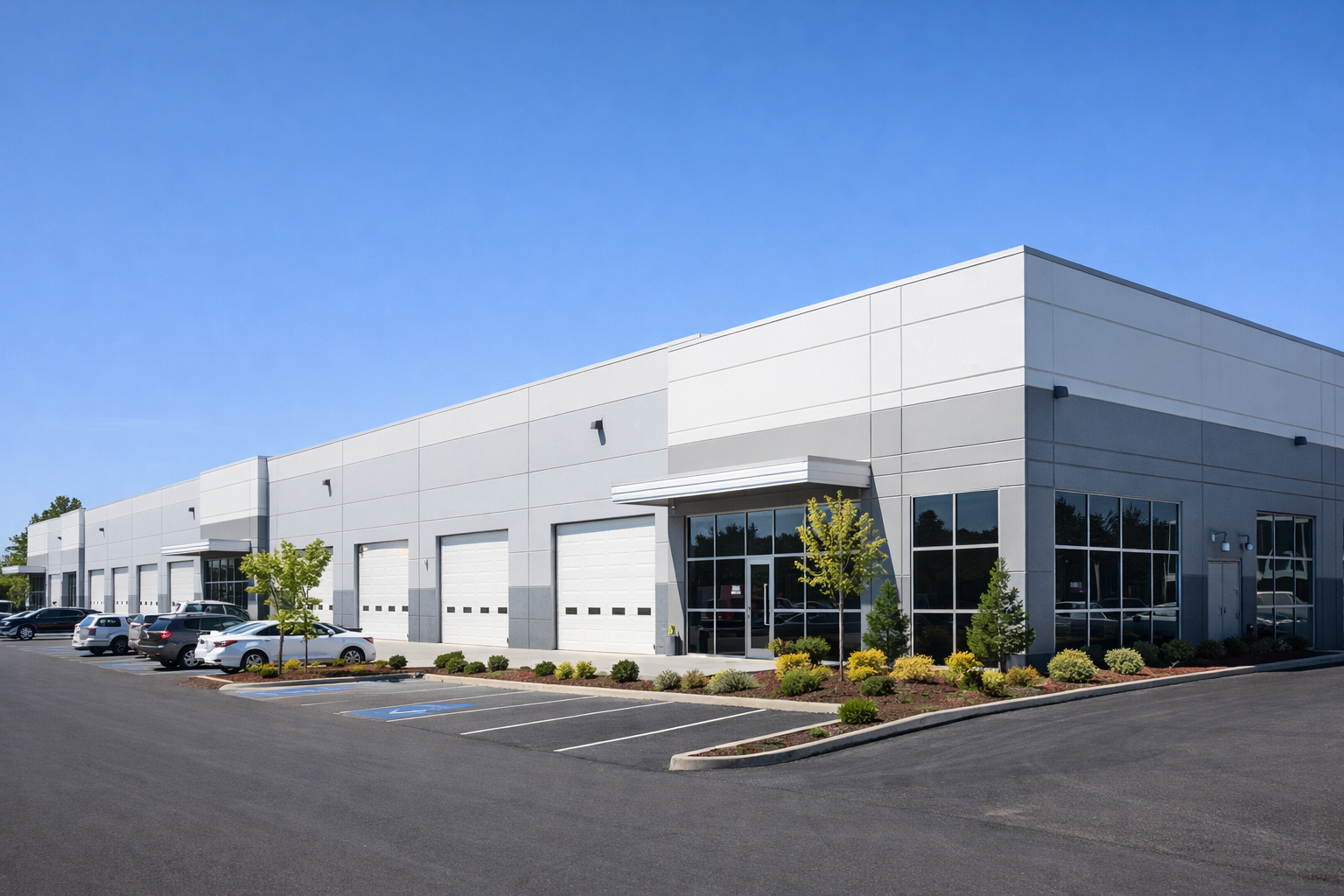
The 217 Corridor — spanning Beaverton, Tigard, and Tualatin along OR-217 — is one of the Portland metro’s most versatile commercial submarkets. It connects three cities with distinct identities but a shared advantage: fast access to US-26, I-5, and the broader westside labor pool. For tenants and investors looking beyond Portland’s urban core, the 217 Corridor offers a mix of flex, industrial, office, and retail space that few other submarkets can match.
This guide breaks down what each city brings to the table, where market conditions stand in 2026, and what to consider before signing a lease or making an acquisition along the corridor.
217 Corridor Commercial Real Estate FAQ
Q: What types of commercial space are available in the 217 Corridor?
A: The 217 Corridor is primarily a business-park flex market, offering office-forward flex space with higher office and showroom percentages than Portland’s east-side industrial submarkets. Traditional industrial, standalone office, and retail space are also available across Beaverton, Tigard, and Tualatin.
Q: What are commercial lease rates in Beaverton and Tualatin in 2026?
A: Beaverton office space averages around $22 per square foot, with Sunset Corridor properties commanding closer to $24.45 per square foot. Tualatin industrial space averages approximately $14.13 per square foot. Rates vary significantly by property class, parking ratio, and office percentage.
Q: How do vacancy rates in the 217 Corridor compare to Portland overall?
A: Beaverton’s office vacancy sits around 15-17% depending on submarket — lower than Portland’s metro-wide office vacancy of roughly 24%. Industrial vacancy across the westside remains tighter at approximately 6-7%, supported by Oregon’s urban growth boundary limiting new supply.
Q: Who are the typical tenants in the 217 Corridor?
A: Contractors and service businesses needing combined office and warehouse space, regional operations prioritizing westside coverage, showroom operators, light manufacturers, and tech companies — particularly in the Sunset Corridor near Nike and Intel campuses.
Beaverton Commercial Real Estate: Office and Flex Hub
Beaverton anchors the northern end of the 217 Corridor and is the submarket’s strongest office and flex market. The Sunset Corridor — running along US-26 from Beaverton into Hillsboro — is home to Nike’s world headquarters, Intel’s Ronler Acres campus, and a growing cluster of tech-adjacent businesses that benefit from proximity to those anchors.
Office asking rents in Beaverton average about $22 per square foot across all classes, with Sunset Corridor properties pushing closer to $24.45 per square foot. Class B space dominates the inventory at roughly 68% of total listings, with Class A and trophy properties making up about 23% combined.
What makes Beaverton stand out from Portland’s downtown office market is the vacancy differential. While Portland CBD office vacancy has climbed past 24%, Beaverton’s Sunset Corridor holds closer to 15% — a meaningful gap that reflects steady demand from tech, professional services, and healthcare tenants who value westside access and lower occupancy costs.
For tenants evaluating flex and R&D space, Beaverton offers some of the most functional options in the metro. Business parks along Murray Boulevard and near the Beaverton Creek light rail station provide the office-warehouse hybrid layouts that contractors, distributors, and regional service operations need.
Tigard Commercial Real Estate: Retail Strength and Redevelopment Potential
Tigard sits at the crossroads of Highway 99W, Highway 217, and I-5 — a location that generates significant traffic counts through the city’s primary commercial zones. Retail is the clear strength here, with vacancy running at approximately 4.9%, well below the metro average.
Bridgeport Village, the 500,000-square-foot lifestyle center near I-5 and Lower Boones Ferry Road, continues to attract high-profile tenants. Recent additions include Fogo de Chao, a Lego store, Rivian’s new showroom, and Salt & Straw — brands that signal ongoing investor confidence in Tigard’s retail market.
The bigger story for commercial real estate in Tigard is the Tigard Triangle — a roughly 550-acre area bounded by 99W, 217, and I-5. The city has designated this as a transit-oriented mixed-use district, with tax increment financing in place to fund infrastructure improvements. For investors and developers, the Triangle represents one of the largest redevelopment opportunities on Portland’s westside, though current infrastructure gaps mean most activity remains in the planning and early entitlement stages.
For tenants weighing a Tigard location, the practical advantages are straightforward: strong retail foot traffic, competitive lease rates compared to Portland’s urban core, and direct freeway access in three directions.
Tualatin Industrial Space and Warehouse Market 2026
Tualatin is the 217 Corridor’s primary industrial node. Located at the southern end of the corridor where I-5 and I-205 converge, it offers distribution-oriented tenants something the rest of the westside generally cannot: proximity to two major interstates and a relatively deep inventory of warehouse and distribution space.
Industrial asking rents in Tualatin average approximately $14.13 per square foot. The most active listings cluster in the Tualatin North submarket, where warehouse and distribution properties range from 1,500 to over 70,000 square feet. For tenants needing more than basic warehouse space, the Cascade Production Park campus and other multi-building industrial parks offer heavier-use configurations with manufacturing infrastructure.
Tualatin’s industrial vacancy has ticked up in line with Portland’s broader industrial market trends, but the submarket benefits from Oregon’s urban growth boundary, which constrains new supply and puts a floor under rents. Most new industrial development in the region has shifted to Clark County, Washington, where land is more available — a dynamic that keeps Tualatin’s existing inventory in consistent demand.
217 Corridor Flex Space: What Tenants Need to Know
The defining characteristic of the 217 Corridor is its flex inventory. Unlike Portland’s east-side industrial corridors — the Central Eastside, Columbia Corridor, or Clackamas — the 217 Corridor skews toward office-forward flex with higher office and showroom percentages. This makes it ideal for businesses that need a combination of workspace types under one roof but don’t need heavy industrial infrastructure.
Typical flex tenants in the corridor include contractors running both office and shop operations, showroom-based businesses, light manufacturers with significant front-office needs, and service companies needing equipment storage alongside professional workspace.
There are important constraints to understand before committing to flex space in this submarket. Many 217 Corridor business parks carry CC&R restrictions that limit outdoor storage, fleet parking, signage, and operating hours. Parking ratios can become the binding constraint on growth — a building might have adequate square footage but not enough stalls to support your headcount. Loading is typically grade-level rather than dock-high, which matters for businesses moving palletized freight.
When negotiating a flex lease along the 217 Corridor, pay close attention to CAM charges and how maintenance responsibilities are split between landlord and tenant. Office-forward flex properties often carry higher CAM than pure industrial, and the definitions can vary significantly from park to park.
217 Corridor Office Vacancy and Lease Rate Trends 2026
The office market along the 217 Corridor is performing better than Portland’s urban core, but it is not immune to the broader recalibration happening across the metro. Suburban office nodes like the Sunset Corridor benefit from tenants prioritizing accessibility, parking, and value — but demand remains selective.
Beaverton office vacancy ranges from roughly 15% in the Sunset Corridor to 21% in less desirable pockets — a spread that reflects the quality gap between well-located Class A product and aging Class B inventory with deferred maintenance. For context, Portland’s downtown office vacancy sits above 24%, making Beaverton’s numbers look relatively healthy.
Lease rate growth has been modest. Beaverton office rents are roughly flat year-over-year, with landlords competing more on concessions — free rent, TI allowances, and flexible term structures — than on face rates. Tenants with strong negotiating leverage can extract meaningful concessions in this environment, particularly for longer-term commitments.
The industrial and flex segments are tighter. Westside industrial vacancy remains in the 6-7% range, and flex space with good parking ratios and clean office finishes continues to lease well. If you are evaluating NNN lease structures in this submarket, expect operating expenses to vary more than in Portland’s east-side industrial areas due to the higher office percentages and business-park maintenance standards.
How the 217 Corridor Compares to Other Portland Submarkets
Choosing the 217 Corridor over other Portland submarkets comes down to a few key tradeoffs.
Compared to the Central Eastside and inner Portland: the 217 Corridor offers more space per dollar, better parking, and easier freeway access — but less walkability, less urban energy, and a longer commute from Portland’s east-side neighborhoods.
Compared to the Columbia Corridor and Airport Way: the 217 Corridor has less heavy industrial inventory and fewer dock-high options, but stronger office and showroom configurations and better access to the westside labor pool. Businesses that need true distribution capability will generally find better fits in the Columbia Corridor.
Compared to the adjacent Hillsboro and Sunset Corridor: Beaverton’s portion of the 217 Corridor overlaps with the Sunset Corridor and shares much of its tenant base. Tigard and Tualatin offer lower industrial rents and better I-5 access than Hillsboro, which skews more toward tech and advanced manufacturing.
For a deeper look at how the 217 Corridor fits into the broader Portland industrial services landscape, including submarket-by-submarket comparisons, the Portland CRE submarket pages provide detailed breakdowns by corridor.
What to Consider Before Leasing in the 217 Corridor
If the 217 Corridor is on your shortlist, here are the practical considerations that matter most:
Transportation access is the corridor’s strongest selling point — but it cuts both ways. Highway 217 itself is one of the most congested stretches in the Portland metro during peak hours. Buildings near interchange ramps (particularly at US-26/217 and I-5/217) benefit from visibility and access, but commute times can spike significantly between 4:00 and 6:30 PM.
Labor pool access favors employers drawing from Beaverton, Tigard, Tualatin, Lake Oswego, and the broader Washington County suburbs. If your workforce is primarily east-side Portland, the commute math may not work.
Building quality varies widely. The 217 Corridor has inventory ranging from 1970s-era flex buildings with low ceilings and minimal HVAC to modern Class A office product in the Sunset Corridor. A thorough building inspection and honest assessment of deferred maintenance are essential — particularly for flex and older industrial properties.
Parking and loading constraints deserve early attention in any site search. Many flex properties in this submarket have inadequate parking for office-heavy users, and the business-park format means loading options can be limited.
Ready to evaluate space along the 217 Corridor? Whether you are comparing flex buildings in Beaverton, scouting retail sites in Tigard, or looking for warehouse space in Tualatin, the right approach starts with understanding your operational requirements and matching them against what each part of the corridor actually offers. A broker who knows the 217 Corridor’s building inventory, landlord dynamics, and lease structures can help you avoid the most common missteps and negotiate from a position of strength.