
Buying vs. Leasing Commercial Property in Portland
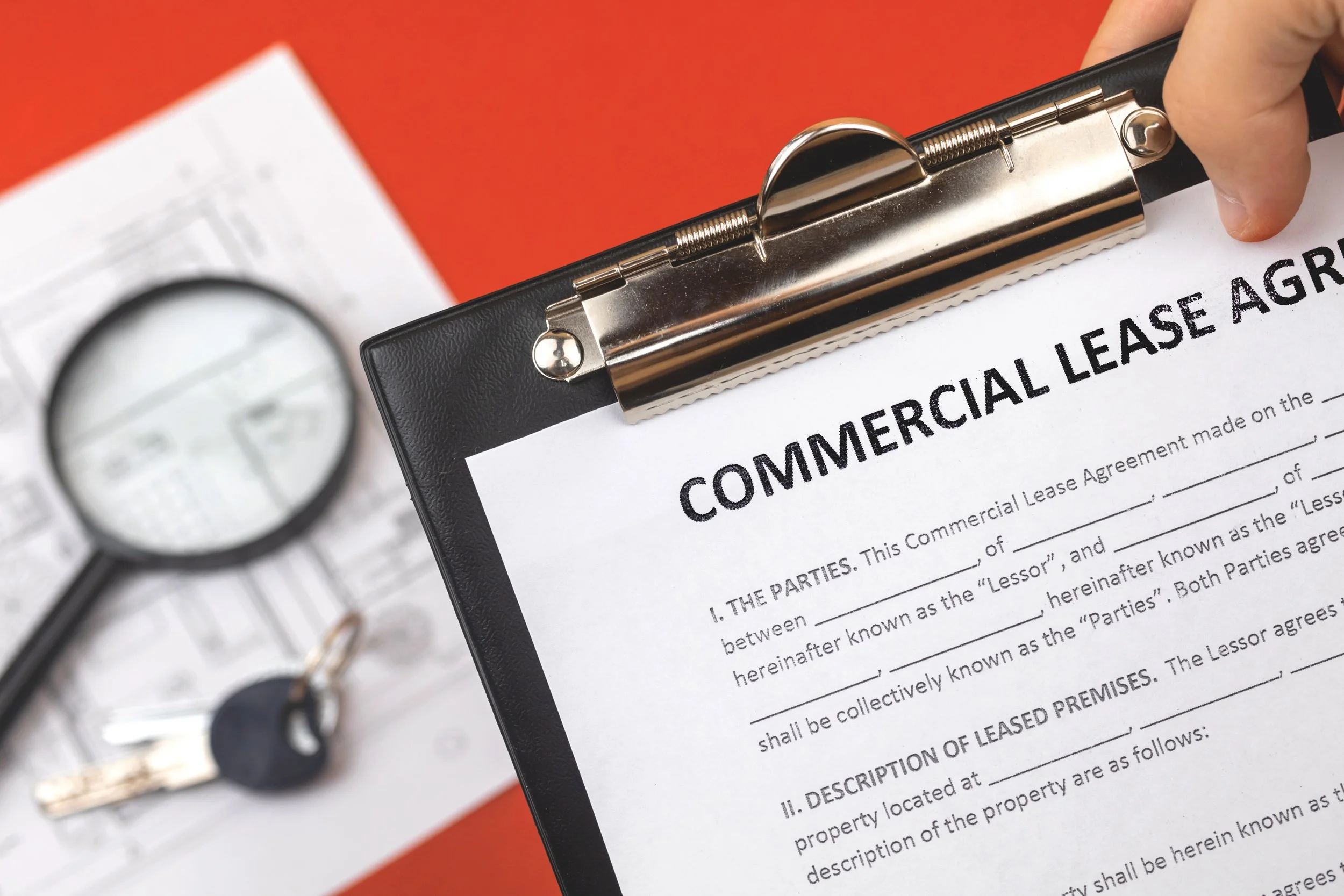
When a business owner considers their next location in Portland, the question rarely stops at “where.” It becomes “should we buy or lease.” The answer shifts based on cash flow, growth plans, interest rates, and market conditions. There’s no universal right answer, but there are clearer financial pictures once you understand the tradeoffs.
This breakdown addresses the numbers most Portland business owners actually care about: real estate costs, equity accumulation, tax implications, and operational flexibility in the 2026 market.
FAQ: Buying vs. Leasing Commercial Property in Portland
Q: What’s the typical monthly cost difference between buying and leasing commercial space in Portland?
A lease for office space in Portland currently runs around $28.99 per square foot annually, or roughly $2.42 per month. Retail space averages $26 per square foot annually. For a 2,000-square-foot office, that’s $4,833 monthly rent. A purchase with a standard 20% down payment and current 2026 interest rates typically results in a mortgage payment between $5,200 and $5,800 monthly for the same space, plus property tax, insurance, and maintenance. Initially, the monthly payment appears higher, but equity accumulation changes the long-term picture.
Q: Can small businesses in Oregon qualify for commercial loans to buy property?
A: Yes. The SBA 504 loan program and SBA 7(a) loans are actively available in Oregon. The 504 program typically requires 10% down for owner-occupied properties. The 7(a) program requires 10-25% down depending on property type and borrower profile. Traditional lenders in Portland also offer conventional financing with similar or slightly higher down payment requirements. Qualification depends on credit, business financials, and personal guarantees.
Q: What happens to a lease if the Portland commercial real estate market shifts?
A: Your rate locks in for the lease term. If Portland’s market strengthens and rents rise—as they did in suburban corridors recently—your cost stays fixed. If the market softens, you’re locked at the higher rate. Conversely, if you own and refinance when rates drop, you capture that benefit directly. Leases in Portland often include rent escalation clauses of 2-3% annually, which compounds over longer terms.
Q: Are there tax advantages to buying over leasing commercial property in Oregon?
A: Yes. Mortgage interest and property depreciation are deductible when you own. Lease payments are fully deductible but don’t build equity. Oregon also doesn’t impose a capital gains tax on real estate sales, making the equity you build tax-free. Consult a CPA, but for many growing Portland businesses, ownership generates meaningful tax advantages by year three or four.
The Financial Case for Leasing Commercial Space in Portland
Leasing preserves capital and maintains flexibility. A Portland business with $80,000 in cash avoids putting $40,000 down on a $200,000 property. That capital stays available for inventory, hiring, or weathering downturns. The monthly expense is predictable, and the landlord handles structural repairs and major maintenance.
For businesses uncertain about location commitment or growth trajectory, leasing removes the risk of being locked into a property that no longer fits. If your business needs to relocate within Portland or shift to a larger space in a stronger market corridor, you exit at lease end. If you purchased, you’re managing a sale or becoming an unintended landlord.
Oregon commercial leases often include common area maintenance charges (CAM), insurance pass-throughs, and property tax participation. These costs average an additional $4-8 per square foot annually depending on the property class and location within Portland or suburban markets. Add these to base rent when comparing total occupancy cost.
For startups or service-based businesses, leasing makes strong financial sense. You avoid the complexity of commercial financing, appraisals, and property management. Your focus stays on the business.
The Financial Case for Buying Commercial Property in Portland
Buying builds equity. In Portland’s stabilized market, a business that purchases property at $200 per square foot and carries a 20-year mortgage locks in an appreciating asset. Assuming modest 2% annual appreciation—historically conservative for Portland—that same property appreciates to roughly $297,000 by year 20. More importantly, the business has paid down mortgage principal throughout that period, converting rent-equivalent payments into home equity.
The math requires a comparison: the total rent paid over 20 years versus total mortgage payments plus carrying costs. For a 2,000-square-foot office at current Portland rates ($28.99 per square foot), 20 years of leasing with 2.5% annual escalation totals approximately $1.36 million. A mortgage payment of $5,500 monthly, property tax of $350, insurance of $180, and maintenance of $200 totals $6,230 monthly. Over 20 years, that’s $1.495 million, but the business retains ownership of a property worth roughly $297,000. Net cost to the business: approximately $1.2 million, versus $1.36 million for leasing.
This simplified calculation excludes refinancing opportunities, which matter in volatile rate environments. If rates drop, an owner refinances and lowers the monthly payment. A long-term lessee captures no benefit from rate changes.
Commercial Property Valuation and Financing in Portland
Before making an offer on Portland commercial property, understand the valuation. Properties are typically appraised using the income approach (net operating income capitalized at market rates), the comparable sales approach, or cost approach. Most Portland commercial purchases rely on income-based valuations.
Lenders require appraisals before loan approval. The appraisal often drives the purchase decision. If your offer is $200 per square foot but the appraisal comes in at $185, the lender finances based on the lower number. You either lower your offer or increase your down payment.
Oregon and Portland have reasonable lending environments for commercial property. SBA 504 loans are popular because they allow 90% LTV (loan-to-value) on owner-occupied properties. SBA 7(a) loans typically go 80% LTV. Conventional loans vary but often reach 75-80% LTV. The stronger your business financials and the more established your operation, the better terms you’ll receive.
Market Conditions: Portland Stabilized, Suburbs Surging
Portland’s core commercial market is mature and relatively stable. Office rates remain steady around $28.99 per square foot. Retail hovers near $26 per square foot. This stability is an advantage for buyers: you’re not purchasing into a booming market about to correct, nor into a declining market with further downside risk.
Suburban Portland corridors—areas like Beaverton, Lake Oswego, and Tigard—have experienced stronger growth and absorption recently. If your business considers expansion beyond Portland proper, these regions offer slightly lower rates and higher available inventory, though less walkability and urban density.
When evaluating a purchase, understand the specific submarket. A downtown Portland address commands different terms than an industrial property in outer Southeast. Work with someone familiar with Oregon real estate markets to avoid overpaying for location premium that won’t serve your business.
Debt Service and Cash Flow Impact
Here’s where many Portland business owners make errors: calculating monthly mortgage payment without accurately modeling what it means for cash flow.
A $200,000 purchase with 20% down ($40,000) and a 20-year mortgage at current 2026 rates (approximately 7.0%) results in a mortgage payment of roughly $1,115 monthly per $100,000 borrowed, or $11,150 annually. That’s $930 monthly. Add property tax (assume $350 monthly), insurance ($180 monthly), and maintenance reserves ($200 monthly). Total carrying cost: roughly $1,660 monthly.
Compare this to leasing 2,000 square feet at $28.99 per square foot: $4,833 monthly base rent, plus estimated CAM of $200 monthly, totaling $5,033 monthly.
For many Portland businesses, the purchase monthly cost is lower, but the down payment requirement—$40,000—represents a significant hurdle. If your business maintains less than six months of operating reserves, that down payment creates financial stress. Leasing avoids this constraint.
The decision often hinges on whether you can afford the down payment without compromising operational liquidity. A business with strong cash reserves and predictable income benefits from ownership. A growing business managing tight margins may need the flexibility and lower capital requirement of leasing.
Tax Implications and Equity Building for Oregon Businesses
Depreciation on commercial property is significant. The IRS allows commercial buildings to be depreciated over 39 years. For a $200,000 building (land values are typically separated and not depreciated), annual depreciation is roughly $5,128. This is a deduction that reduces taxable income even though it’s a non-cash expense.
Mortgage interest is fully deductible. In year one of a 20-year mortgage, most of your payment goes to interest. On a $160,000 loan at 7%, first-year interest is roughly $11,200, compared to $2,800 in principal paydown. The full interest amount offsets business income.
Oregon’s lack of capital gains tax on real estate sales further enhances ownership benefits. If you purchase property, carry it for 20 years, and sell for a gain, that gain is not taxed at the state level. Federal capital gains rules still apply, but Oregon doesn’t add its own layer.
For business owners in higher tax brackets, ownership often generates superior tax efficiency compared to leasing. Consult your CPA or tax advisor to model your specific situation.
Exit Strategies: Owning or Leasing When Circumstances Change
Leasing provides clear exit paths. As lease expiration approaches, you renegotiate, relocate, or downsize. There’s no property to market or carry.
Ownership complicates exits. If your business downsizes or relocates before the property appreciates significantly, you may sell at a loss or become a landlord managing a tenant until you recover your investment. Some Portland business owners successfully reposition their properties as investment real estate, but this requires landlord capacity.
The exit consideration matters most for businesses in volatile industries or with uncertain long-term location requirements. If your business is established, profitable, and location-stable, ownership exit risk diminishes.
Lease Renewal Negotiations in Portland
One factor many lessees underestimate is the cost of lease renewal negotiations. As lease expiration approaches—typically 12-24 months beforehand—landlords reassess market rates. If Portland’s market has strengthened or your building has been upgraded, renewal rates may be 15-25% higher than your current rent.
These increases can be painful. A business paying $3,000 monthly might face renewal offers at $3,500 or higher. Relocation is an option, but moving costs add up: tenant improvements at a new space, signage, customer notification, operational disruption.
Ownership eliminates this risk. Your carrying cost is fixed by the mortgage terms. If you refinance (subject to new rates), you control the timing. Landlords control lease renewal leverage.
Making the Decision: Portland Commercial Property Buy or Lease
Buy if:
Your business will occupy the space for 7+ years.
You have sufficient capital reserves (down payment plus 6-12 months operating expenses).
Your business has consistent, predictable cash flow.
You want equity accumulation and tax benefits.
You prefer cost certainty over flexibility.
You plan to stay in Portland or the specific market.
Lease if:
You need to preserve capital for business growth or contingencies.
Your business may relocate, downsize, or shift operations within 5-7 years.
You prioritize flexibility and reduced operational complexity.
You operate in a high-growth phase with uncertain location needs.
You want to avoid long-term leverage and property management.
Portland’s commercial market offers attractive conditions for both strategies. If you’re leaning toward purchase, professional commercial property valuation helps validate your offer price and informs financing negotiations. If you’re leaning toward leasing, understanding lease structure and negotiating favorable renewal terms protects long-term costs.
For a detailed financial model specific to your situation, consider working with a commercial broker or financial advisor familiar with Portland’s submarkets and current lending environment. The difference between a sound decision and a costly one often hinges on accurate local market data and professional guidance.
Next Steps for Portland Business Owners
Whether you decide to buy or lease, understanding the specific properties and financials in your target Portland submarket is essential. Our buyer representation services help business owners navigate purchase decisions. Our tenant representation team structures lease negotiations that align with your operational and financial goals. If you’re evaluating a specific property, a professional property valuation ensures you’re not overpaying for ownership.
For a deeper dive into lease comparison and structure, review our detailed guide on how to compare commercial lease proposals in Portland.
We also provide guidance on lease renewals when your current lease approaches expiration, helping you renegotiate or strategically relocate based on market conditions.
Have questions about buying versus leasing commercial property in Portland? Reach out to discuss your specific situation. We provide straightforward analysis without the sales pitch.