
Hillsboro Data Centers: Industrial Land and Real Estate in 2026
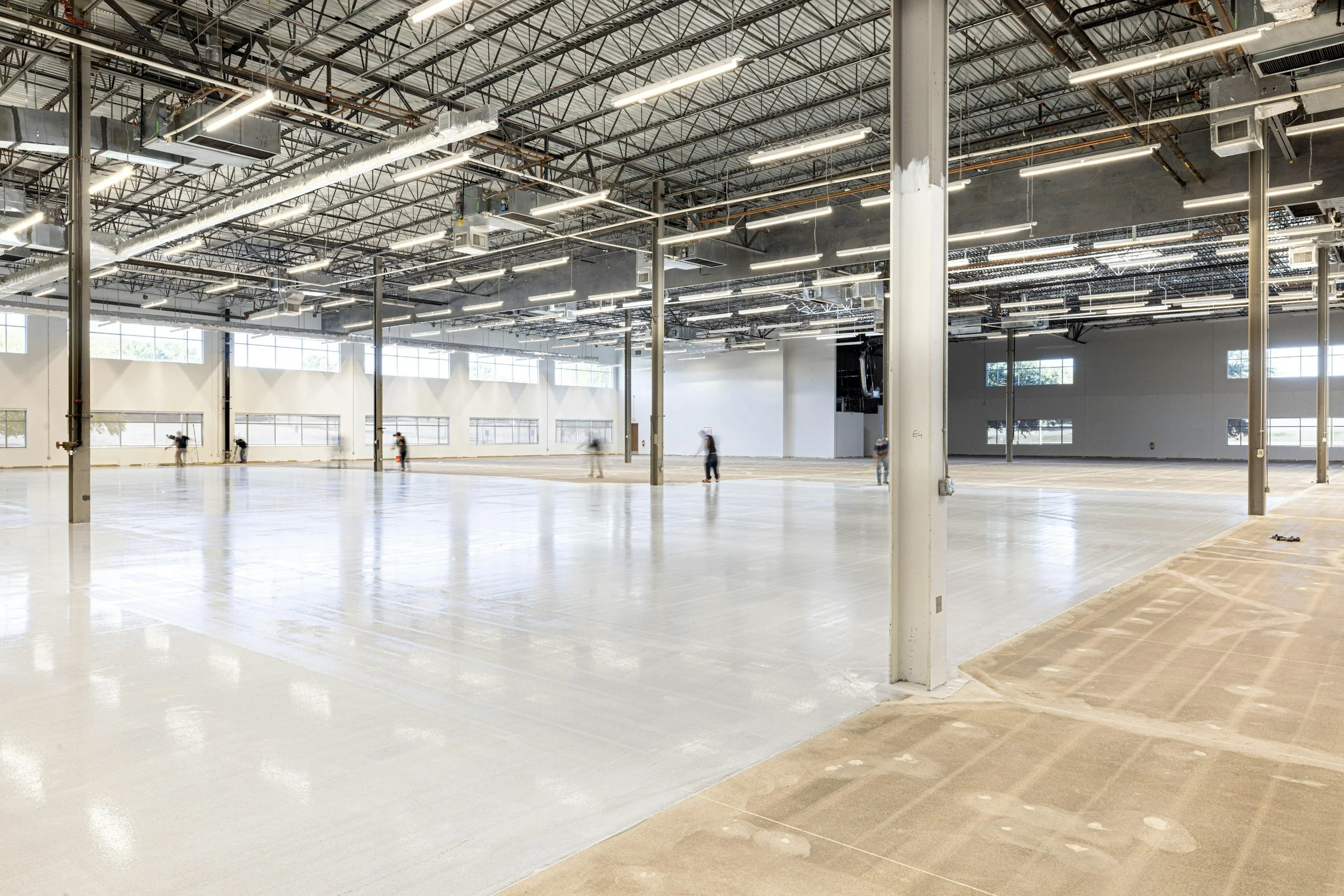
Hillsboro has become one of North America's most important data center markets. Ranked alongside Northern Virginia by CBRE, the city posted a data center vacancy rate of just 0.2% in the first half of 2025 — the lowest among the eight primary U.S. markets tracked. Demand for industrial land in the Hillsboro and Sunset Corridor submarket is now driven as much by hyperscale computing as by traditional manufacturing or warehousing.
But that growth is colliding with Oregon's land use framework. In March 2026, Senate Bill 1586 — which would have brought 373 acres of rural land into Hillsboro's urban growth boundary and designated roughly 1,400 acres for future industrial use — was pulled after fierce opposition from farmers, residents, and land use advocates. The result is a market where demand is surging, supply is constrained, and the ripple effects are reaching well beyond data centers into every corner of Portland-area industrial real estate.
Hillsboro Data Center Real Estate FAQ
Q: What is Hillsboro's data center vacancy rate in 2026?
A: Hillsboro posted a 0.2% data center vacancy rate in H1 2025, the lowest among CBRE's eight primary U.S. data center markets. New capacity continues to be absorbed almost immediately upon delivery.
Q: Why are data centers concentrated in Hillsboro Oregon?
A: Hillsboro offers subsea fiber-optic cable access to Asia-Pacific markets, competitive energy rates from Portland General Electric, Oregon's lack of sales tax, enterprise zone tax abatements, and a climate well-suited for server cooling. Businesses can save roughly 25% in operating costs compared to Silicon Valley.
Q: How does Hillsboro's data center boom affect industrial real estate?
A: Data center operators and their supply chain tenants are competing for the same limited industrial land and flex space in the Sunset Corridor. This is pushing lease rates higher, reducing available inventory, and creating spillover demand into adjacent submarkets.
Q: What happened with the Hillsboro industrial land expansion bill (SB 1586)?
A: Senator Janeen Sollman pulled SB 1586 in March 2026 after significant public opposition. The bill would have added 373 acres to Hillsboro's urban growth boundary for advanced technology use. Its failure means no new industrial land is coming to the submarket in the near term.
Hillsboro Data Center Market: Vacancy, Demand, and Growth
The numbers tell the story. Hillsboro absorbed 48.4 MW of new data center capacity in the first half of 2025 against 48 MW of new deliveries — meaning essentially every megawatt that came online was leased before or immediately after completion. Flexential is bringing its sixth Hillsboro facility online in 2026, a 358,000-square-foot, 36 MW facility at Aloclek Place. Aligned Data Centers is building a 31 MW battery system to help Portland General Electric interconnect approximately 80 MW of new data center load this year.
The demand drivers are structural, not cyclical. AI training and inference workloads are expanding compute requirements exponentially. Hillsboro sits at a unique intersection of subsea fiber connectivity to Asia, Intel's R&D campus at Ronler Acres (where a $36 billion expansion is underway), and a deep bench of semiconductor and tech tenants that make ancillary data center services a natural fit.
For property owners and investors evaluating commercial real estate services in the Portland metro, this concentration of tech infrastructure spending is creating a submarket with fundamentally different demand characteristics than traditional industrial corridors.
The SB 1586 Industrial Land Fight and Oregon's Urban Growth Boundary
Oregon's urban growth boundary is one of the most restrictive land use tools in the country. It limits outward sprawl by drawing a hard line around developable land — and in Hillsboro, that line is now the single biggest constraint on data center and industrial growth.
SB 1586, formally the Oregon JOBS Act, was a bipartisan attempt to address the shortage. The bill would have brought 373 acres of rural land south of U.S. 26 into Hillsboro's UGB, designated approximately 1,400 acres for future industrial development over 50 years, extended and expanded tax credits for advanced manufacturing and semiconductor research, and prohibited standalone data centers on the new land (only accessory data center uses tied to manufacturing or R&D would have been allowed).
Hundreds of people testified against the bill. Critics pointed out that roughly 10,000 acres of industrial land already sit inside Oregon's urban growth boundaries statewide, including several hundred developable acres in Hillsboro itself. Farmers and land policy groups argued the bill prioritized corporate interests over agricultural preservation.
Senator Sollman shelved the bill in early March 2026. For now, no new industrial land is coming to Hillsboro through legislative action.
What this means for the market: the supply side is locked. If demand continues at its current pace — and every indicator suggests it will — existing industrial property in the Sunset Corridor becomes significantly more valuable. Owners of flex, warehouse, and manufacturing space near Intel's campus and the data center cluster should expect increasing interest from tenants tied to the tech supply chain.
Sunset Corridor Industrial Real Estate: Lease Rates and Spillover Demand
Industrial lease rates in Hillsboro are already among the highest in the Portland metro, averaging $16 to $18 per square foot annually. That premium reflects the submarket's unique tenant mix: semiconductor suppliers, clean room operators, data center support services, and advanced manufacturing firms that need proximity to Intel, Nike, and the fiber backbone.
The spillover effects are measurable. A recent 100,000+ square foot lease near Intel's Ronler Acres campus was tied directly to data center construction support. The 214,000-square-foot Trellis West advanced manufacturing campus — a stabilized four-building property in the heart of the Sunset Corridor — hit the market in April 2026, positioned as an investment opportunity in one of the West Coast's densest semiconductor clusters.
For tenants searching for industrial or flex space in Hillsboro, the competition is real. Conducting thorough commercial real estate due diligence before making an offer is critical — properties in this submarket move fast, and the evaluation window is shorter than in most Portland corridors.
Tenants who cannot find or afford space in Hillsboro proper are looking south along the 217 Corridor into Beaverton and Tigard, or east toward the broader Portland industrial market. Understanding NNN and full service lease structures in these adjacent submarkets is essential for making an informed comparison.
Power, Energy Costs, and Community Pushback in Hillsboro
The data center boom has not come without friction. Residential electricity rates in Hillsboro have risen by nearly 50%, while data centers pay less than half the per-kilowatt-hour rate that households do — and have received significant state tax breaks on top of that disparity.
Hillsboro City Councilor Kipperlyn Sinclair has called for a temporary moratorium on new data center development. A community petition seeking a pause on new facilities has gained traction. Oregon Public Broadcasting recently explored the question of who benefits and who bears the cost of the state's data center expansion.
This matters for commercial real estate because political and regulatory risk is now part of the investment calculus. If Hillsboro imposes a moratorium or new conditions on data center permitting, demand could shift to other jurisdictions — potentially benefiting industrial markets in Prineville, The Dalles, or even across the river in Clark County, Washington. Property owners should factor this uncertainty into long-term hold and leasing strategies.
For landlords weighing how to position their properties, understanding tenant improvement allowances and build-out costs for data center support tenants is worth the analysis — these tenants often require significant electrical and cooling infrastructure upgrades.
What Hillsboro's Data Center Boom Means for Portland CRE Investors
The broader takeaway for Portland commercial real estate is straightforward: Hillsboro is not just a tech submarket anymore. It is a national-scale data infrastructure hub, and the capital flowing into it is reshaping industrial demand across the metro.
Three implications for investors and property owners:
Existing industrial land in Hillsboro is scarce and appreciating. With SB 1586 dead and the UGB intact, no new supply is coming. Properties with adequate power infrastructure, proximity to fiber routes, or zoning flexibility for tech-adjacent uses will command premiums.
Spillover demand benefits adjacent submarkets. Tenants priced out of Hillsboro are moving into the 217 Corridor, Sunset West, and even the broader Westside market. If you own industrial or flex space within 20 minutes of Intel's campus, your tenant pool just expanded.
Regulatory risk cuts both ways. A moratorium would constrain Hillsboro's growth but could redirect demand. Owners in competing submarkets should be watching the Hillsboro City Council closely.
For anyone evaluating an acquisition or negotiating a letter of intent on industrial property in the western metro, the data center dynamic is now a core underwriting variable — not a footnote.
Position Your Industrial Property in Portland's Fastest-Moving Submarket
The Sunset Corridor is evolving faster than most of Portland's commercial real estate market. Whether you are a landlord looking to reposition an industrial asset for tech tenants or a tenant navigating a constrained submarket, a data-driven strategy matters. A broker who understands the Hillsboro and Sunset Corridor submarket can help you evaluate your options and move before the market tightens further.