
The 82nd Avenue TIF District: Mapping Tax Increment Financing’s Impact on East Portland Retail
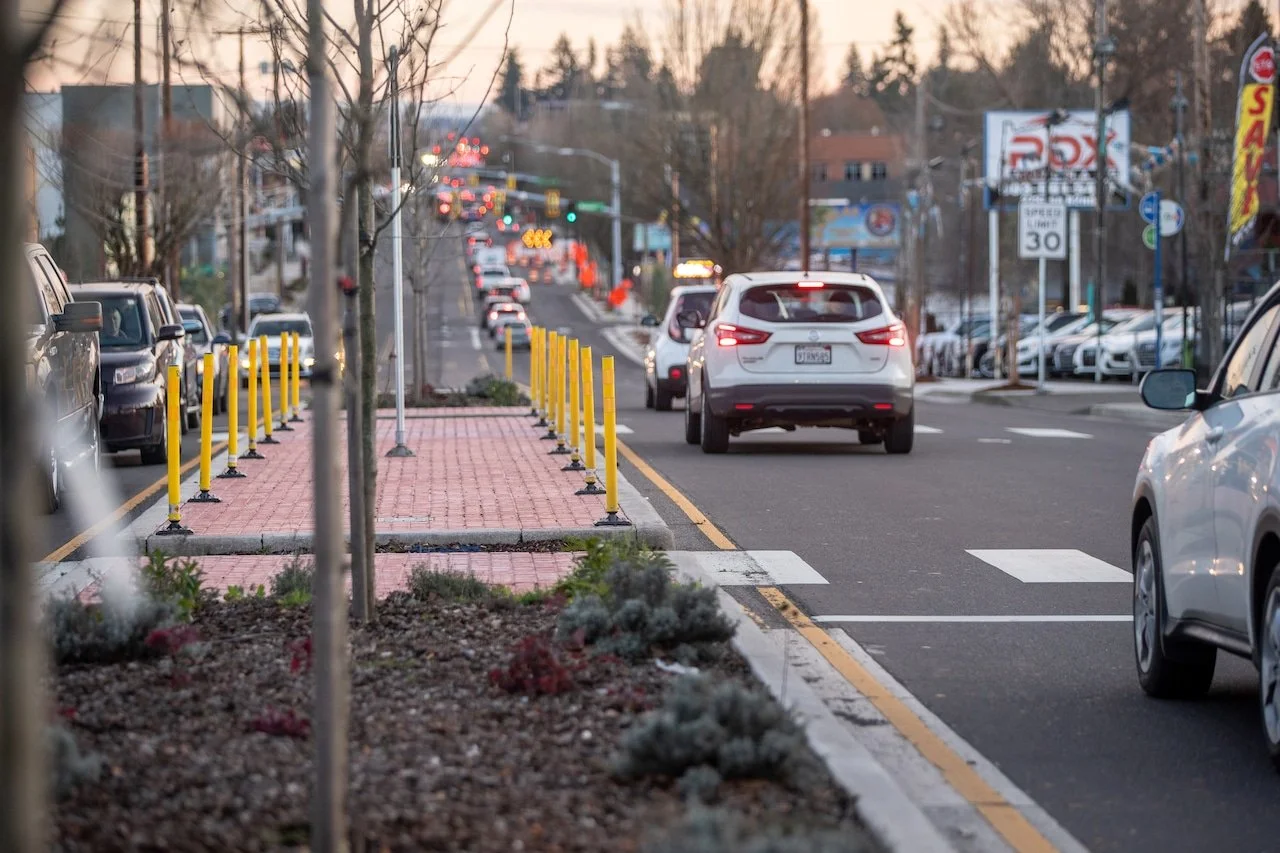
The 82nd Avenue TIF District represents a fundamental shift in how Portland approaches economic development in its historically underserved east side corridors. Since the district began collecting tax increment on July 1, 2025, it has become one of three new TIF zones serving the East Portland area—and one worth understanding if you’re tracking commercial real estate opportunity in the region.
Tax Increment Financing, for those new to the mechanism, redirects a portion of property tax growth into a dedicated fund for improvements. For the 82nd Avenue corridor specifically, this means 30 years of committed capital flowing toward infrastructure, business stabilization, and mixed-use development. That’s not a typical pilot program. That’s structural investment.
Understanding the 82nd Avenue TIF District: Portland’s East Side Play
The 82nd Avenue Area TIF District exists within a larger East Portland development framework. City Council approved six new TIF districts in October 2024, with three focused on East Portland: the 82nd Avenue Area, the East 205 Corridor, and the Sumner-Parkrose-Argay-Columbia Corridor district. The 82nd Avenue district began its collection phase in the 2025-2026 fiscal year, meaning revenue is flowing into improvement projects now.
The district boundaries encompass 82nd Avenue itself and adjacent areas, including portions of the Montavilla neighborhood. This geography matters because it places the TIF in direct reach of residential areas experiencing significant housing pressure, which shapes the district’s governance and priorities.
What sets this apart from earlier Portland TIF efforts is its explicit focus on what the City calls “inclusive economic growth.” The 82nd Avenue TIF doesn’t exist primarily to attract new development capital from outside the district. It exists to stabilize existing businesses, support resident retention, and build infrastructure that serves the community already there.
FAQ: 82nd Avenue TIF District Basics for Commercial Real Estate Professionals
What is tax increment financing and how does it work in the 82nd Avenue district?
Tax increment financing captures the difference between a property’s baseline assessed value (set when the district is created) and its assessed value in future years. That incremental growth in tax revenue gets diverted into a dedicated fund managed by the district’s governance body. For the 82nd Avenue Area, this fund supports infrastructure improvements, small business assistance, and affordable housing—not general city services. The baseline was established at district creation in 2024, with collections beginning in July 2025.
Who governs the 82nd Avenue TIF and what are the funding priorities?
A Community Leadership Committee (CLC) with 13 positions provides governance oversight. Members represent existing businesses, residents, nonprofit organizations, and community institutions. This structure reflects the district’s equity-focused mandate. The committee’s early work emphasizes preventing displacement of vulnerable residents and businesses, stabilizing the existing commercial corridor, funding infrastructure gaps, and supporting affordable housing development. You won’t see these priorities reordered significantly over the 30-year life of the district.
What’s the timeline for TIF funding to impact 82nd Avenue development?
The district has begun collecting revenue, which means project identification and prioritization are happening now. Early-stage work focuses on community engagement and needs assessment rather than major capital projects. Expect infrastructure improvements (streetscape, signage, parking, utilities) to roll out gradually over the next 3-5 years. Mixed-use development projects will require coordination with the CLC, which means timelines depend on community buy-in, not just development feasibility.
How does the 82nd Avenue TIF compare to the other East Portland districts?
The East 205 Corridor and Sumner-Parkrose-Argay-Columbia Corridor districts serve similar geographies with similar governance structures and equity mandates. The three districts collectively represent Portland’s commitment to concurrent East Portland development. However, each has distinct boundary lines, CLC compositions, and project priorities. The 82nd Avenue Area TIF is the most linear corridor-based district of the three.
East Portland Commercial Real Estate and the TIF Advantage
The East Portland commercial real estate market has historically operated at a discount relative to inner eastside and central Portland corridors. Property values on 82nd Avenue lag similar retail corridors closer to central Portland by 15-25 percent on comparable footage. That discount created opportunity for value-add investors, but it also meant the corridor carried higher vacancy rates and lower foot traffic investment from established retailers.
TIF districts change this equation without erasing the gap overnight. What they do is provide certainty that infrastructure capital is coming. A property owner on 82nd Avenue now knows that parking improvements, streetscape upgrades, utility infrastructure work, and business support programs are scheduled, even if the exact timeline remains fluid. That certainty has value because it signals neighborhood stabilization to potential tenants and buyers.
The retail market in East Portland operates on tenant economics much tighter than central Portland. A small grocer, hair salon, or local restaurant on 82nd Avenue cannot absorb rent increases beyond 3-4 percent annually without operational stress. TIF-funded infrastructure improvements that reduce parking friction or improve foot traffic increase the economic viability of those tenants without forcing displacement through rent hikes. That’s the mechanism: stabilizing existing commercial activity through public investment rather than private market pressure.
Mixed-use development on 82nd Avenue—ground-floor retail with residential or office above—becomes more viable when the public sector has committed to corridor-level improvements. A developer can reasonably project that an 82nd Avenue mixed-use project will benefit from streetscape improvements, signage support, and parking solutions that the TIF district funds. That reduces project risk and improves financing terms.
Tax Increment Financing and Portland Retail Development: The 2026 Landscape
Portland’s broader retail market in 2026 reflects mixed conditions. Downtown retail continues to experience pressure from e-commerce and office vacancy. Suburban retail remains bifurcated between necessity goods (grocery, pharmacy, quick service) and struggling discretionary retail. The 82nd Avenue corridor, as the main commercial spine of East Portland, sits between these dynamics.
The district’s focus on stabilization, not acceleration, reflects realistic market conditions. The goal is not to transform 82nd Avenue into the Pearl District. It’s to ensure existing businesses can remain viable, residents can access goods and services locally, and the corridor doesn’t consolidate into empty storefronts and speculative land banking. That’s a lower bar than “rapid appreciation,” but it’s the appropriate bar for a corridor serving primarily residential neighborhoods.
For investors and developers, this distinction matters. If you’re seeking rapid retail appreciation and high-end mixed-use opportunity, central eastside and close-in southeast Portland offer clearer paths. If you’re seeking stable cash flow, community alignment, and genuine public-sector partnership, the 82nd Avenue TIF district creates that framework. The district’s 30-year horizon assumes long-term ownership and operation, not short-term flips.
Infrastructure and Business Stabilization: Where TIF Funding Flows
The early priorities of the 82nd Avenue Area TIF reflect its governance structure and mandate. Infrastructure improvements top the list: parking facilities, streetscape work (lighting, landscaping, sidewalk improvements), utility undergrounding where feasible, and pedestrian/bicycle infrastructure. These are the unglamorous but essential improvements that shape retail viability.
Parking in particular matters on 82nd Avenue. Unlike downtown cores where parking is assumed paid and distant, strip retail corridors depend on free, visible parking immediately adjacent to storefronts. Scattered parking on 82nd Avenue, combined with occasional displacement by larger developments, has created friction. TIF-funded parking improvements—surface lots or small structures—meaningfully increase retail access.
Business stabilization programs funded by the TIF include small business assistance, facade improvement grants, and commercial loan support. These programs target existing businesses, not incoming retailers. An established family-owned grocery on 82nd Avenue can access TIF funds to upgrade storefront appearance, improve fixtures, or refinance existing debt at better terms. This keeps businesses operating and prevents turnover driven by deferred maintenance or rising operating costs.
Affordable housing integration is also explicit. A portion of the TIF fund commits to affordable housing development or preservation near the commercial corridor. This serves the district’s equity mandate—ensuring that commercial stabilization doesn’t produce displacement pressure on adjacent residential areas.
Inclusive Economic Growth and East Portland Development Strategy
Portland’s rationale for the 82nd Avenue TIF District, and its sibling East Portland districts, stems from explicit findings about historical disinvestment. East Portland—a catch-all term for neighborhoods east of the Willamette River and north of I-84, particularly around 82nd Avenue—has experienced decades of lower public investment, higher vacancy rates, and greater difficulty accessing capital compared to westside corridors.
The TIF mechanism addresses this by ringfencing tax growth for reinvestment within the district. This prevents the scenario where property value increases drive property tax growth that flows to general city services benefiting the entire city, while the originating corridor captures none of the growth.
Inclusive economic growth, as the City defines it in TIF governance documents, means several things: prioritizing retention and support of existing businesses over recruitment of outside chains; ensuring affordability for residents and small business operators; centering community voice in decision-making through the CLC; and explicitly addressing displacement risk as development occurs. This is more restrictive than pure market-driven development, but it reflects the corridor’s economic reality and stated community priorities.
For commercial real estate professionals serving the 82nd Avenue corridor, this framework means understanding that deal structures must account for community alignment, not just numbers. A landlord proposing significant rent increases on an 82nd Avenue retail space faces not just market resistance but potential CLC opposition if that increase risks displacing a longstanding minority-owned business. That’s not a hypothetical constraint—it’s a governance reality.
Mixed-Use Development on 82nd Avenue: Realistic Timelines and Structures
Mixed-use development along 82nd Avenue will follow a different arc than similar projects in higher-velocity markets. The corridor’s land use, property ownership patterns, and community governance structures create both constraints and opportunities.
Most commercial frontage on 82nd Avenue is held by small or mid-sized property owners—not institutional investors or large development firms. This fragmented ownership means assembled projects will require time and careful negotiation. However, it also means existing owners often have deep community relationships and genuine interest in long-term stabilization over quick exits.
Density on new mixed-use projects will be constrained by neighborhood character goals articulated through the CLC. Five-story mixed-use with 100+ units above ground-floor retail may be financially optimal for a developer, but it may exceed community comfort on 82nd Avenue. Four-story projects with 40-60 residential units paired with retail may be more achievable. That affects feasibility and underwriting.
TIF funding can offset some of these constraints through contributions to parking solutions, infrastructure improvements, or predevelopment assistance. A mixed-use project that would be marginally feasible without TIF support becomes viable with it. That’s the calculus for developers considering the 82nd Avenue corridor as part of their 2026-2028 pipeline.
Market Comparisons: How the 82nd Avenue TIF Shapes Competitive Position
Portland commercial real estate is organized around several distinct submarkets, with retail distributed across downtown, inner eastside, inner southeast, inner southwest, suburban nodes, and corridor retail. The 82nd Avenue district competes primarily with other East Portland retail corridors and with suburban retail nodes in Gresham, Troutdale, and outer Portland areas.
The TIF district advantage over comparable undistricted corridors is infrastructure certainty and public commitment to stabilization. Over a 30-year period, that’s material. A retail operator considering 82nd Avenue versus a comparable space in an undistricted corridor benefits from knowing infrastructure improvements are coming, small business support is available, and the public sector has a vested interest in the corridor’s success.
The 82nd Avenue TIF disadvantage versus inner eastside corridors (Hawthorne, Division, 28th) is that those corridors have already appreciated. They have established consumer recognition, higher foot traffic, and stronger tenant demand. The TIF doesn’t erase that gap in 5 years. It creates conditions for gradual, stable improvement over 30 years.
For landlords and investors, this means different hold periods and return expectations. A Division Avenue retail property might justify a 5-7 year hold with expectation of significant appreciation and exit opportunity. An 82nd Avenue property makes sense for a 15-20+ year hold with consistent cash flow and modest appreciation, plus the optionality of larger mixed-use redevelopment in years 10-15.
Navigating the 82nd Avenue TIF as a Commercial Real Estate Professional
If you’re working with clients on either the tenant or landlord side of 82nd Avenue, the TIF district context is material to your analysis. It shifts the risk profile of long-term leases favorably. It creates potential for TIF-funded improvements to enhance property performance without private capital investment. It also creates governance complexity—the CLC may weigh in on major property changes or development proposals.
For tenant representation, the TIF opens access to business support resources that a tenant might not find on comparable undistricted corridors. A growing food business or services provider can access assistance with lease negotiation, build-out financing, or operational improvement through TIF-funded programs.
For landlord representation, the TIF means longer-term value creation but requires patience and community alignment. Quick value-add strategies (purchase, improve, sell in 3-5 years) are less viable. Long-term stabilization and mixed-use redevelopment strategies are more aligned with TIF district realities.
For development site search on the 82nd Avenue corridor, the TIF dramatically improves the business case for any project with a 10+ year hold period. It introduces a level of public-sector partnership that simplifies entitlements and community engagement.
Strategic Next Steps for East Portland Commercial Investment
The 82nd Avenue TIF District represents a nine-year opportunity window before its governance and funding realities become fully settled. Early TIF investors—those acquiring property or development rights in the next 1-2 years—benefit from lower entry prices before corridor stabilization effects show up in comps.
The City’s concurrent investment in the East 205 Corridor and Sumner-Parkrose-Argay-Columbia Corridor TIF districts creates a broader East Portland investment wave. A portfolio strategy spanning multiple East Portland corridors distributes risk and captures different growth patterns.
Infrastructure improvements funded by TIF are not optional value-add features—they’re scheduled improvements that reduce project risk. Understanding the TIF district’s project roadmap, when it becomes available, is essential to site selection and feasibility underwriting.
The Community Leadership Committee’s composition and decision-making norms will shape what projects succeed and what deal structures work. Early engagement with CLC members, understanding their priorities, and building community support are no longer optional for 82nd Avenue development. They’re baseline to competitive advantage.
Get Strategic Guidance on East Portland Commercial Investment
The 82nd Avenue TIF District and broader East Portland commercial opportunity requires analysis beyond standard market metrics. You need guidance from advisors who understand both the economics and the governance. That’s where strategic buyer representation and landlord representation become essential.
If you’re tracking commercial real estate in Portland broadly, understanding the TIF district opportunity is baseline. The City is systematically investing public capital in East Portland. That creates conditions for stable returns and genuine community alignment—if you structure investments appropriately.
Explore what property valuations look like in the 82nd Avenue corridor and other East Portland districts. Compare those to the broader Portland retail market 2026 outlook. Review timing on when to start commercial site search in Portland if the 82nd Avenue corridor is on your list.
For East Portland industrial opportunities on the outer edges, understand the Clackamas and outer southeast industrial landscape as a complement to 82nd Avenue corridor retail.
The 82nd Avenue TIF District won’t make East Portland competitive with central eastside or inner southeast corridors in 2026. It will make East Portland stable, strategically important, and genuinely viable for long-term commercial operators. That’s not hype. That’s market reality.
Have questions about the 82nd Avenue TIF District or East Portland commercial opportunity? Contact our team for strategic guidance on market conditions, site selection, and deal structure.