
Buying an Industrial Condo in Wilsonville Oregon: A Commerce Circle Case Study
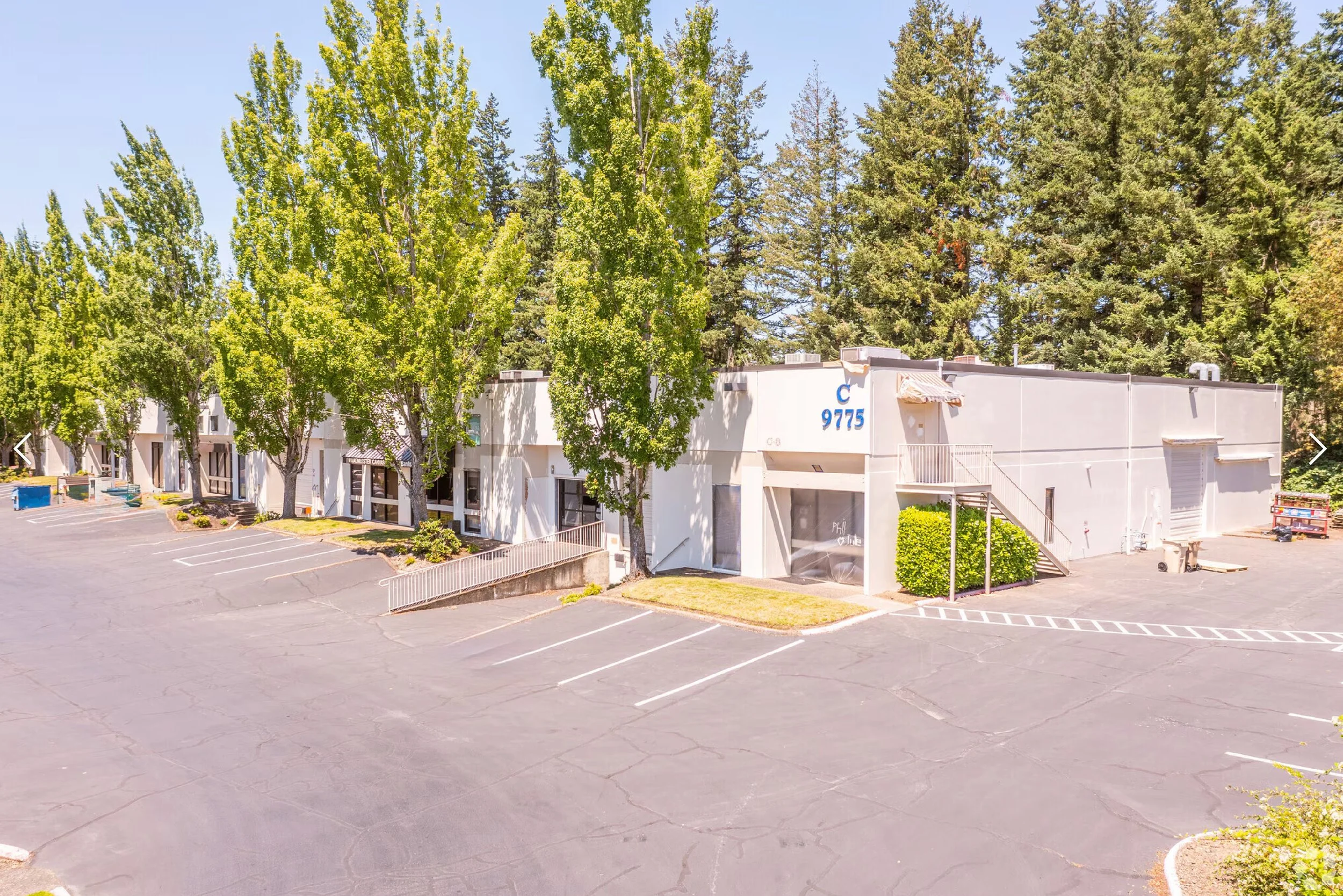
When an electronics distribution company needed a permanent headquarters in the Portland metro, the search led to an unlikely candidate: a 16,000-square-foot industrial condo at Commerce Circle Business Park in Wilsonville, Oregon — previously operated as a baseball training facility. The result was a $1.39 million all-cash acquisition that gave the buyer a turnkey owner-user space less than a mile from I-5, with a seller-funded roof replacement negotiated as part of the deal. This case study explains how buyer representation shaped the acquisition strategy, why Wilsonville's industrial market made sense for the buyer, and what the deal reveals about the advantages of owning versus leasing flex industrial space in the Portland metro.
Wilsonville Industrial Condo Purchase FAQ
Q: How much did the industrial condo at Commerce Circle Business Park sell for?
A: The 16,000 SF industrial condo at 9775 SW Commerce Circle in Wilsonville, OR sold for $1,390,000 — approximately $86.88 per square foot, well below the Wilsonville industrial average of roughly $169/SF.
Q: What is Commerce Circle Business Park in Wilsonville Oregon?
A: Commerce Circle Business Park is a multi-building industrial condo complex in Wilsonville, OR located less than one mile from I-5. The park features flex industrial units ranging from warehouse and distribution to light manufacturing, with easy freeway access and proximity to Wilsonville's SMART transit system.
Q: Why buy an industrial condo instead of leasing flex space in Portland?
A: Buying eliminates lease escalations, builds equity, and gives owner-users full control over build-out and operations. For established businesses with stable space needs, ownership locks in long-term occupancy costs and provides an asset that appreciates alongside the market.
Q: How does buyer representation help when purchasing commercial property in Portland?
A: A buyer's broker handles market search, property evaluation, price negotiation, and due diligence coordination — at no cost to the buyer, since the seller typically pays the commission. In this deal, buyer representation secured a below-market price and a seller-funded roof replacement worth significant capital expenditure savings.
The Challenge: Finding an Owner-User Industrial Space Near Portland
The buyer — an electronics distribution company — had outgrown their existing setup and needed a permanent facility that could serve as both headquarters and distribution center. The requirements were specific: warehouse space with dock-high loading for shipping and receiving, enough office square footage for administrative operations, proximity to I-5 for regional distribution, and a purchase price that made ownership more attractive than continued leasing.
A thorough lease-vs-own analysis confirmed that buying made financial sense for this buyer. With strong cash reserves and a long-term operational horizon, the company could eliminate the uncertainty of lease renewals and escalations while building equity in a tangible asset. The challenge was finding the right property at the right price in a competitive market.
Why Wilsonville Oregon Works for Industrial Buyers
Wilsonville sits at the southern edge of the Portland metro along the I-5 corridor — a strategic location for businesses that need to serve customers across Oregon and into Washington. The Wilsonville and Sherwood submarket offers several advantages that made it the right fit for this buyer.
The area provides direct I-5 access — Commerce Circle Business Park is less than one mile from the freeway interchange. Wilsonville also operates SMART, one of the only fare-free transit systems in Oregon, which simplifies employee commuting. Major retail and services including Target and Costco are immediately across I-5, and the WES commuter rail connects Wilsonville to Beaverton and the broader MAX light rail network.
From a cost perspective, Wilsonville industrial space trades at a discount to closer-in Portland submarkets like the Central Eastside or Columbia Corridor. For a buyer focused on operational efficiency rather than a trendy address, that cost differential translates directly to a better use of capital.
Evaluating the Property at 9775 SW Commerce Circle
The property that fit the buyer's criteria was a 16,000-square-foot industrial condo unit in Building C of Commerce Circle Business Park. Built in 1980, the Class B building offered a practical layout: 3,059 square feet of ground-floor office space, 2,212 square feet of second-floor office space, three dock-high loading doors, and one grade-level door — an ideal configuration for a company that needs both office headquarters and warehouse distribution under one roof.
The due diligence process revealed both an opportunity and a negotiation lever: the building needed a new roof. Rather than walking away or asking for a price reduction, the buyer's strategy was to negotiate a seller-funded roof replacement — a concession that preserved the purchase price while eliminating a major capital expenditure the buyer would have otherwise faced immediately after closing.
The property had been operating as a baseball training facility — an unconventional use for an industrial condo that actually kept the interior shell in clean condition, making the conversion to electronics distribution and office use relatively straightforward.
Buyer Representation Strategy for the Wilsonville Acquisition
With a clear picture of the property's condition and value, the acquisition strategy focused on three priorities: securing a competitive price, negotiating the roof replacement as a seller concession, and structuring an all-cash close to strengthen the offer.
The broker opinion of value analysis benchmarked the property against comparable industrial condo sales in the Wilsonville and Tualatin submarkets. The final purchase price of $1,390,000 — roughly $86.88 per square foot — came in well below the broader Wilsonville industrial average. For the buyer, that pricing reflected the building's age and condition while still recognizing its strong location and functional layout.
The all-cash structure gave the buyer a significant advantage in negotiations. Sellers of commercial property often prefer cash deals because they eliminate financing contingencies, appraisal risks, and lender-driven delays. In this case, the clean offer structure helped close the deal on favorable terms, including the seller's agreement to fund the full roof replacement.
The letter of intent phase established the key deal terms early — purchase price, roof replacement responsibility, and a closing timeline that gave both parties certainty. Matt Lyman of Norris & Stevens represented the buyer throughout the transaction.
From Baseball Facility to Electronics Distribution HQ
The previous tenant operated a baseball training facility — batting cages, pitching machines, and training areas occupying the open warehouse bays. While an unusual use for an industrial condo, it meant the warehouse space was largely open and unobstructed, which simplified the buyer's conversion to distribution operations.
After closing, the buyer built out the space for electronics distribution and administrative headquarters. The existing office space on both floors provided immediate capacity for management and support staff, while the warehouse area was configured for inventory storage, order fulfillment, and shipping operations using the building's three dock-high doors.
The roof replacement — funded by the seller per the negotiated terms — was completed shortly after closing, giving the buyer a fully updated building envelope without any out-of-pocket capital expenditure.
Portland Metro Industrial Condo Market Outlook
Industrial condos occupy a unique niche in the Portland metro commercial real estate market. Unlike traditional leased industrial space, condos offer owner-users the ability to build equity, control their occupancy costs long-term, and customize their space without landlord approval.
The broader Portland industrial market has seen vacancy rates rise to approximately 6.5% as of early 2026 — up from the historic lows of recent years. But the owner-user segment of the market operates differently than the speculative leasing market. Owner-users are less sensitive to short-term vacancy trends because they are buying for operational use, not investment returns. For companies with stable space requirements and the capital to purchase, the current market actually presents an opportunity: more inventory to choose from and less competition from other buyers compared to the frenzy of 2021-2023.
Wilsonville and the I-5 South corridor continue to attract businesses that need affordable, functional space with strong transportation access. Whether the goal is a lease rate analysis for an existing location or a full acquisition search for a permanent facility, the submarket offers solid fundamentals for both tenants and owner-users.
Need help finding and acquiring commercial property in the Portland metro? Start with a broker opinion of value to understand the market and a clear acquisition strategy to find the right space at the right price.