
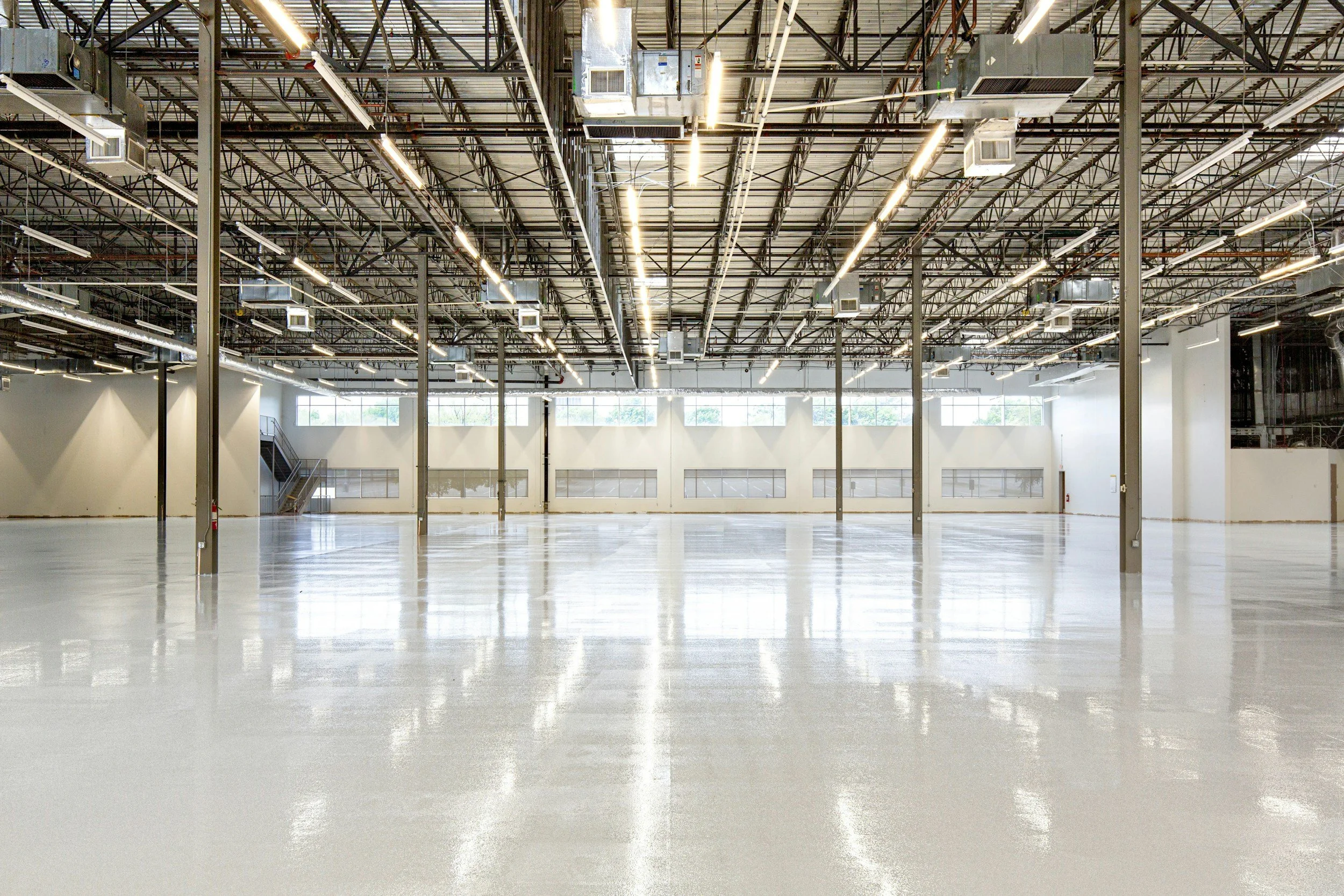
Industrial Lease Renewals
Portland industrial lease renewal strategy built around timing, leverage, and operational continuity—benchmarked against current comps and structured to protect total occupancy cost without disrupting the operation.
WHAT IS INDUSTRIAL LEASE RENEWAL ENGAGEMENT
An industrial lease renewal engagement means hiring a commercial real estate broker to represent your interests before your current lease expires — whether the goal is to stay in place, relocate the operation, or use the renewal as leverage to renegotiate economics and terms. The broker's job is to benchmark your current deal against the market, build a credible relocation alternative, and negotiate from a position of informed leverage rather than inertia.
Most industrial tenants treat renewals as a formality. The landlord sends a proposal 90 to 120 days before expiration, the tenant negotiates rate, and the lease gets extended. That approach consistently leaves money on the table — not just on base rent, but on escalations, NNN caps, TI contributions, expansion options, early termination rights, and restoration obligations that define total occupancy cost over the term.
A structured renewal process treats the lease expiration as a transaction. It starts 12 to 18 months before expiration with a full lease audit, creates competitive pressure through a parallel market search, and negotiates across every term that affects cost and operational flexibility — not just the rate.
In most Portland industrial leases, the landlord pays the brokerage commission on a renewal just as they would on a new lease. That means professional representation on a renewal typically costs the tenant nothing out of pocket while delivering materially better economics than negotiating directly with the landlord.
WHY IT MATTERS IN PORTLAND’S INDUSTRIAL MARKET
Portland's industrial market has been landlord-favorable for years, and that dynamic shows up most clearly at renewal time. Landlords know that industrial relocations are expensive and operationally disruptive — racking systems, equipment installations, power configurations, permitting, and proximity to workforce, supply chain, or customers all create switching costs that office tenants don't face. That knowledge gives landlords confidence to push aggressive renewal terms, because they expect the tenant to stay regardless.
The tenants who get the worst renewal deals are the ones who negotiate without alternatives. If you don't know what's available in your submarket — what competing buildings offer, what lease rates they're achieving, and what concessions landlords are offering to attract new tenants — you're negotiating blind. And if the landlord knows you haven't looked at alternatives, they have zero incentive to sharpen their offer. Without representation, you're negotiating against landlords and their brokers who know exactly how far terms can stretch and exactly how much switching cost you'd absorb to relocate. A structured renewal process levels that playing field by starting early, building competitive pressure, and negotiating with market data instead of assumptions.
HOW AN INDUSTRIAL LEASE RENEWAL WORKS
The renewal process follows a structured sequence designed to maximize leverage and protect total occupancy cost. Every engagement is different, but the core framework applies whether the lease is a 5,000 SF flex bay or a 100,000 SF distribution facility.
Step 1 — Lease Audit. The current lease is reviewed in full — not just rate and expiration, but every term that affects cost and flexibility: escalation structure, NNN caps and reconciliation history, renewal option language, restoration obligations, assignment and sublease rights, expansion and contraction options, HVAC and roof maintenance responsibilities, and any exclusivity or use restrictions. This audit identifies what's working, what's costing you, and what needs to change.
Step 2 — Market Benchmarking. Current lease economics are benchmarked against comparable industrial leases in the submarket — recent deals, current asking rates, concession packages, and vacancy trends. This establishes the data foundation for every negotiation point: is your rate above market, at market, or below? What are landlords offering new tenants right now that they're not offering renewals?
Step 3 — Competitive Search. Even if staying makes the most sense, the process includes a parallel market search for competing industrial availabilities that match operational requirements — clear height, loading configuration, power, yard, column spacing, floor capacity, and geographic constraints. The search produces a credible relocation alternative that creates real competitive pressure in the renewal negotiation.
Step 4 — Renewal Negotiation. With the lease audit complete and market alternatives identified, the negotiation addresses every term that affects total occupancy cost — base rent, escalation structure, NNN expense caps, tenant improvement allowances, free rent, HVAC and roof responsibilities, restoration obligations, expansion and contraction rights, and sublease flexibility. Competing proposals from alternative buildings are used as leverage.
Step 5 — Term Sheet and LOI. A term sheet or letter of intent is drafted to lock in economics and key business terms before the lease amendment stage. This document captures everything negotiated — rate, term, concessions, and structural protections — so nothing gets lost or renegotiated during legal review.
Step 6 — Lease Amendment and Execution. The lease amendment is reviewed against the agreed terms, with attention to escalation language, NNN reconciliation procedures, restoration scope, holdover provisions, and any operational protections. The broker coordinates with the tenant's legal counsel through execution.
COST AND DEAL ECONOMICS
Cost Overview
In the Portland industrial market, tenant representation on a lease renewal is commission-based and paid by the landlord as part of the transaction. The tenant does not pay a separate fee for representation in most standard renewal engagements. The value of representation shows up in the economics of the deal itself. Most industrial tenants treat renewals as a formality — the landlord sends a proposal 90 to 120 days before expiration, the tenant pushes back on rate, and the lease gets extended. That approach consistently leaves money on the table. Landlords price initial renewal proposals above market with the expectation of some pushback, but not structured pushback backed by competing alternatives and lease comp data. Industrial tenants who negotiate renewals without representation or market data consistently sign deals that are 10 to 25 percent above where the market would have allowed them to land.
Total Occupancy Cost
Base rent is the most visible number, but it's rarely the most important one. In a triple-net industrial lease, NNN expenses — property taxes, insurance, and CAM charges — can add $2.00 to $5.00 per square foot or more depending on the property. Escalation structures compound over the term. Restoration obligations can represent $3.00 to $8.00 per square foot in liability at lease end depending on tenant improvements and use-specific modifications. A renewal negotiation that only focuses on base rate and ignores NNN caps, escalation schedules, TI contributions, and restoration terms is leaving the most impactful dollars on the table. On a 20,000 SF industrial lease over five years, the difference between a passively renewed deal and a properly negotiated one can be $100,000 to $300,000 in total occupancy cost.
Why Work with a Renewal Broker
A tenant's broker on a renewal works exclusively for the tenant — not the landlord, not the building. That alignment matters when evaluating whether the landlord's "best and final" is actually final, whether a competing option is worth the disruption of a move, or whether to push harder on concessions. The broker provides market intelligence — comp data, competing availabilities, landlord motivations, and submarket dynamics — so the decision is made on information, not pressure, habit, or deadline anxiety. For most industrial leases in Portland, the landlord pays the tenant rep's commission on a renewal as part of the deal — meaning the tenant gets independent representation at no direct cost.
WHAT’S YOUR PROPERTY WORTH?
Whether you're benchmarking against recent warehouse and distribution sales, evaluating a hold-vs-sell decision, or preparing for a refinance conversation, a broker opinion of value gives you a clear, comp-based pricing range for your Airport Way or Columbia Corridor industrial property. I'll deliver a 50–80+ page report covering comparable sales, lease comps, vacancy analytics, and a pricing summary with conservative, probable, and optimistic values — at no cost and no obligation.
ARE YOU PAYING THE RIGHT LEASE RATE?
Whether you're negotiating a new warehouse lease, approaching a renewal in the Columbia Corridor, or evaluating whether your current rate reflects today's market, a lease rate analysis gives you the data to negotiate from a position of strength. I'll pull recent lease comps, concession packages, and vacancy trends for Airport Way and Columbia Corridor industrial space — so you know exactly what tenants like you are paying and where there's room to negotiate.
RELATED

GET IN TOUCH
Contact Matt Lyman at Norris & Stevens about your upcoming industrial lease renewal in Portland — whether you're evaluating your options, benchmarking your current rate, or preparing to negotiate.
Share your current building address, approximate square footage, lease expiration date, and any concerns about your current space — and Matt will follow up with renewal comps, a stay-vs.-move analysis framework, and a recommended negotiation timeline.
Coverage spans the full Portland metro industrial market — Airport Way/Columbia Corridor, Swan Island/Rivergate, Central Eastside, Clackamas/Outer SE, Hillsboro/Sunset Corridor, Tualatin/Sherwood, NW Portland, Gresham, 217 Corridor, and Vancouver, WA.