
Creative Flex Space in Central Eastside Portland: Why Makers Are the New Anchors
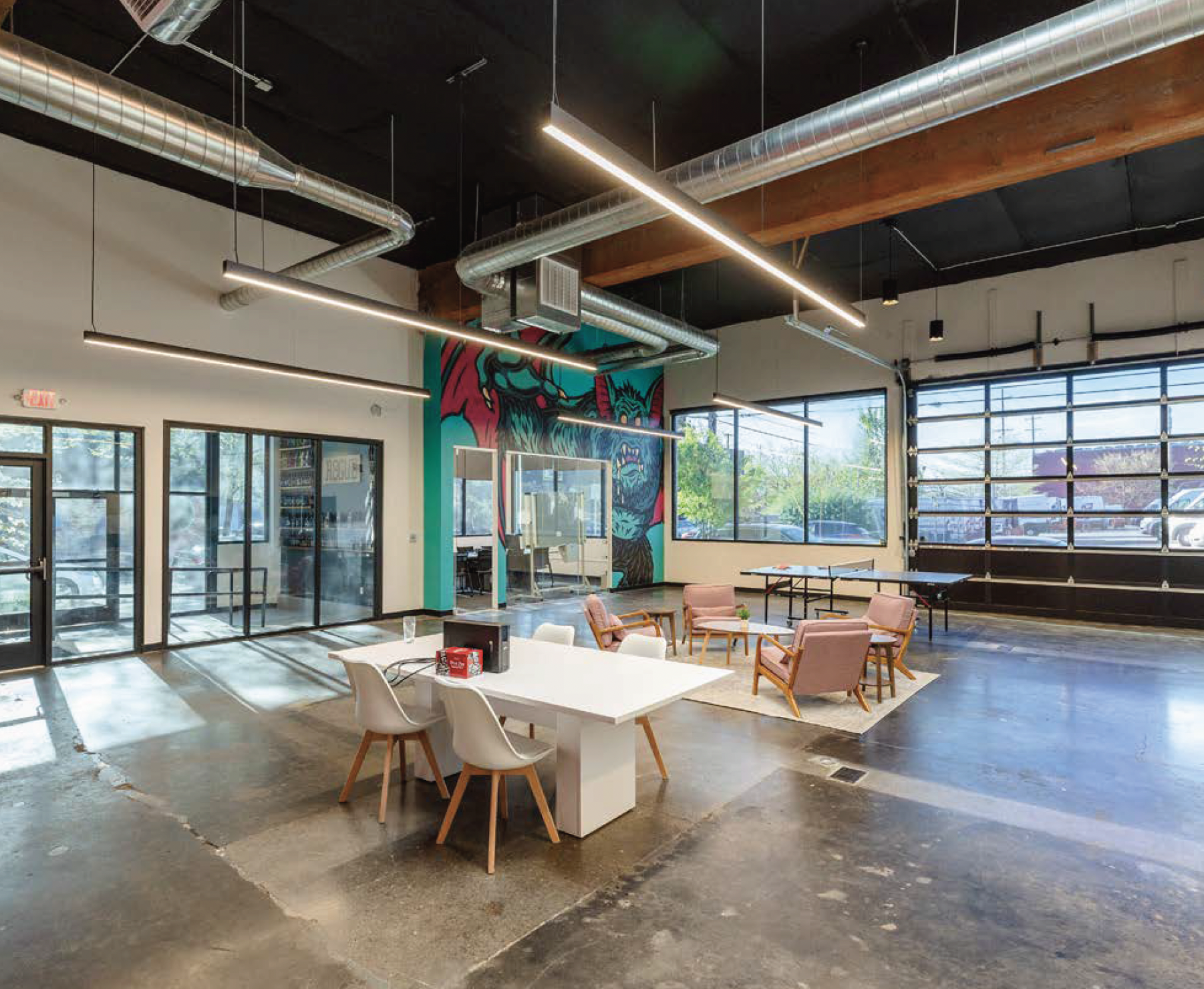
The Central Eastside Industrial District has shifted. Where industrial warehouses once dominated, you now find maker studios, artist collectives, light manufacturing operations, and creative companies sharing the same buildings. This isn't a side effect of gentrification—it's a fundamental change in how real estate economics work in Portland's industrial core. Creative flex tenants are no longer afterthoughts filling empty space. They've become anchor tenants driving leasing demand and justifying investment in adaptive reuse projects.
Understanding this shift matters if you're a landlord evaluating what to do with industrial space, a business owner searching for affordable creative workspace, or an investor tracking where Portland's commercial real estate is moving. The numbers are clear, and the opportunity window isn't infinite.
FAQs
Q: What exactly is creative flex space?
A: Creative flex space is industrial or adaptive reuse real estate designed to accommodate multiple uses simultaneously: art studios, small manufacturing, light assembly, flexible office, and service-based operations. Unlike traditional office, it features high ceilings, flexible floor plates, industrial finishes, and utility infrastructure that supports both creative and light-industrial work. The Central Eastside has become Portland's primary market for this product type.
Q: Why has demand for creative flex space exploded in Portland?
A: Three factors: First, rising office rents have made traditional commercial space unaffordable for small creative businesses. Second, remote work has reduced demand for centralized office space, leaving inventory available for repurposing. Third, the Central Eastside's walkability to restaurants, breweries, and retail, combined with its authentic industrial character, has made it desirable for companies that need space but also want cultural vibrancy.
Q: How much is creative flex space renting for in Portland right now?
A: The Portland flex space market averages $17 per square foot annually. Average lease sizes are 10,185 square feet. These rents are significantly lower than traditional office—typically 30-40% cheaper—which explains why creative tenants have moved from scattered locations to concentrated clusters in the Central Eastside.
Q: What's the difference between creative flex space and traditional light industrial?
A: Light industrial typically serves a single tenant or function. Creative flex space is designed for mixed-use occupancy with divisible floor plates, enhanced aesthetics, and tenant-friendly economics. The distinction matters: flex space attracts mission-driven companies willing to share walls with creative neighbors. Traditional industrial tenants often require exclusive occupancy or specific operational requirements that don't align with shared environments.
The Central Eastside Has Become Portland's Creative Flex Hub
The Central Eastside Industrial District, located east of the Willamette River and accessible from the Hawthorne and Burnside bridges, has emerged as Portland's primary market for creative flex space. This wasn't accidental. The district's combination of industrial zoning, authentic warehouse stock, and walkable urban context created the conditions for this shift.
The statistics confirm it. Creative office now accounts for 9.66% of all Portland office listings. Within the Central Eastside specifically, flex space represents the fastest-growing segment of new leasing activity. Properties designed or converted to accommodate multiple creative tenants consistently achieve higher occupancy rates and faster leasing timelines than single-tenant industrial buildings in the same market.
Consider the product that's being built. The FLEX Building delivers 19,000 square feet of space with a divisible 200-by-95-foot open floor plate that can be separated into eight distinct bays. Each bay operates independently, with its own entrance and utilities, while the building functions as a community for makers, artists, and light manufacturers. This design—both programmatically and economically—wouldn't exist if there weren't demonstrated demand.
The Waterman Building, a sustainably renovated property, demonstrates another approach. With 13-foot ceilings, polished concrete floors, and adaptive reuse construction, it signals to the market that Central Eastside landlords aren't just offering cheap warehouse space. They're offering designed space that appeals to businesses that care about environment and brand.
The Mt. Whitney Building—11,711 square feet of adaptive reuse with four industrial kitchens—shows how specific flex configurations serve hyperlocal demand. Food production, commercial bakeries, and beverage companies need industrial kitchens. Rather than force them into generic office space or oversized single-tenant industrial buildings, the market has created a flex product tailored to their needs.
Why Makers and Light Industrial Tenants Are Now Anchor Tenants
Anchor tenants have historically meant household names or credit-strong corporate entities that justify the economics of a building. In the Central Eastside, the anchor tenant profile has changed. Now, a successful creative flex building might be anchored by five or six medium-strength creative tenants rather than one large single-tenant user.
This shift happens because of economics. Traditional industrial buildings face occupancy challenges when their tenant base shrinks or relocates. Single-tenant buildings are particularly vulnerable: if the anchor vacates, the building often sits largely empty while the landlord seeks replacement. Multi-tenant flex buildings distribute risk. Losing one tenant of 2,000 square feet affects occupancy differently than losing a single tenant occupying 30,000 square feet.
Creative tenants also demonstrate lower churn than traditional corporate office. Artists, makers, and light manufacturers often occupy space long-term. They invest in buildouts, create community with other tenants, and develop roots in the neighborhood. They're not chasing cheaper rents to the suburbs or downsizing because of economic pressure. Their leases tend to hold.
The neighborhood character matters too. Makers and creative companies attract foot traffic, create authentic mixed-use vitality, and align with the Central Eastside's existing cultural brand. They're not incompatible with industrial users—they're complementary. A building housing both a small fabrication shop and a design studio creates the kind of creative industrial ecosystem that's harder to replicate through single-tenant development.
From an investment perspective, this translates to lower vacancy risk, longer average lease terms, and reduced capital expenditure for re-leasing between tenants. The math works.
The Flex Space Market Size in Portland
Portland's flex space market includes 62 active listings, representing approximately 625,000 square feet of available space. That's substantial, but context matters. NW Flex Space alone operates 500,000 square feet across four campuses, demonstrating that a single landlord focus on this product type can achieve significant scale.
The Central Eastside represents roughly 40% of Portland's flex inventory, with an average listing size of 10,185 square feet. This means you're looking at roughly 250,000 square feet of flex space concentrated in one industrial district, leasing at an average of $17 per square foot.
At those numbers, a 20,000-square-foot flex building generating 90% occupancy at $17/SF produces approximately $306,000 in annual base rent. After operating expenses and debt service, the returns depend on acquisition price and capital structure. But the through-cycle leasing and occupancy data show that creative flex space outperforms traditional single-tenant industrial from a risk-adjusted returns perspective.
Why Walkability Matters for Creative Flex Tenants
The Central Eastside isn't isolated from Portland's urban neighborhoods. Burnside, Hawthorne, and the Mississippi Avenue corridor are immediately adjacent. Within a short walk, tenants access restaurants, breweries, retail, and cultural venues. For creative businesses—particularly those whose team works hybrid or whose culture depends on community—this matters significantly.
A maker studio in a suburban industrial park is affordable but isolating. The same space in the Central Eastside, where employees can walk to lunch or grab coffee between studio sessions, serves a different purpose. It attracts talent, increases retention, and creates the kind of cross-pollination that generates creative work.
This extends to tenant recruitment and business development. Landlords marketing creative flex space in the Central Eastside have a much easier story to tell than properties in outlying industrial areas. The neighborhood sells itself.
Adaptability and the Case for Flex Over Single-Tenant Industrial
Single-tenant industrial buildings offer certainty for one user. They allow the tenant to control the entire environment, dictate build specifications, and operate without neighbors. But they create outsized risk for the landlord. When that tenant departs, the landlord faces an extended vacancy, potential capital expenditure to prepare for a replacement user, and the possibility that the next tenant has different space requirements entirely.
Flex buildings distribute that risk. The economic model doesn't depend on one tenant staying forever. It assumes normal churn, where departing tenants are replaced by others from an active pipeline of comparable users. The more flexible the floor plate and the more clearly the product aligns with actual market demand, the shorter typical vacancy windows become.
For tenants, the calculus differs. Flex space offers affordability and short-term commitment relative to traditional industrial. Tenants can test markets, grow incrementally, and avoid the capital expenditure of a long-term lease build-out.
For further reading on how to evaluate different lease structures, consider reviewing how to compare commercial lease proposals in Portland, which covers the economic tradeoffs between lease types.
Light Industrial Operations in Mixed-Use Environments
Not all creative flex space is artist studios. The Central Eastside flex market includes light manufacturing, assembly operations, food production, and service-based businesses that need industrial facilities but operate at a scale and intensity compatible with shared occupancy.
A furniture maker, screen printing studio, woodworking shop, or assembly operation can thrive in a flex environment if the building is designed with sound insulation, dedicated utilities, and appropriate zoning. The FLEX Building's multi-bay design specifically accommodates this—each bay can be configured for different operational requirements.
The distinction matters for landlords. If you own industrial property and are considering conversion to flex, you need to understand what light industrial operations want versus what pure creative tenants require. The overlap is significant but not complete.
The Investment and Development Case for Central Eastside Flex Properties
For developers and investors, the Central Eastside flex opportunity presents a specific thesis: The district has become Portland's proven market for mixed-use creative and light industrial space. Demand exceeds supply. Rents, while lower than traditional office, support the economics of adaptive reuse projects. Risk is lower than single-tenant industrial because occupancy depends on a diversified tenant base rather than one user.
The rental upside, while real, isn't dramatic. Growing from $17 to $20 per square foot represents significant rent growth in this market segment. But the path to consistent occupancy is more straightforward than in traditional industrial, and the social capital that comes with supporting Portland's maker ecosystem is real in this market.
If you're a landlord evaluating how to reposition industrial space, the creative flex model offers a clearer path to stabilization than holding for a single-tenant industrial user that may never materialize.
Tenant Representation and Flex Space Decisions
For businesses considering a move to creative flex space, the leasing decision involves different variables than traditional office or industrial. You're evaluating not just the space, rent, and lease terms, but also the community of tenants, the neighborhood's evolution, and whether a shorter-term lease with growth options aligns with your business trajectory.
Tenant representation services help you model these decisions—comparing the economics of flex space against traditional alternatives, understanding what a $17/SF rent truly costs over time, and identifying whether the neighborhood trajectory supports your long-term location strategy.
Related resources on lease economics include understanding the difference between NNN and full-service leases in Portland and when a sublease makes more sense than a direct lease.
The Tenant Improvement Economics of Flex Conversion
Converting industrial or underutilized commercial space into creative flex requires capital. Ceilings may need acoustic treatment, electrical systems require upgrade, and finishes need to appeal to a broader tenant base than a single industrial user would require.
The good news: Flex conversions typically require less capital than office buildouts. Polished concrete floors, exposed structure, and industrial aesthetics reduce finish costs. The bad news: You still need to budget for systems, hazmat remediation, and code compliance.
Understanding tenant improvement allowances in Portland helps landlords budget these conversions and model when they pencil economically.
Where the Market Goes From Here
The Central Eastside's shift toward creative flex space represents a permanent reordering of the district's real estate profile. The market has spoken: Makers, artists, light manufacturers, and creative companies represent stable, creditworthy demand that can support development and investment.
That doesn't mean all industrial space converts to flex. Single-tenant industrial operations will continue, and there's significant market demand for them. But the high-growth segment is clearly flex, concentrated in the Central Eastside, populated by mission-driven operators who value community and walkability as much as affordable rent.
For landlords, developers, and tenants operating in Portland's commercial real estate market, this shift changes the decision framework. It's not about replacing what was there before. It's about recognizing that the actual, demonstrated demand in this market is for flexible, mixed-use creative space. Buildings built to that specification outperform alternatives. The data supports it, and the market continues to move in that direction.
If you're evaluating Central Eastside opportunities—whether as a landlord considering adaptive reuse, a developer looking for a market with clear demand signals, or a tenant searching for the right balance of affordability and community—the current market presents a relatively clear thesis. Creative flex space is the future of the Central Eastside, and that future is now.
Need clarity on your Central Eastside lease strategy? Our team specializes in Portland commercial real estate. Whether you're evaluating landlord representation or tenant representation, we help you model the economics and navigate the nuances. Explore our Central Eastside and inner Southeast portfolio.