
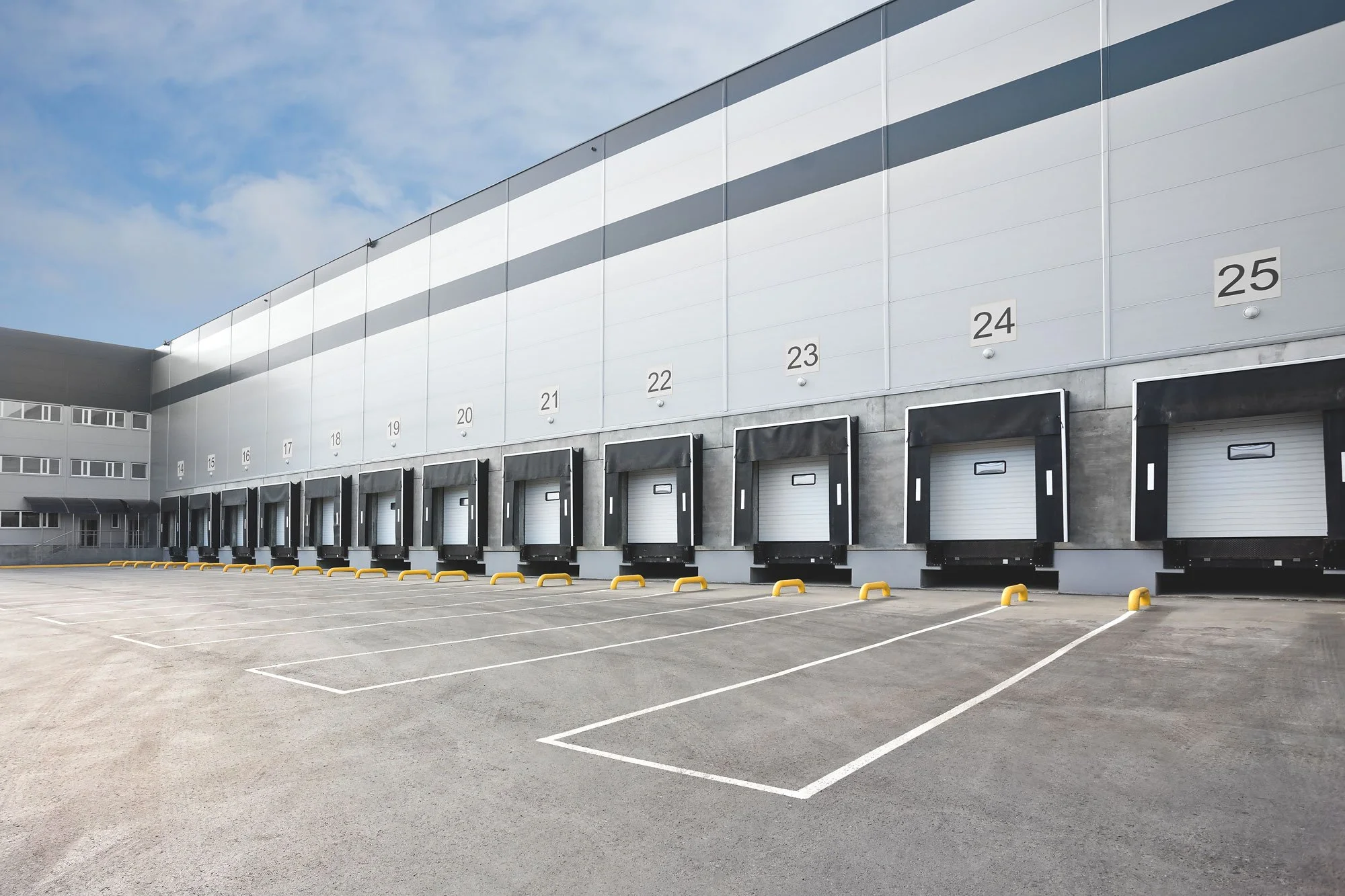
Portland Commercial Real Estate Submarkets
A practical guide to the Portland metro's commercial districts — what each market offers across office, industrial, retail, and flex, and how to choose.
SUBMARKETS
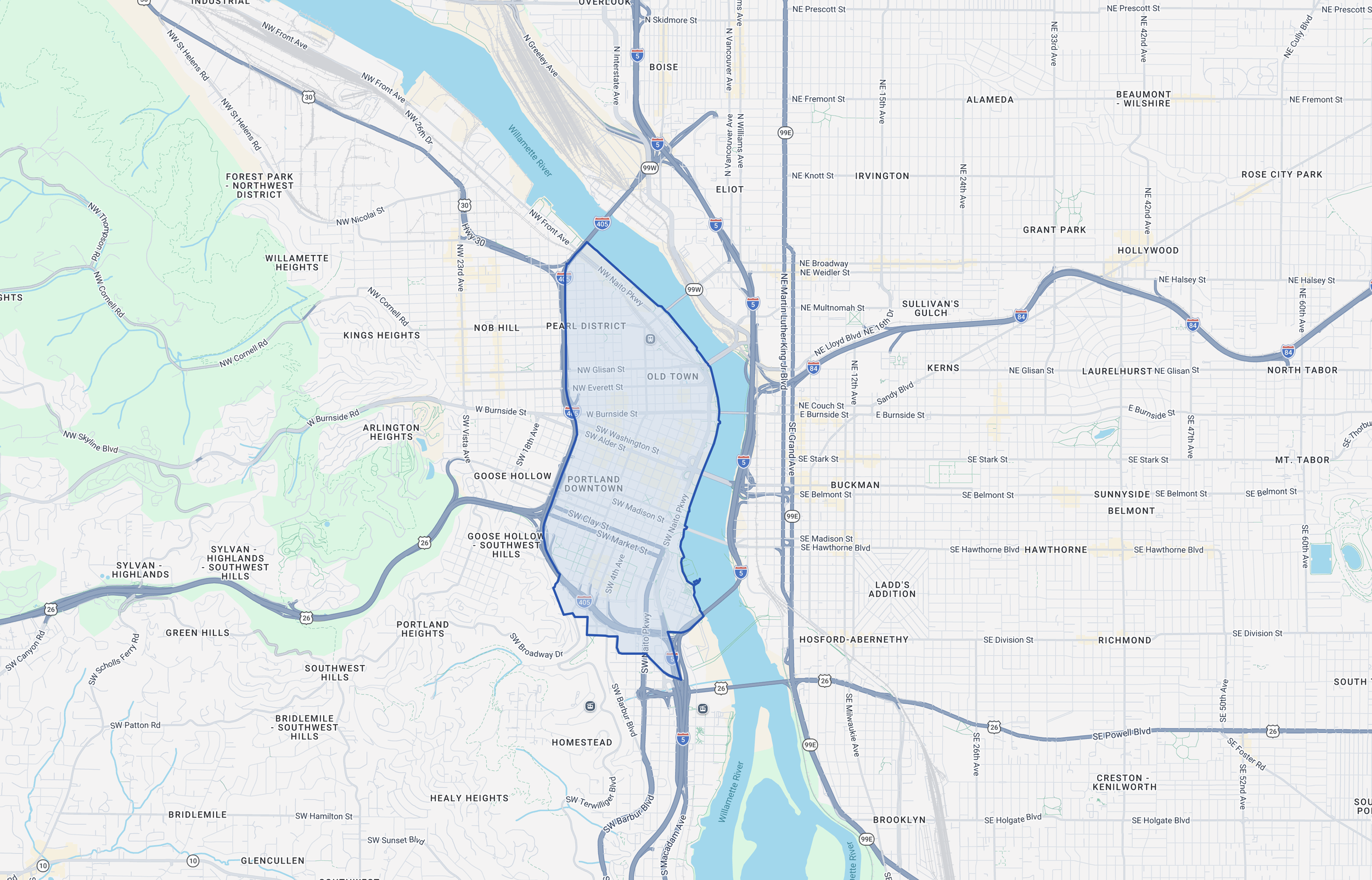
Downtown/CBD
Portland's largest and deepest office market with Class A and B towers concentrated along the transit mall. Building stock ranges from renovated historic product to institutional high-rises. Transit access is the strongest in the metro. Elevated vacancy has created meaningful tenant leverage on concessions, TI, and effective rent — but flight to quality means the best buildings still perform differently than commodity product. Retail is ground-floor and transit-corridor oriented with steady foot traffic. Limited industrial inventory.
Best for: Law, finance, accounting, government, and professional services firms prioritizing transit access, institutional presence, and central visibility. Retail tenants seeking high-traffic ground-floor space.
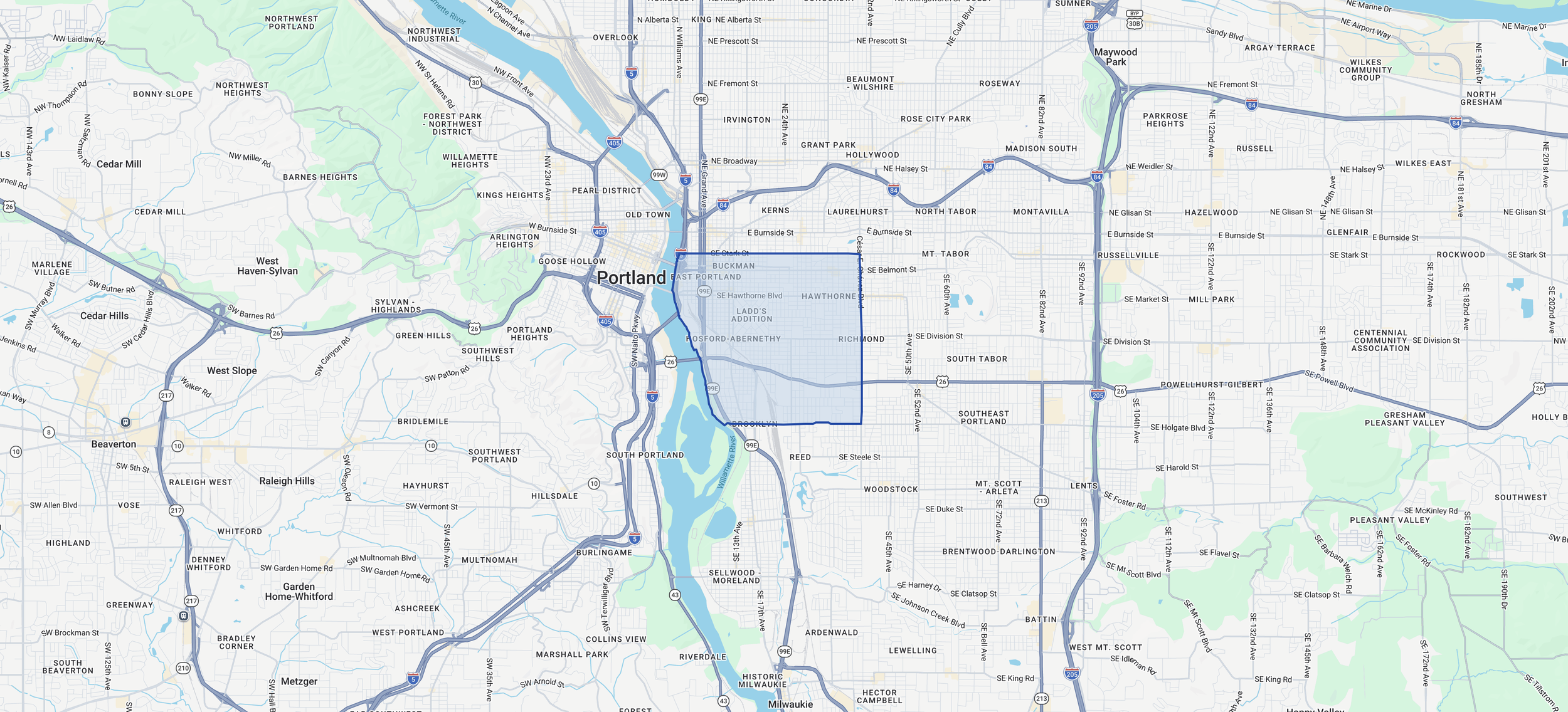
Central Eastside & Close-In SE
One of Portland's most dynamic mixed-use submarkets spanning office, industrial, retail, and flex. Office inventory includes converted warehouse space, creative product, and newer ground-up construction. Industrial ranges from legacy manufacturing and warehouse to flex/industrial with close-in access advantages. Retail and food/beverage tenants are active along the main corridors, benefiting from the district's growing density. Parking is constrained across all product types. Zoning and use can be complex — some buildings carry industrial overlay restrictions that affect permitted uses.
Best for: Office — tech, creative, startups, and firms valuing inner Portland proximity. Industrial — light production, showroom/flex, maker space, and service users needing close-in location. Retail — food and beverage, experiential retail, and neighborhood-serving businesses.
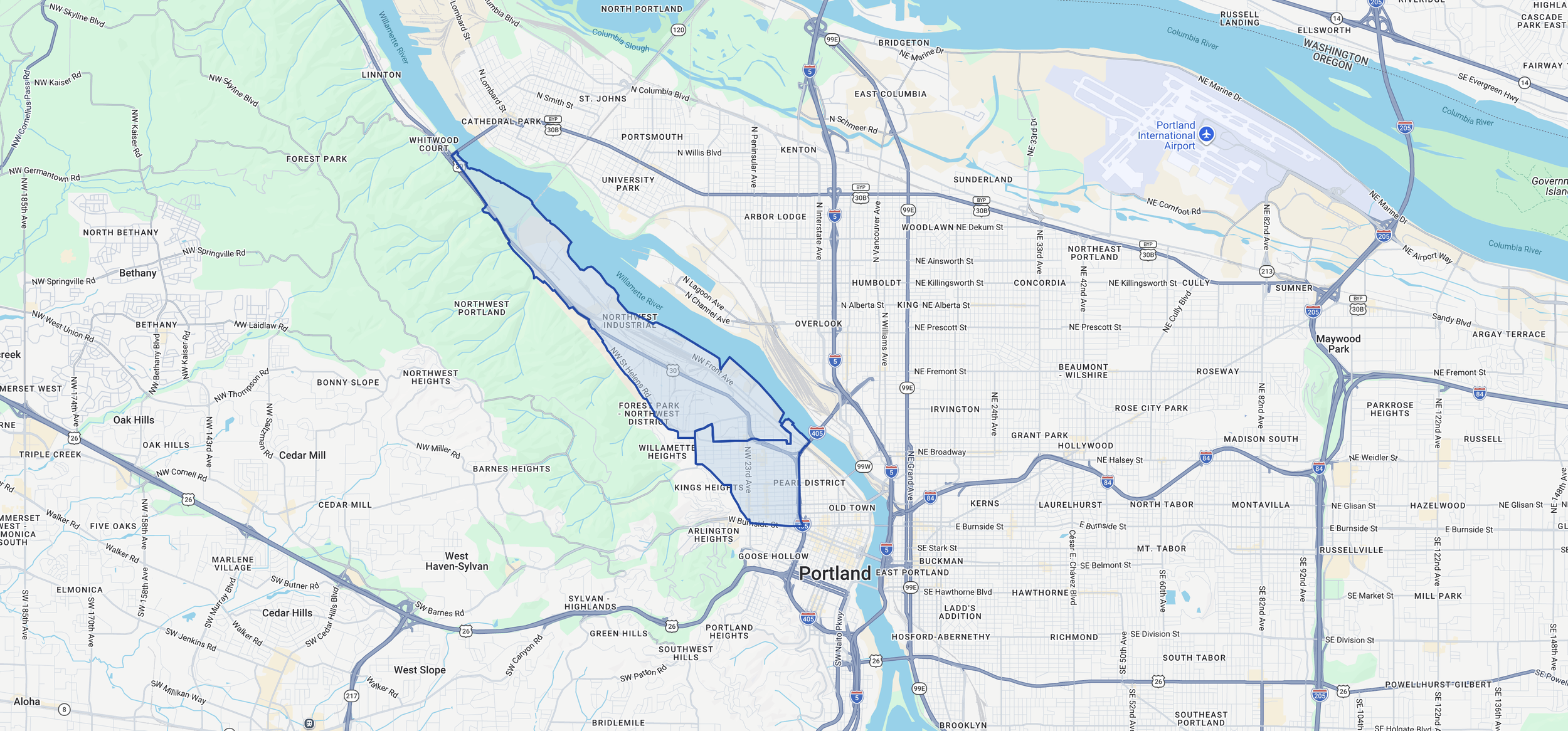
NW Close-In & Guilds Lake
Two distinct markets in close proximity. NW Close-In offers creative and tech-oriented office in converted warehouse and loft buildings mixed with newer construction — smaller floorplates, exposed structure, limited parking typically priced separately. Street-level retail is strong along NW 23rd and the Pearl District fringe with consistent neighborhood foot traffic. Guilds Lake is a core industrial pocket with strong Hwy 30 access and quick connectivity to Downtown and North Portland. Industrial product can be supply-constrained with tighter sites, so loading configuration and circulation need early verification.
Best for: Office — tech, creative, design, and marketing firms valuing neighborhood character and walkability. Industrial — service and manufacturing users who value close-in location over newer specs. Retail — neighborhood-serving businesses on NW 23rd and adjacent corridors.
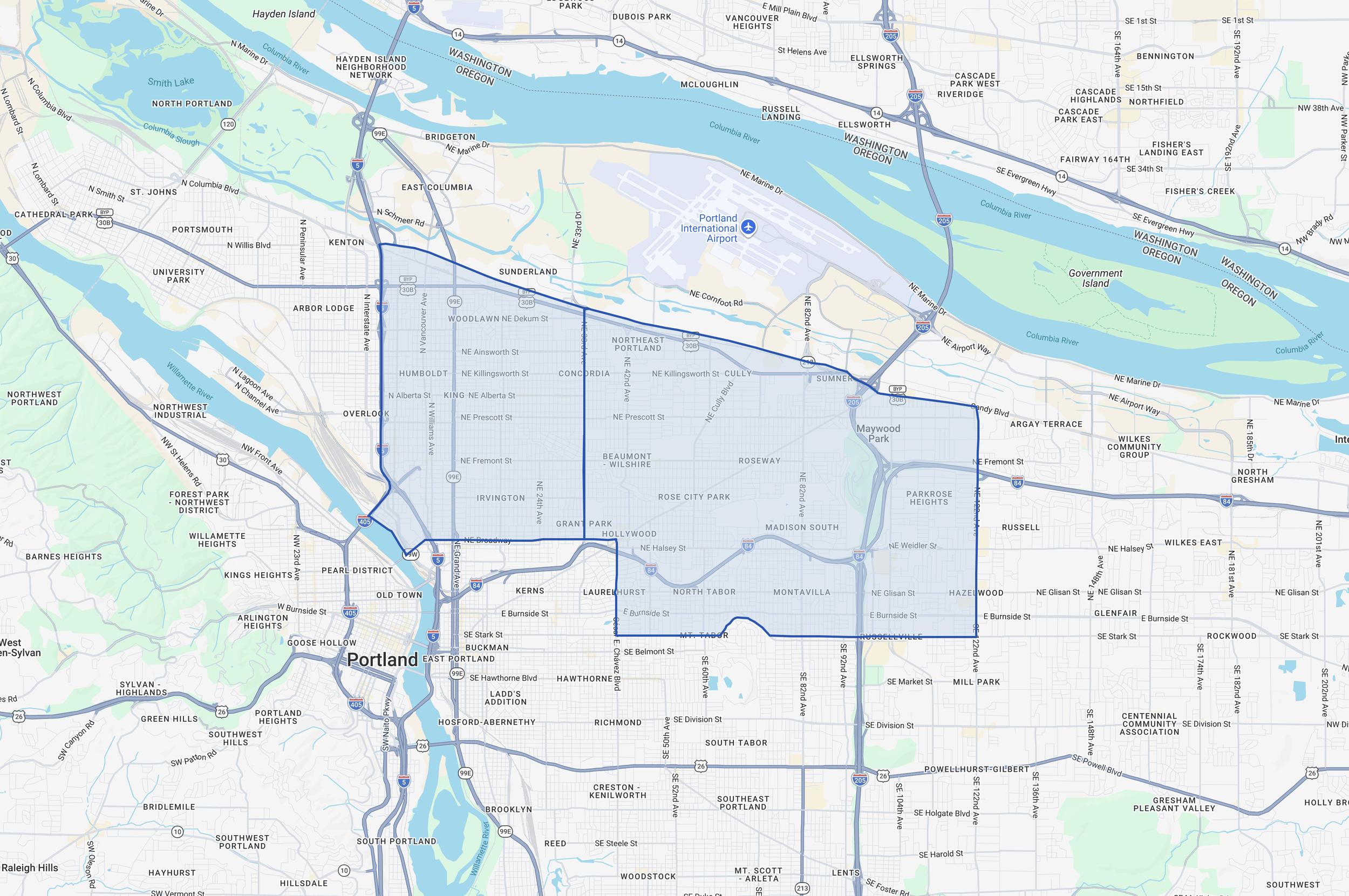
Gateway & NE Close-In
Diverse east-side pocket spanning close-in NE Portland through the Gateway and Mall 205 areas. Office inventory ranges from smaller neighborhood product in close-in NE to larger suburban-style buildings near the Gateway transit center and I-205 interchange. Flex and light industrial product in the outer areas serves contractor and service users. Retail options span strip retail, freestanding, and multi-tenant centers with strong vehicle traffic along 82nd and Halsey. Pricing generally runs below CBD and Lloyd with functional parking. Building quality varies widely — due diligence on systems and condition matters.
Best for: Medical, professional services, nonprofit, and tenants seeking east-side access with moderate pricing. Flex users needing I-84/I-205 connectivity. Retail tenants targeting east Portland's residential density.
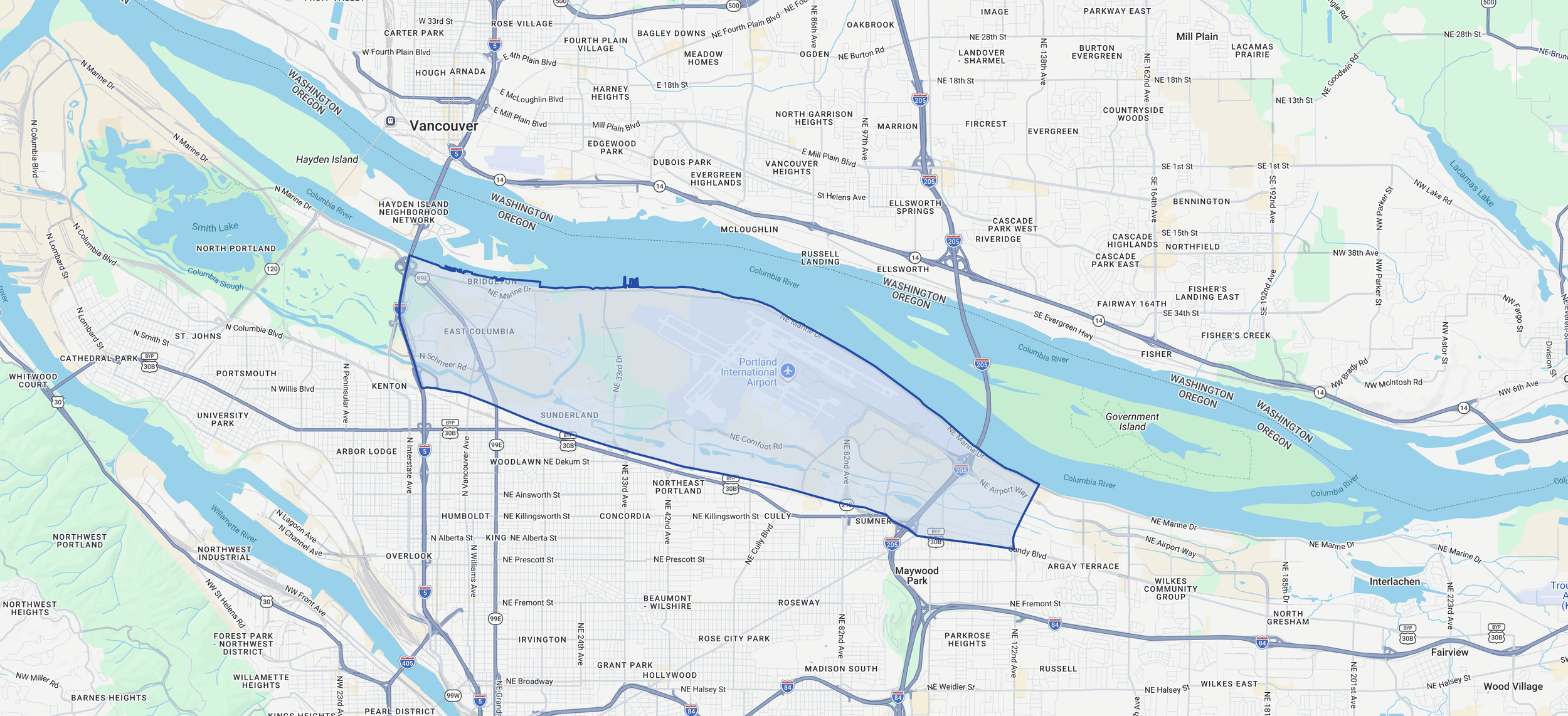
Airport Way & Columbia Corridor
One of Portland's most active industrial corridors, anchored by PDX access and strong I-84/I-205 connectivity. Inventory ranges from modern distribution facilities to functional warehouses and flex/industrial with wide variance in loading, yard, and power. The corridor handles a significant share of the metro's distribution and logistics activity. Flex product with higher office ratios serves users who need both warehouse and administrative space. Retail is limited and primarily service-oriented along Airport Way and Sandy Blvd.
Best for: Distribution/3PL, last-mile logistics, e-commerce fulfillment, and users prioritizing freeway and airport access. Flex tenants needing combined warehouse and office functionality.
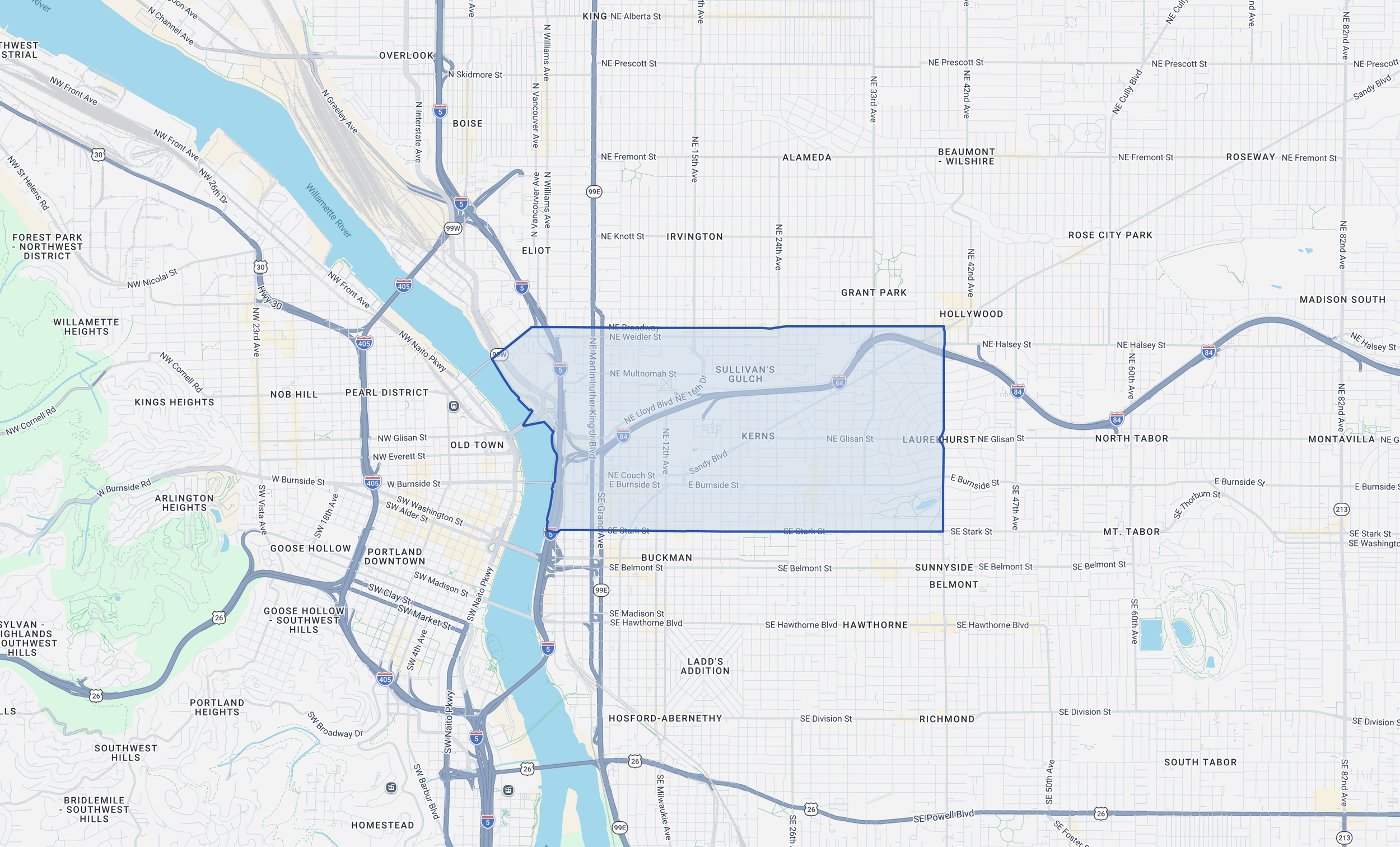
Lloyd District
East-side office market with larger institutional floorplates and proximity to I-84, the Convention Center, and MAX. Lloyd offers a price alternative to CBD with better parking ratios and reasonable transit access. The submarket has absorbed tenant migration from Downtown as companies seek value positioning without losing accessibility. Retail activity clusters around the Lloyd Center and Broadway corridors. Some flex space in older converted product along the district edges.
Best for: Mid-size to large professional services, healthcare administration, and tenants seeking CBD-adjacent economics with better parking. Retail and restaurant users near Lloyd Center and Convention Center traffic.
Johns Landing & SW Close-In
Mix of newer Class A construction along the South Waterfront (OHSU, aerial tram, streetcar access) and smaller-scale Class B product along Macadam and the Barbur/Capitol Hwy corridors. South Waterfront inventory is limited and skews toward healthcare and institutional tenants. Johns Landing and the broader SW corridor offer smaller lease sizes, moderate pricing, and a quieter environment. Retail is neighborhood-scale along Macadam and Barbur — smaller footprints serving the residential base. Parking and building condition vary significantly between properties.
Best for: Healthcare, biotech, and OHSU-affiliated firms on the waterfront side. Small professional firms, consultancies, and service businesses seeking close-in location and moderate pricing. Neighborhood retail along the SW corridors.
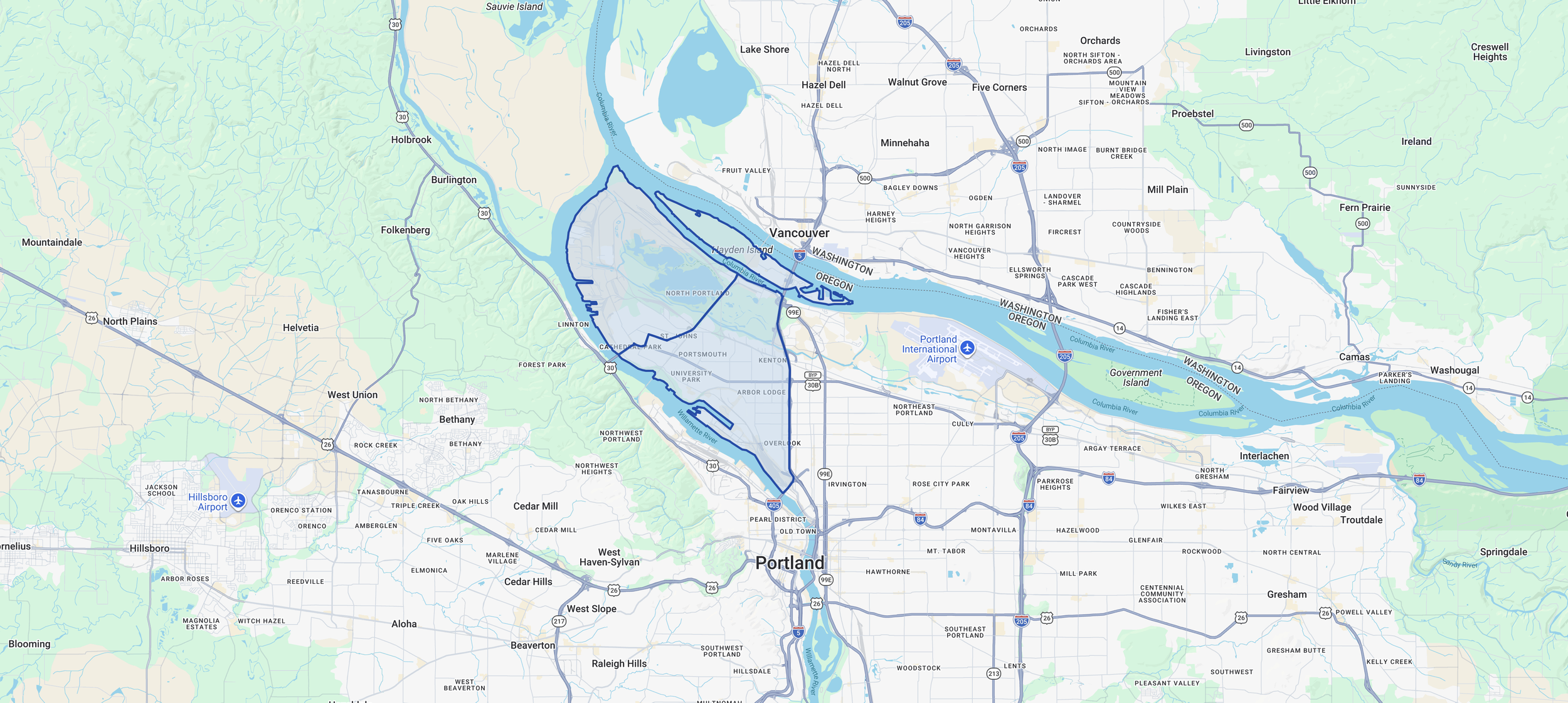
Swan Island & Rivergate
Close-in industrial near the river with a blend of established industrial users and functional building stock. Swan Island offers proximity to the central city with heavier industrial zoning and some flex product suitable for service and contractor operations. Rivergate serves port-adjacent and larger-footprint users with heavier industrial and distribution capability. Due diligence on loading, power, and site constraints is especially important given older inventory and tighter sites. Retail is minimal — the submarket is production and distribution oriented.
Best for: Manufacturing, service, marine-related, and industrial users prioritizing proximity to the central city and port facilities. Flex users needing yard access and heavier zoning.
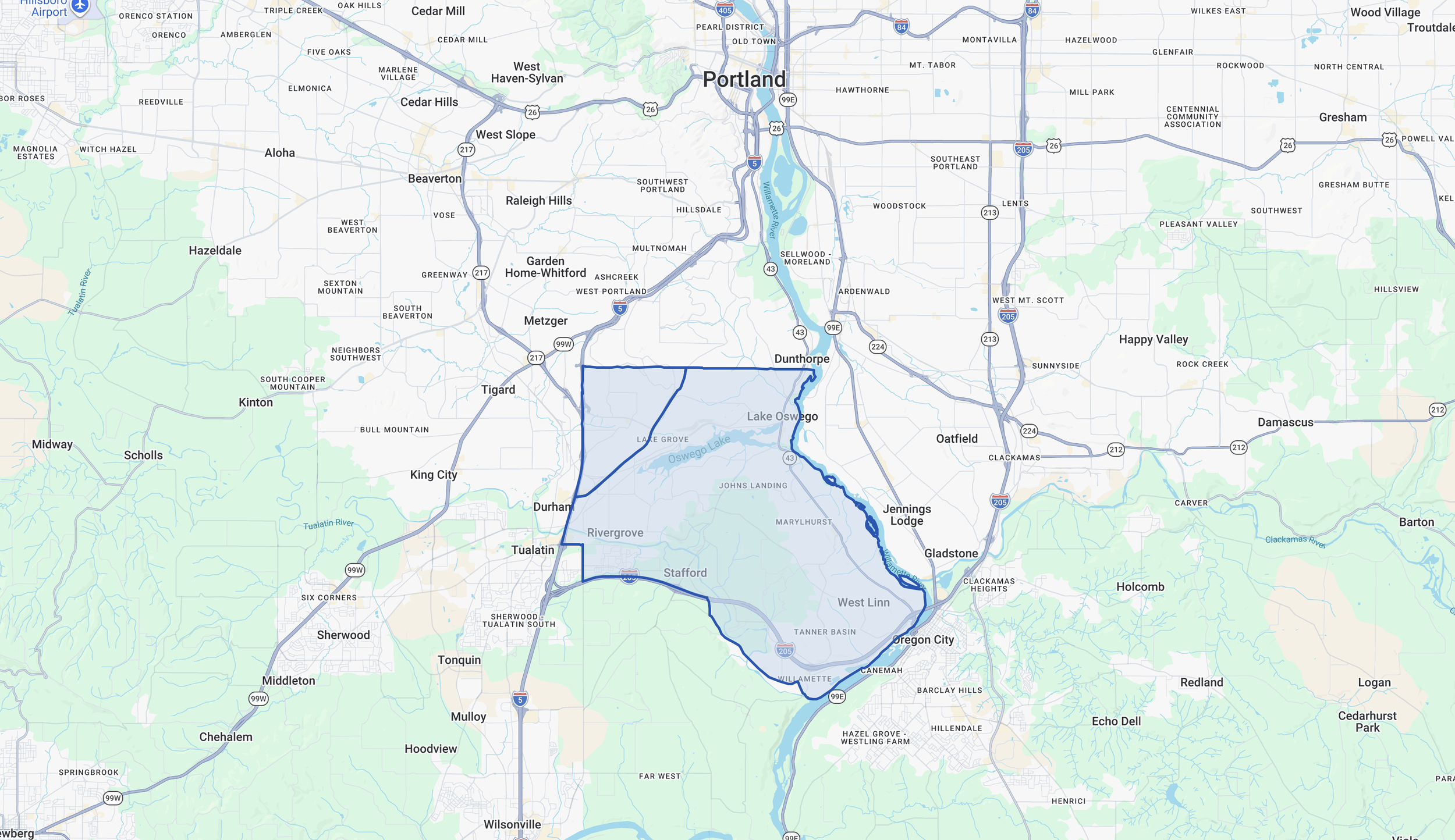
Lake Oswego & Kruse Way
Suburban Class A and B office corridor south of Portland concentrated along Kruse Way, Boones Ferry, and Meadows Road. Strong parking ratios, lower rates than CBD, and a professional tenant base weighted toward financial, legal, insurance, and medical users. Buildings tend to be lower density with parking typically included in rent. Retail is concentrated in Lake Oswego's downtown core and along Boones Ferry with an affluent consumer base. Minimal industrial inventory in this submarket.
Best for: Financial services, wealth management, insurance, legal, medical office, and professional firms prioritizing suburban access and lower occupancy costs. Retail tenants targeting Lake Oswego's high-income demographics.
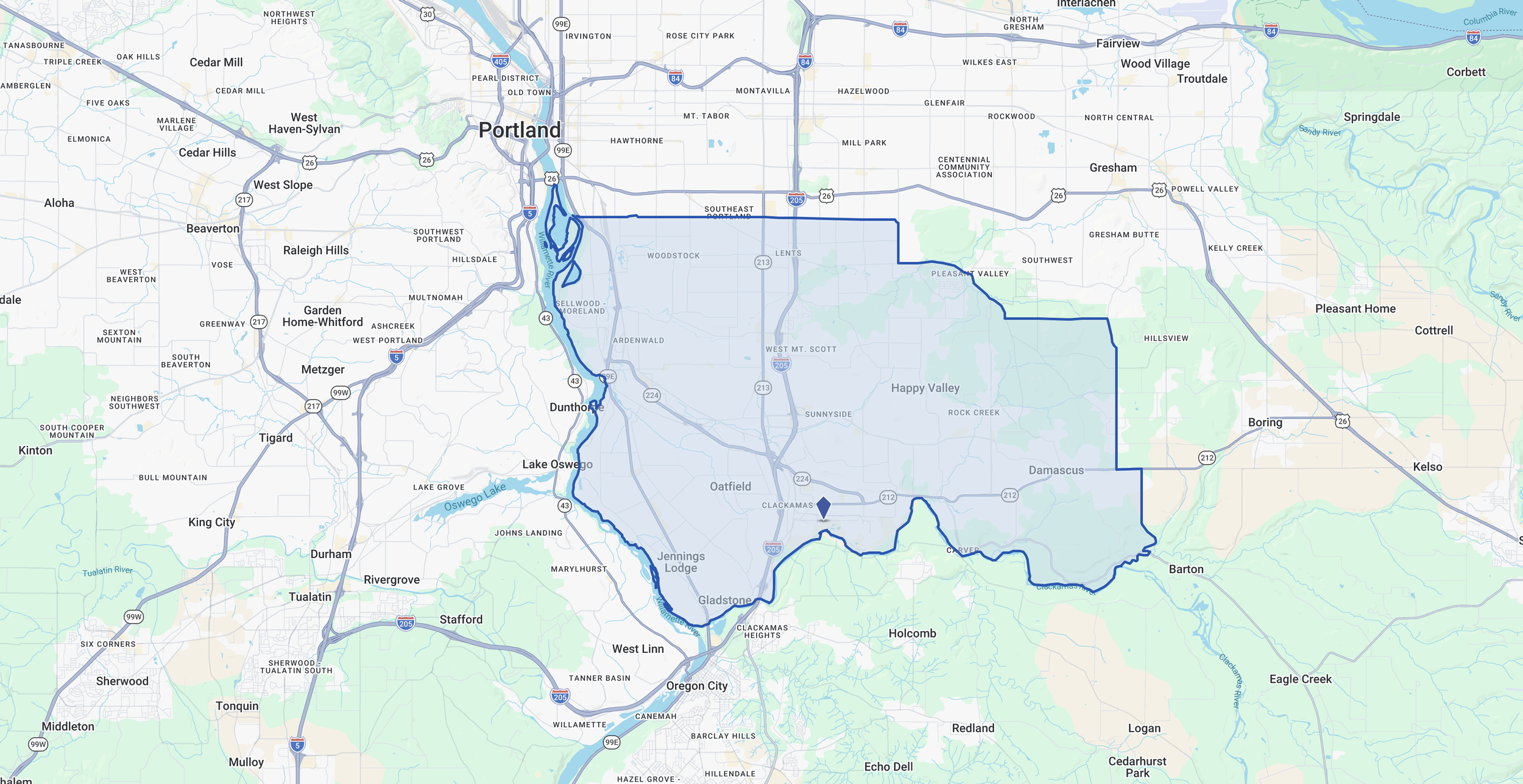
Clackamas & Milwaukie
Southeast metro market along the I-205 and 82nd/99E corridors with depth across office, industrial, retail, and flex. Office is a mix of Class B and C product with value-oriented pricing and strong parking ratios. Industrial offers a large, diverse corridor with a deep base of contractor/service and light industrial users. Retail is active along 82nd Ave, McLoughlin Blvd, and the Clackamas Town Center area with strong vehicle traffic. Building stock varies widely in age and quality across all product types — condition and systems due diligence is important.
Best for: Office — medical, insurance, professional services, government. Industrial — contractor/service, light industrial, and tenants optimizing function and commute patterns. Retail — service, medical, and value-oriented businesses along high-traffic SE metro corridors.
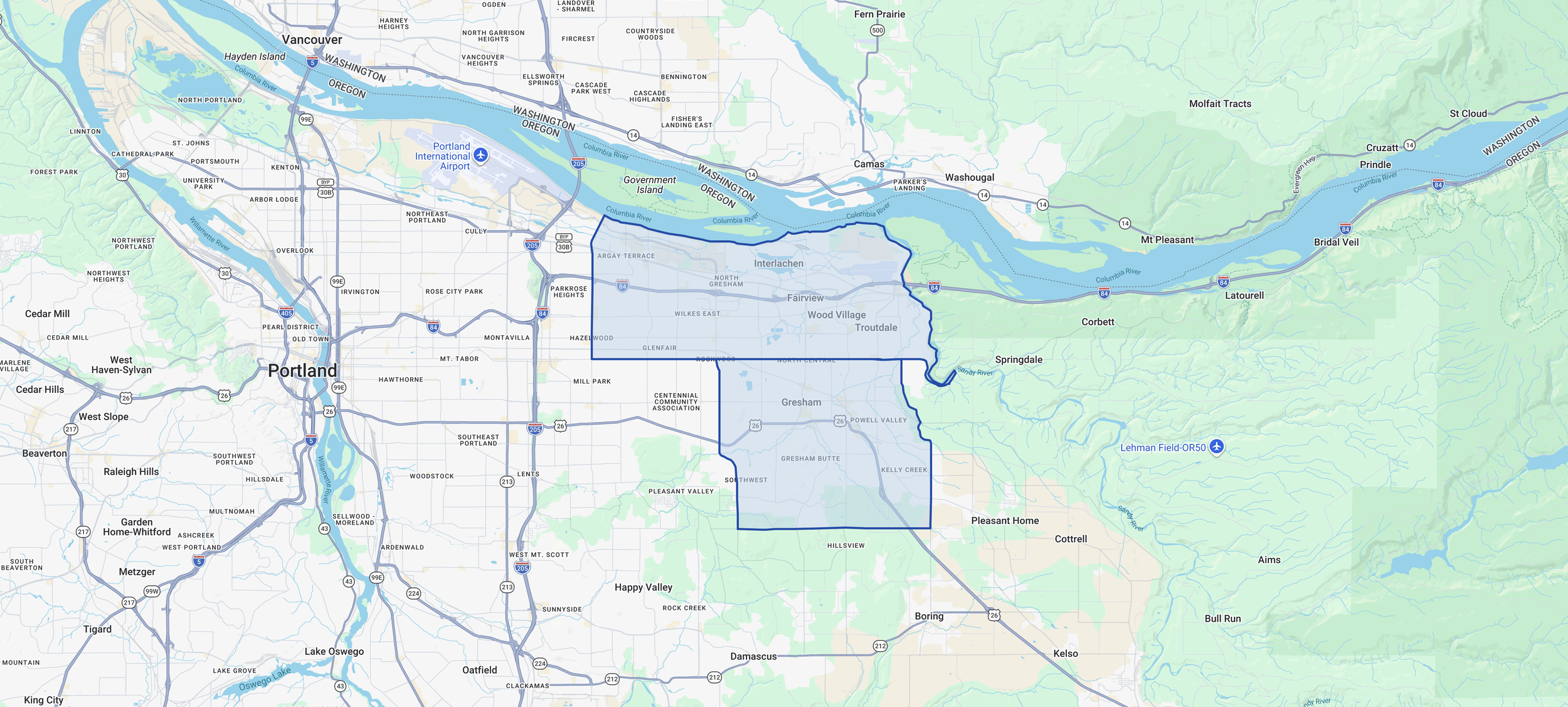
Gresham & East Columbia
East metro industrial inventory that often provides more space-for-the-money and larger sites relative to close-in corridors. Building stock includes newer distribution product along the I-84 corridor and older functional warehouse. Flex options with moderate office build-out serve users balancing warehouse and administrative needs. Some retail along the Burnside and Powell corridors serves the surrounding residential base. Last-mile delivery time and labor commute patterns should be weighed against rent and value advantages.
Best for: Users needing larger square footage, outdoor storage potential, or value positioning east of the I-205 interchange. Flex tenants seeking functional space at lower price points.
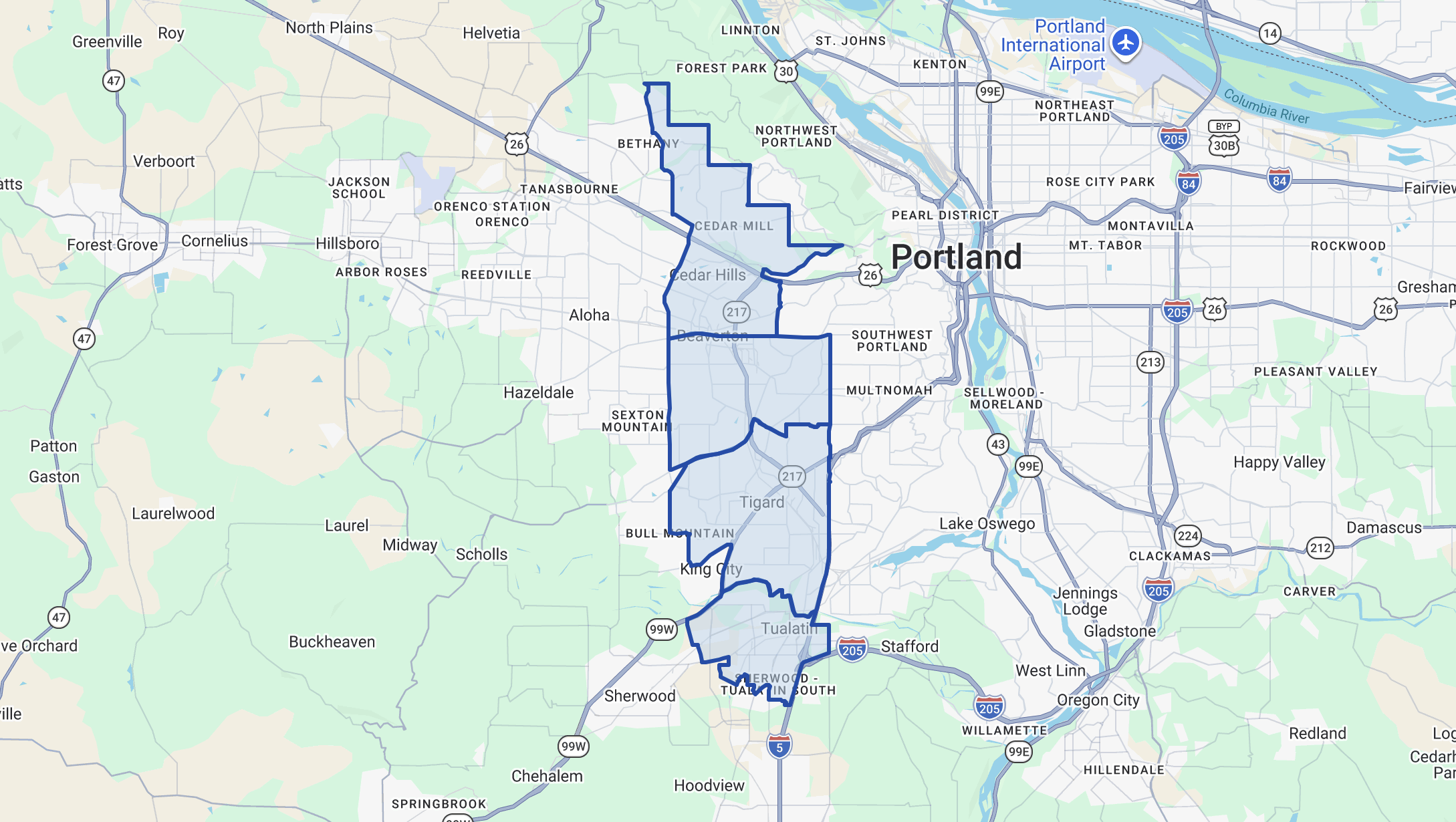
217 Corridor, Beaverton, Tigard
Large westside market with depth across office, industrial, flex, and retail. Office inventory spans Class B and C product in office parks along 217, with pricing generally below CBD and Kruse Way and strong parking. Industrial includes a broad base of flex and light industrial options shaped by 217/I-5 access. Retail is active along major arterials — Hall Blvd, Pacific Hwy, and Scholls Ferry — with strong vehicle counts and established commercial nodes. Options can move quickly across all product types.
Best for: Office — professional services, medical, engineering, insurance, and back-office users prioritizing westside access and value. Industrial — contractor/service fleets and flex users serving west metro customers. Retail — service, medical, and neighborhood businesses along high-traffic westside corridors.
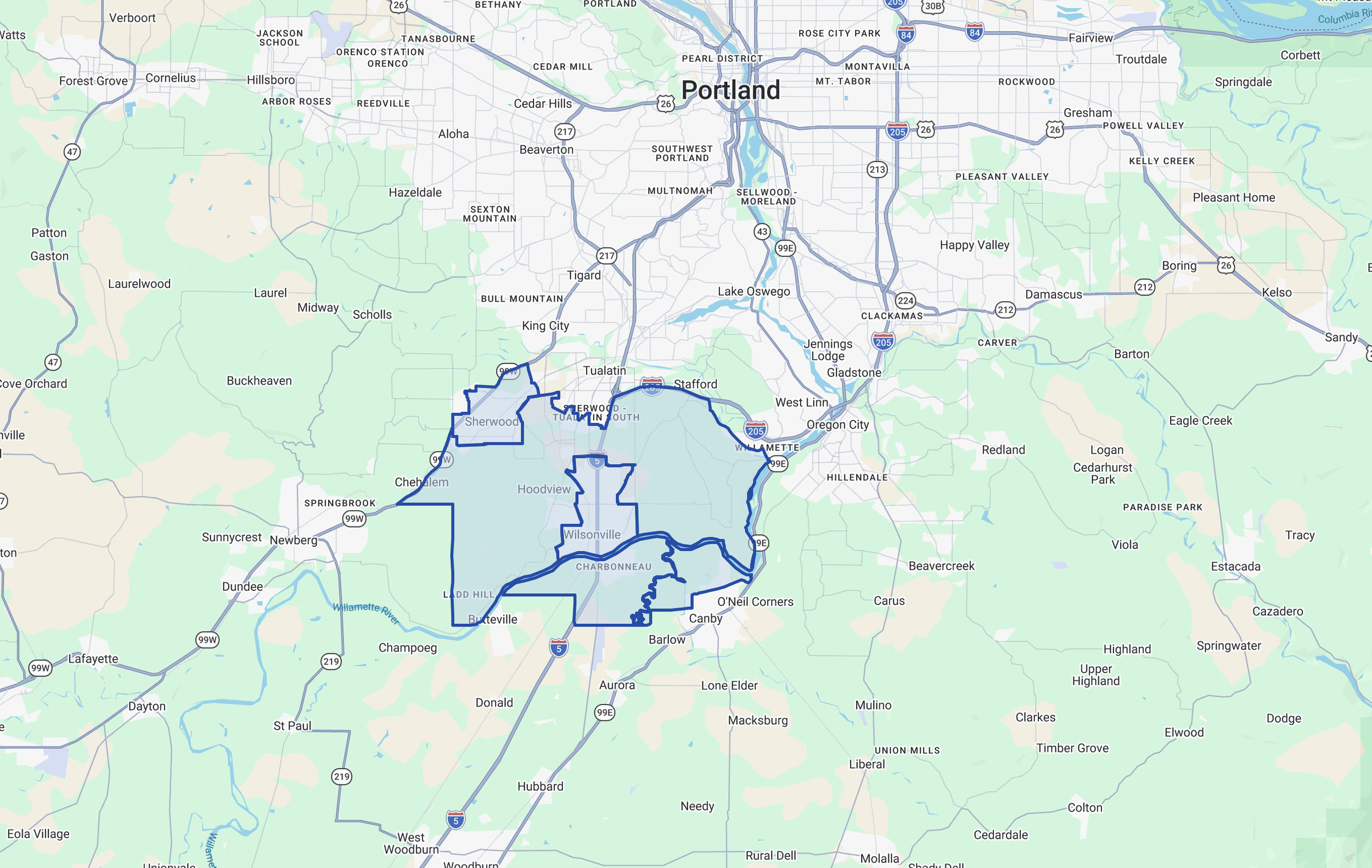
Tualatin, Wilsonville & Sherwood
South metro market along the I-5 and 99W corridors with depth across office, industrial, and flex. Office inventory is a mix of office park product and flex/office buildings, generally newer than close-in Portland options. Industrial includes newer distribution and business-park product, often with stronger site utility than closer-in options. Retail serves the local residential base along commercial corridors in each city center. Users commonly weigh I-5 access, labor commutes, and site functionality across all product types.
Best for: Professional services, engineering, medical, regional distribution, and industrial users with south metro or Salem-corridor geography. Retail tenants serving the growing south metro residential population.
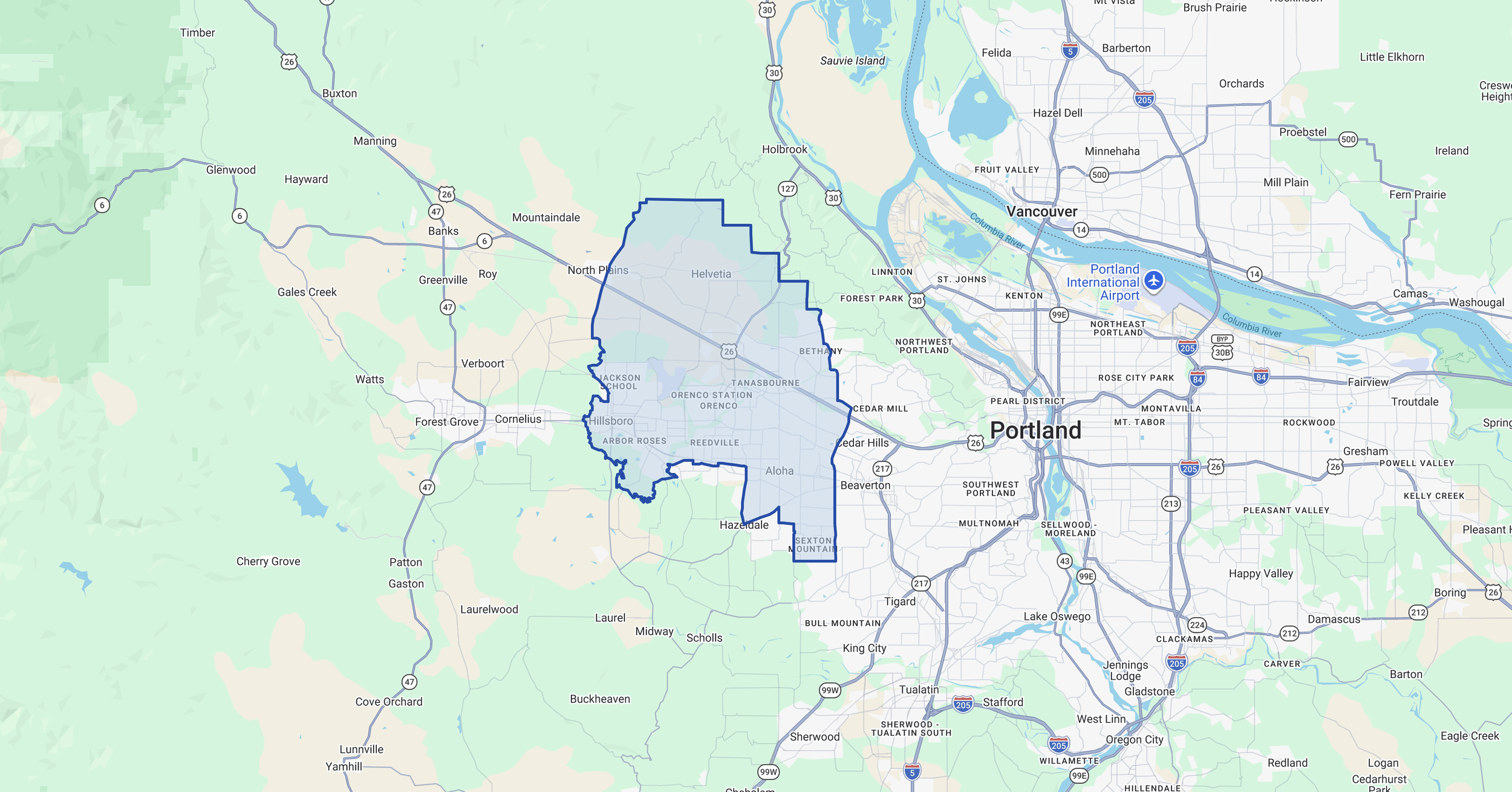
Sunset Corridor & Hillsboro
Westside market tied to the tech and semiconductor employment base along US-26. Office inventory includes corporate campus product and multi-tenant office parks. Industrial spans business park flex and industrial buildings serving the corridor's tech and manufacturing ecosystem. Retail is concentrated in Hillsboro's Orenco Station and Tanasbourne areas with growing residential density driving demand. Availability in both office and industrial can swing based on corporate expansion/contraction cycles and sublease releases from larger tenants.
Best for: Tech companies, engineering firms, semiconductor-adjacent businesses, and companies with workforces or clients concentrated in the US-26/Hillsboro corridor. Retail tenants serving the corridor's growing residential base.
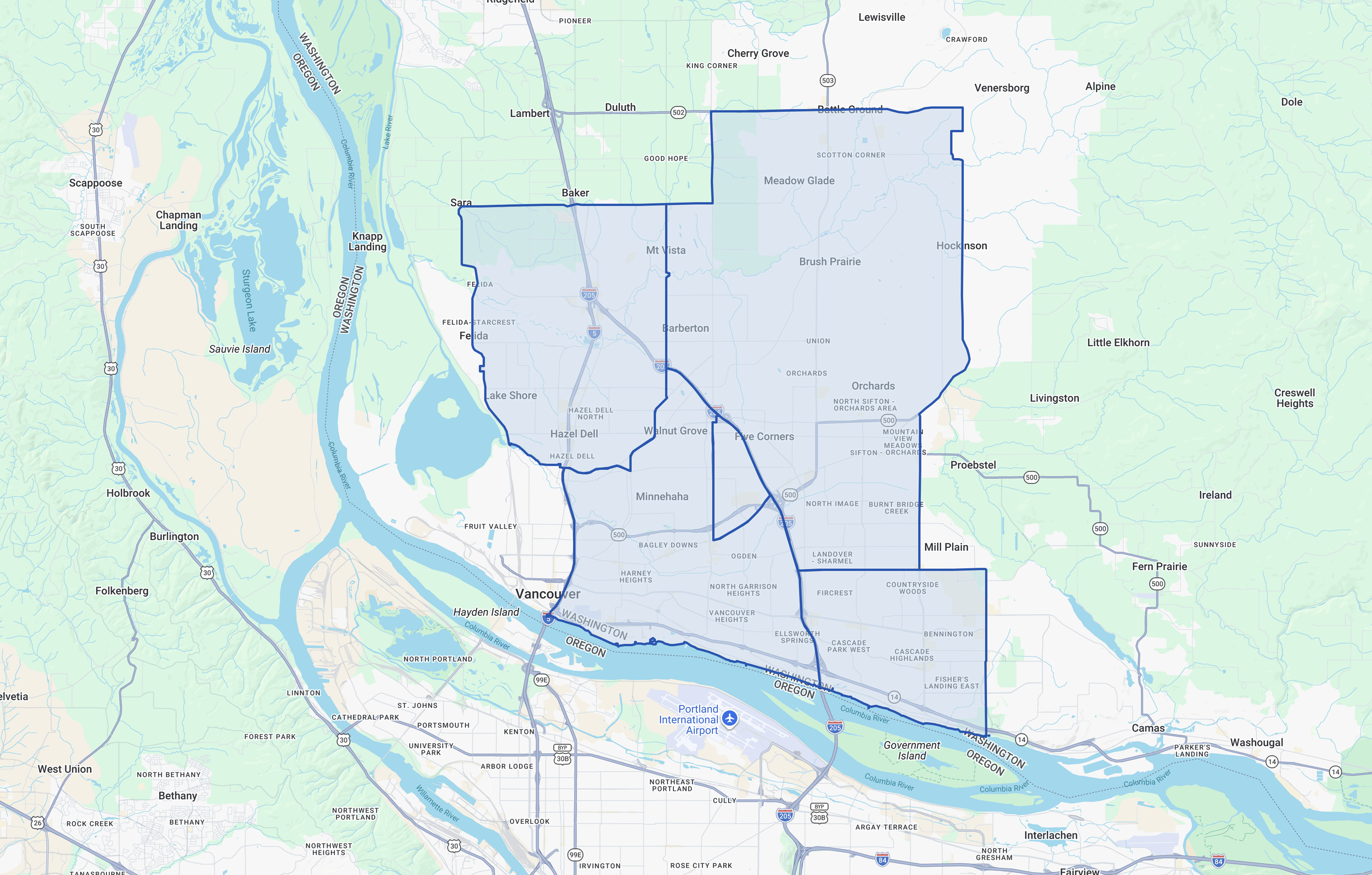
Vancouver, WA
Suburban market spanning West Vancouver/CBD, central Vancouver, Cascade Park, Hazel Dell, and the Vancouver Waterfront. No state income tax for Washington-resident employees is a meaningful draw across all property types. Office pricing generally runs below comparable Portland product with strong parking. The Waterfront has added newer institutional-quality product. Retail is active along major corridors with a growing residential base driving demand. Some industrial and flex inventory exists in east Vancouver and the I-5 corridor. Columbia River crossing congestion is a real commute factor for Oregon-side employees.
Best for: Professional services, healthcare, finance, and companies with Washington-based workforces or clients seeking tax-advantaged positioning. Retail tenants targeting Clark County's expanding residential demographics.
COMMON QUESTIONS ABOUT PORTLAND COMMERCIAL REAL ESTATE SUBMARKETS
-
It depends on the priority. Downtown/CBD offers the deepest inventory and strongest transit access for firms that want institutional presence. Lloyd District delivers similar accessibility at lower effective rent with better parking. Lake Oswego/Kruse Way and the 217 Corridor serve firms with suburban client bases and employees who prioritize parking and commute over urban location. The right submarket comes down to where your clients are, where your team commutes from, and what lease economics fit your budget — a shortlist comparison across two or three submarkets usually clarifies the decision quickly.
-
Airport Way and the Columbia Corridor handle the largest share of distribution activity in the metro, anchored by PDX access and strong I-84/I-205 connectivity. For users who need larger footprints or more competitive pricing, Gresham and the East Columbia Corridor often deliver more space-for-the-money. Wilsonville and Sherwood serve regional distribution along the I-5 corridor south. The right fit depends on last-mile delivery radius, dock and yard requirements, and where your labor commutes from — those factors narrow the list faster than rent alone.
-
Downtown/CBD typically runs 1-2 stalls per 1,000 SF with parking often priced separately or included at a premium. Suburban submarkets like Lake Oswego, the 217 Corridor, and Tualatin generally offer 3-4+ stalls per 1,000 SF with parking included in rent. Lease structures also shift — CBD product tends toward full-service or modified gross, while suburban and flex product more commonly runs NNN or modified gross with different operating expense exposure. Comparing total occupancy cost (base rent plus parking, plus operating expense exposure) across submarkets is more useful than comparing asking rent alone.
-
Retail activity varies by format. High-traffic ground-floor space concentrates in Downtown/CBD, the Central Eastside, and NW 23rd. Strip and multi-tenant retail with strong vehicle counts runs along 82nd Ave, McLoughlin Blvd, Hall Blvd, and Pacific Hwy through the 217 Corridor, Clackamas, and Gateway submarkets. Neighborhood retail with affluent demographics clusters in Lake Oswego and the Sunset Corridor's Orenco Station/Tanasbourne areas. Vancouver, WA adds Washington's no-income-tax advantage for operators with Washington-resident employees. The best fit depends on your customer base, traffic pattern (foot vs. vehicle), and lease budget.
-
Three factors matter most: location and access (close-in and transit-served commands a premium), building quality and age (newer product with better systems costs more but often delivers lower total occupancy cost), and current vacancy (submarkets with elevated vacancy offer more tenant leverage on concessions, TI, and effective rent). Comparing effective rent — what you actually pay after concessions — matters more than comparing asking rates, because two buildings at the same asking rent can deliver very different economics once free rent, TI, and escalation structures are factored in.
-
Start 12-18 months before expiration for most office and industrial leases. That's enough time to benchmark your current deal against market alternatives, run a competitive process if the numbers justify it, and negotiate from a position of leverage. Starting earlier — 18-24 months — makes sense for larger spaces or specialized buildouts where relocation lead time is longer. The most common mistake is treating the renewal as administrative and starting late, which eliminates the option to relocate and removes the landlord's incentive to sharpen the offer.
-
Convert everything to total occupancy cost per square foot per year. A $22 NNN lease with $8 in operating expenses costs the same as a $30 full-service lease — but the NNN tenant carries more exposure to expense increases over the term. Modified gross structures fall in between, with some expenses included and others passed through. When comparing buildings across submarkets, ask for a total occupancy cost projection over the full lease term, including escalations, to see what you're actually committing to. The structure that looks cheapest on paper isn't always the lowest total cost.
GET IN TOUCH
Contact Matt Lyman at Norris & Stevens about leasing, renewing, relocating, buying, or selling commercial real estate in Portland — whether you're evaluating submarkets, comparing available options, or need a market opinion on your current space or property.
Share your property type, size, location priorities, timing, and what decision you're trying to make. Matt will follow up with current availability or market context, relevant comps, and a recommended approach.
Coverage spans the full Portland metro — Downtown/CBD, Lloyd District, Central Eastside, NW Portland, Johns Landing/SW, Airport Way/Columbia Corridor, Swan Island/Rivergate, Gateway/NE, 217 Corridor (Beaverton/Tigard), Lake Oswego/Kruse Way, Clackamas/Milwaukie, Gresham, Tualatin/Wilsonville/Sherwood, Hillsboro/Sunset Corridor, and Vancouver, WA.