
Central Eastside Portland Commercial Real Estate: A Guide for Tenants and Investors
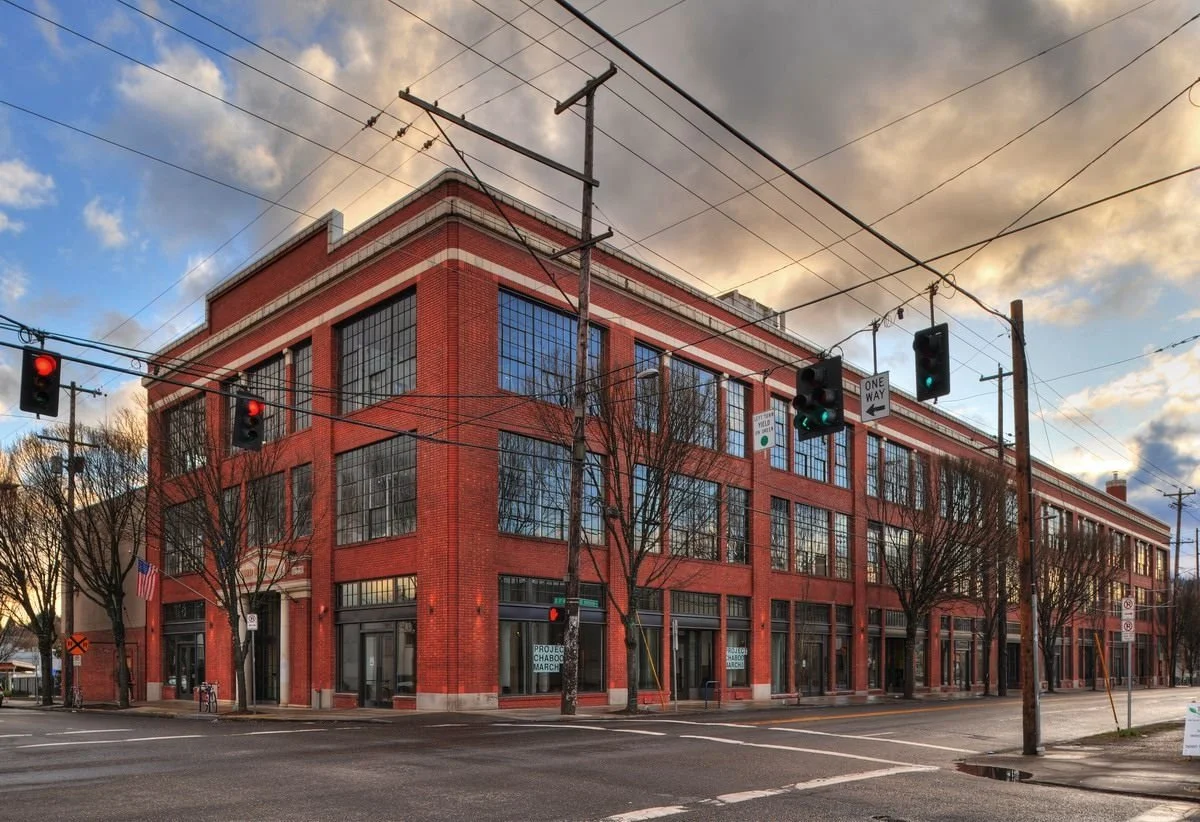
Portland’s Central Eastside Industrial District is one of the most active and distinctive commercial real estate submarkets in the metro area. The 681-acre district — stretching from I-84 south to Powell Boulevard, and from the Willamette River east to SE 12th Avenue — has evolved from a traditional industrial corridor into a mixed-use hub where flex space, creative office, food and beverage production, and light manufacturing operate side by side.
For tenants evaluating commercial space in Portland, the Central Eastside offers something most submarkets cannot: close-in urban access with industrial zoning flexibility. That combination has made it a magnet for businesses that need both a central location and the ability to operate production, warehouse, or maker-style uses that traditional office districts prohibit.
What Makes the Central Eastside Different
The Central Eastside Industrial District (CEID) is one of only a handful of industrial-zoned areas within Portland’s urban core. Most industrial inventory in the metro sits along the Columbia Corridor, in Clackamas, or out in the 217 Corridor suburbs. The CEID is the exception — an industrial sanctuary embedded in the inner city, minutes from downtown and the Pearl District.
This location advantage drives a different tenant profile. The district attracts creative agencies, technology firms, craft breweries and distilleries, food production companies, architecture and design studios, and specialty manufacturers. The common thread is that these tenants need flexible space — often with a mix of office, showroom, and production or warehouse uses — in a walkable, transit-accessible location.
The district is also an Enhanced Services District, meaning property owners fund supplemental services like trash cleanup, graffiti removal, and business development through an assessment. That investment has helped maintain the district’s appeal even as Portland’s broader commercial market has faced headwinds.
Zoning and Land Use
The Central Eastside operates under Portland’s Central Employment (EX) and General Industrial (IG1) zoning designations. The EX zone allows mixed uses and is designed for areas with predominantly industrial development that benefit from a central location. The IG1 zone preserves traditional industrial uses but also provides zoning tools for locating office-intensive uses in certain areas.
For tenants, this means the Central Eastside can accommodate uses that would be prohibited in most office or retail-zoned districts — manufacturing, warehousing, food production, vehicle repair, and similar operations. At the same time, office and retail uses are permitted in many areas, which is why the district has attracted the creative office and food-and-beverage tenants that define its character today.
Investors should note that the zoning flexibility cuts both ways. The industrial sanctuary designation protects against residential conversion pressure, which has preserved the district’s commercial character. But it also means certain residential and hospitality uses face restrictions that limit development options compared to adjacent neighborhoods like Buckman or the Central City.
Property Types and Inventory
The Central Eastside’s building stock reflects its industrial heritage. Expect to find converted warehouses with heavy timber framing and high ceilings, concrete tilt-up industrial buildings, older brick commercial structures, and newer ground-up creative office and flex developments. Very little of the inventory looks like a typical Class A suburban office building — and that is part of the appeal.
The main property types available include creative office space in converted industrial buildings with exposed structure, polished concrete, and open floor plans. Flex and light industrial spaces offer a combination of office, warehouse, and production areas, typically with grade-level loading and higher ceiling heights. Food and beverage production spaces come equipped with commercial kitchen infrastructure, loading access, and appropriate zoning for manufacturing. Retail and showroom spaces occupy ground-floor positions in mixed-use buildings, particularly along major corridors like Grand Avenue, MLK Boulevard, and Water Avenue.
For tenants searching for space, understanding how lease structures work in the Central Eastside is important. Industrial and flex spaces typically lease on NNN or modified gross terms, while creative office spaces may use full-service or modified gross structures depending on the building.
Lease Rates and Market Conditions
Portland’s overall commercial market has faced significant challenges heading into 2026. The metro-wide office vacancy rate climbed to approximately 24% by Q4 2025, and industrial vacancy rose to roughly 7% — the highest level since 2010. The Central Eastside has not been immune to these trends, but the submarket has characteristics that differentiate it from the broader market.
Creative office and flex space in the Central Eastside generally commands asking rents in the range of $20 to $35 per square foot annually, depending on the building quality, finish level, and amenities. Traditional industrial and warehouse space leases at lower rates, typically in the $10 to $18 per square foot range. These numbers vary considerably based on building condition, loading capabilities, ceiling height, and proximity to transit and amenities.
Tenants negotiating leases in the current market have leverage. Vacancy has increased, and landlords across Portland are offering more competitive tenant improvement allowances and concession packages than they were two or three years ago. The key is knowing how to compare lease proposals on a total-occupancy-cost basis rather than focusing only on the asking rate.
Who Should Consider the Central Eastside
The Central Eastside is a strong fit for businesses that match one or more of the following profiles.
Creative and technology firms that want a non-corporate environment with character, walkability, and proximity to Portland’s food and cultural scene. The district’s converted warehouse and heavy-timber spaces appeal to teams that prioritize workplace culture and recruiting advantages.
Food and beverage producers that need production-grade space with appropriate zoning, loading access, and proximity to Portland’s restaurant and retail distribution network. The CEID’s concentration of breweries, distilleries, and food companies has created a cluster effect that benefits marketing and brand visibility.
Flex and light industrial users that need a combination of office, warehouse, and production space close to Portland’s urban core. Businesses that serve downtown clients but also need loading, storage, or assembly capabilities find the Central Eastside more practical than a downtown office or a suburban industrial park.
Investors looking for value-add opportunities in buildings with adaptive reuse potential. The district’s industrial building stock, combined with strong tenant demand for creative and flex space, creates opportunities to reposition older buildings at attractive returns. Understanding due diligence requirements is critical before committing capital.
Transportation and Access
The Central Eastside benefits from strong multimodal access. The district is bounded by I-84 to the north, providing direct freeway connections to I-5 and I-205. Multiple bridges — including the Morrison, Hawthorne, and Burnside bridges — connect the district to downtown Portland in minutes.
TriMet bus service runs along Grand Avenue, MLK Boulevard, and several east-west routes through the district. The Orange Line MAX station at SE Grand and Mill provides light rail access to downtown, South Waterfront, Milwaukie, and beyond. The Tilikum Crossing bridge, exclusively for transit, pedestrians, and cyclists, connects the district to the South Waterfront and OHSU.
For industrial users, the district’s grid street layout and proximity to I-84 provide workable truck access, though the urban setting means deliveries and loading require more planning than in suburban industrial parks like the Columbia Corridor or Clackamas.
Parking is tighter than in suburban locations. Most buildings offer some on-site parking, but ratios are lower than what tenants find in the 217 Corridor or outer East Portland. Tenants who rely heavily on employee parking should factor this into their space search, though the district’s transit access often offsets the constraint for office-oriented users.
Development Pipeline and Outlook
The Central Eastside has seen steady development activity over the past decade, with new creative office, mixed-use, and flex projects adding to the district’s inventory. The pace of new construction slowed in 2024 and 2025 as rising interest rates and construction costs made penciling new deals more difficult. That slowdown may benefit tenants in the near term by limiting new supply and keeping vacancy from rising further.
Looking ahead, the district’s fundamentals remain strong relative to the broader Portland market. The combination of zoning flexibility, urban location, and a tenant base that skews toward growth sectors — food and beverage, creative industries, technology — positions the Central Eastside to recover ahead of submarkets that are more dependent on traditional office or commodity industrial demand.
For landlords and building owners, the current environment requires a proactive leasing strategy. Buildings with deferred maintenance or outdated layouts may struggle to compete for tenants who have more options than they did in 2021 or 2022. Investing in building improvements, flexible lease terms, and competitive concession packages can make the difference between a long vacancy and a signed lease.
How to Evaluate Space in the Central Eastside
If the Central Eastside fits your business requirements, the next step is defining your space criteria and running a structured site search. Key factors to evaluate for each property include zoning confirmation for your intended use, ceiling height and column spacing for production or warehouse needs, loading access such as grade-level doors or dock-high positions, building systems including HVAC, electrical capacity, and plumbing, parking ratios and transit proximity, and lease structure and total occupancy cost.
Working with a broker who knows the submarket — the landlords, the building histories, and the lease comp data — can save significant time and money. The Central Eastside is a submarket where local knowledge matters more than in commodity industrial or suburban office markets, because the building stock is varied and the tenant mix is specialized.
The Bottom Line
The Central Eastside Industrial District offers a rare combination in Portland commercial real estate: industrial zoning flexibility in an urban, transit-rich location with genuine neighborhood character. For tenants and investors who value that combination, the current market — with elevated vacancy and more negotiating leverage than any time in recent memory — represents a window to secure space or assets at favorable terms.
Whether you are looking for creative office space, flex industrial, food production, or an investment property, understanding the Central Eastside’s zoning, tenant mix, and market dynamics is the starting point.
Ready to explore the Central Eastside? Start with a market overview and space search tailored to your requirements and timeline.
For a deeper analysis of the flex and maker space market in the CEID, see our creative flex space guide.