
Federal Lease: U.S. Army Corps of Engineers at Rock Pointe Tower
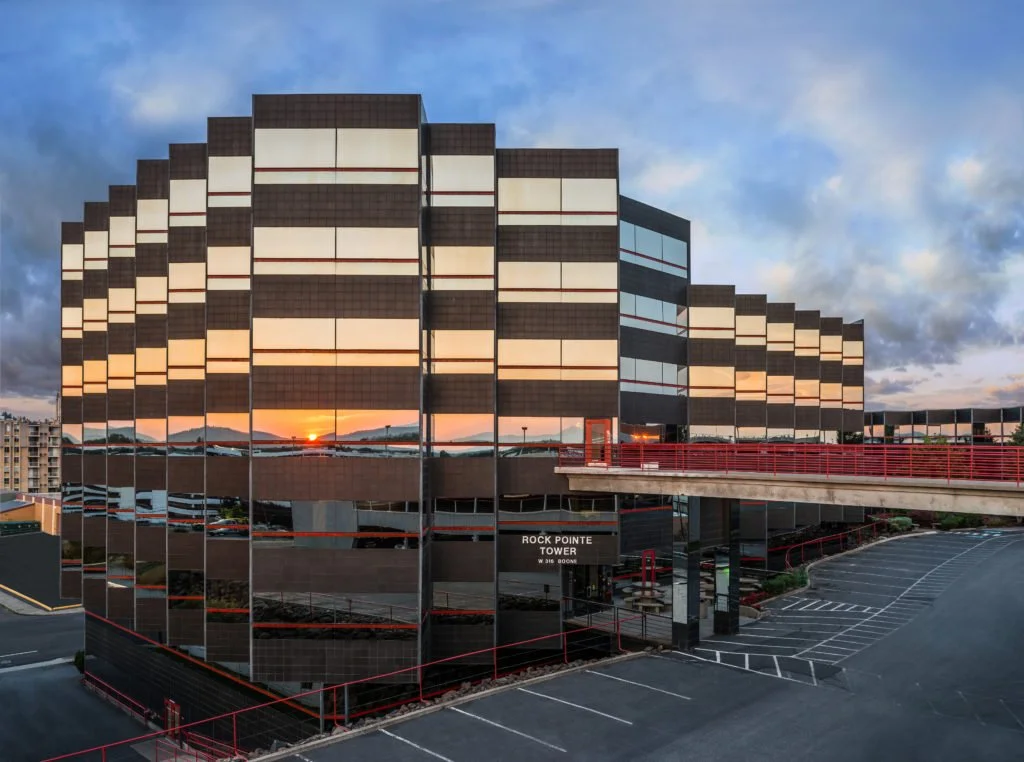
Matt Lyman represented the U.S. Army Corps of Engineers in a federal office lease at Rock Pointe Tower in Spokane, Washington — an assignment that moved through the GSA contracting framework from start to execution in a compressed timeline. The initial lease covered 8,321 square feet on a five-year term with flat rent, fixed operating expenses, and a 30-day termination right. Three months after occupancy, the Corps expanded to 12,551 square feet in the same building, and the landlord increased the tenant improvement allowance from $24,693 to $50,204 to accommodate the larger footprint.
Federal leases demand a different process than conventional commercial deals — tighter compliance requirements, longer approval chains, and less room for ambiguity in delivery conditions. What follows is how the deal was structured, why the economics worked, and what the rapid expansion says about getting the initial terms right.
Federal Office Lease FAQ
Q: How does a federal lease differ from a conventional commercial lease?
A: Federal leases run through the GSA contracting framework, which requires compliance with specific security, life-safety, and accessibility standards at delivery. Approval workflows are longer, drafting must be precise, and the landlord's deliverables need to be documented in detail — not negotiated informally.
Q: What is a GSA lease, and who negotiates it?
A: A GSA lease is a federal government lease procured through the General Services Administration. The tenant agency defines its requirements; a tenant representative translates those into lease terms and negotiates with landlords on the agency's behalf, managing compliance, economics, and timeline simultaneously.
Q: Can a federal tenant terminate a lease early?
A: It depends on the lease. In this case, the lease included a 30-day termination right — a critical provision for mission-driven agencies whose program needs can shift with budget cycles or operational changes.
Q: What did the U.S. Army Corps of Engineers lease in Spokane?
A: 8,321 square feet of office space at Rock Pointe Tower (316 W Boone Avenue, Spokane, WA), expanding to 12,551 square feet three months after initial occupancy.
The Property: Rock Pointe Tower, Spokane
Rock Pointe Tower sits within the Rock Pointe Corporate Center at 316 West Boone Avenue in Spokane, Washington. The building offered the combination the Corps needed: office space in a professionally managed, multi-tenant property with the security, parking, loading, and infrastructure specifications that federal occupancy requires.
While this deal closed in Spokane rather than Portland, the process and strategy are identical to what Matt Lyman brings to federal and institutional tenant assignments across the Pacific Northwest. The GSA framework does not change by city — the compliance requirements, approval workflows, and negotiation dynamics are the same whether the building sits in Spokane, Portland, or Seattle.
How the Lease Was Structured
The economics were designed for predictability — a priority for any government tenant managing to a fixed budget cycle.
Base rent was set at $144,207.12 per year, flat for the full term — no annual escalations. Operating expenses were fixed at $62,226.36 per year, eliminating the reconciliation uncertainty that comes with pass-through structures. Together, that put total occupancy cost at approximately $24.81 per square foot — a number the Corps could take to its budget authority without caveats about future adjustments.
The landlord funded a $24,693 tenant improvement allowance (roughly $2.97 per square foot) to cover the build-out to USACE specifications. And the lease included a 30-day termination right — a provision that required careful negotiation, since landlords understandably resist short-notice termination on a five-year commitment. Getting that clause in while keeping the economics competitive was one of the harder parts of the deal.
The Expansion: From 8,321 SF to 12,551 SF in Three Months
Three months after taking occupancy, the Corps needed more space. That is not unusual with federal tenants — program requirements evolve, and agencies that start with a conservative footprint often expand once operations are running.
The expansion added roughly 4,200 square feet, bringing the total to 12,551 square feet — a 51 percent increase. The landlord agreed to increase the tenant improvement allowance to $50,204 (approximately $4.00 per square foot on the expanded footprint) to build out the additional space to the same specifications.
The speed of the expansion underscores why getting the initial lease structure right matters. Because the base terms were clean — flat rent, fixed opex, clearly documented landlord deliverables — the expansion negotiation focused on the incremental space rather than relitigating the original deal. A messier initial lease would have slowed that process considerably.
What Federal Tenant Representation Delivered
Federal leases create value in places conventional deals do not:
Compliance translation. Taking USACE's operational requirements — security, life-safety, accessibility, power, communications — and converting them into a landlord-deliverable checklist that satisfies both the agency and the GSA contracting framework.
Economic clarity. Separating base rent from operating expenses and TI to keep the numbers clean for federal budget approval. No ambiguity, no reconciliation surprises, no escalation risk.
Timeline discipline. Back-planning from the acceptance date and mapping every submittal, inspection, and approval to the counterpart's obligations so federal review cycles do not stall possession.
Optionality. Securing the 30-day termination right and structuring renewal mechanics that protect mission continuity without overcommitting term or capital.
Expansion readiness. Structuring the initial lease so cleanly that when the Corps needed 51 percent more space three months later, the expansion closed without friction.
Lessons for Government and Institutional Tenants
Three things carry beyond this specific deal:
Fix your costs. Flat rent and fixed operating expenses are not standard in commercial leasing, but for budget-driven tenants, they should be the starting position. If your broker is not pushing for cost certainty, your approval process will be harder than it needs to be.
Build in flexibility. A 30-day termination right is aggressive, but some version of early termination or contraction should be on the table for any mission-driven tenant whose requirements may shift. The letter of intent is where that negotiation starts.
Plan for growth. If there is any chance your agency or organization will need more space in the first year, address expansion rights in the initial lease. The Corps did not have a formal expansion option — but the clean initial structure made the expansion possible on favorable terms anyway.
Need Federal or Institutional Tenant Representation?
Whether you are a federal agency working through GSA, a state or municipal entity, or an institutional user with complex compliance and approval requirements, the process is the same: translate operational needs into lease terms, control costs, and manage the timeline so approvals do not stall occupancy. Matt Lyman handles federal and institutional tenant representation across the Pacific Northwest.
Ready to start? Call me at 503-507-4880 or visit portlandcre.com/contact for a confidential consultation.