
Vancouver WA Commercial Real Estate: A Guide for Tenants and Investors in 2026
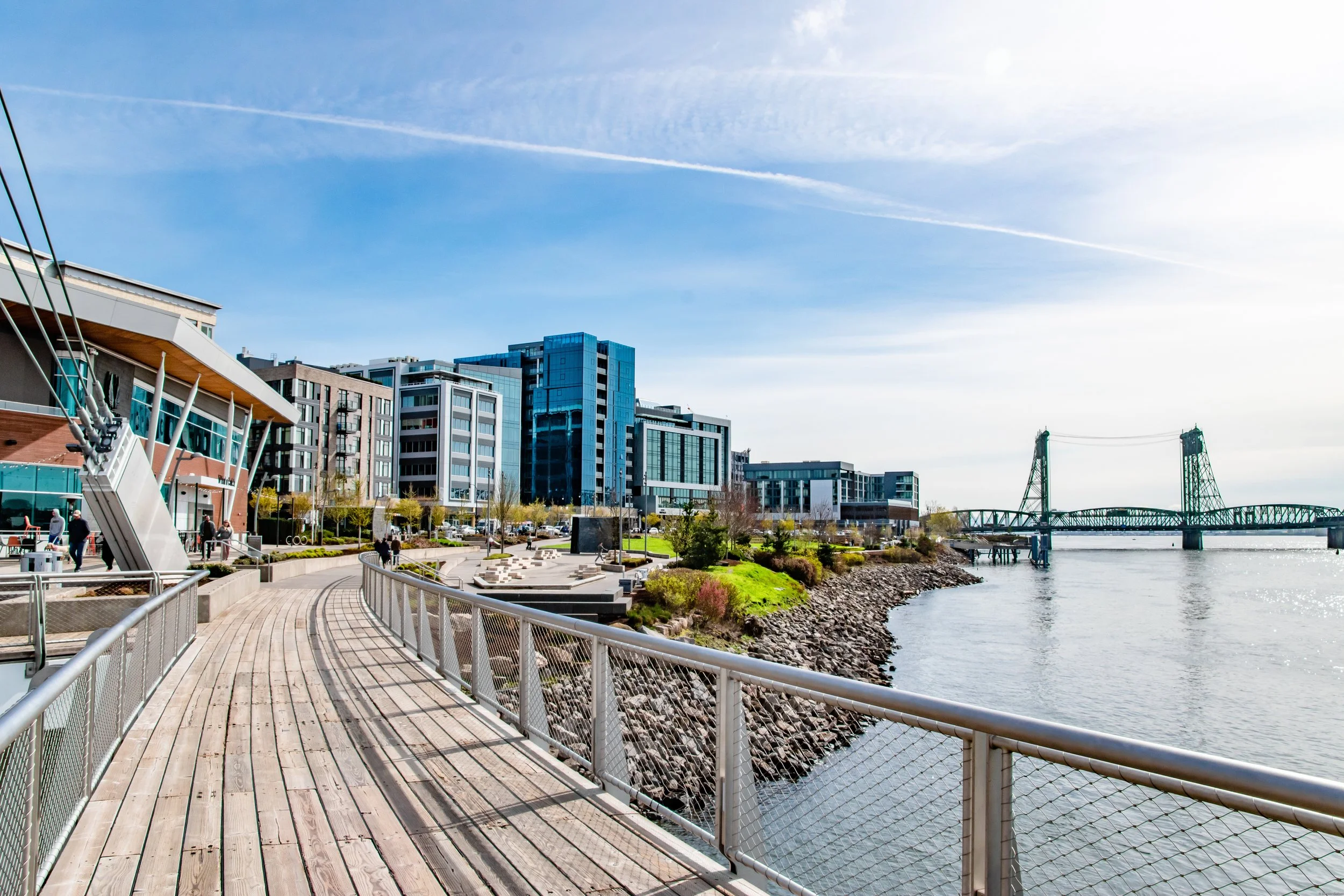
Vancouver, Washington has quietly become one of the most competitive commercial real estate markets in the Pacific Northwest. Sitting directly across the Columbia River from Portland, Clark County offers tenants and investors a combination that is increasingly hard to ignore: lower operating costs, tighter vacancy, a $1.6 billion waterfront development pipeline, and Washington's zero state income tax.
For Portland-area businesses evaluating their next lease or acquisition, Vancouver deserves serious consideration. This guide breaks down the market by property type, highlights the tax and cost dynamics that matter most, and covers the development pipeline shaping the submarket through 2030.
Vancouver WA Commercial Real Estate FAQ
Q: What is the average commercial vacancy rate in Vancouver WA in 2026?
A: The Vancouver area averages approximately 7% overall commercial vacancy, with office vacancy as low as 0.4% in the CBD/West Vancouver submarket and retail vacancy averaging 6.1% over the past decade.
Q: Is Vancouver WA cheaper than Portland for commercial space?
A: Lease rates in Vancouver are generally comparable to Portland suburban submarkets, but total occupancy cost is often lower due to Washington's zero state income tax and competitive property tax structure. The trade-off is Washington's 8.8% sales tax and B&O tax on gross receipts.
Q: What major commercial developments are happening in Vancouver WA?
A: The Waterfront Vancouver is the largest project — a $1.6 billion mixed-use development delivering 386,000 SF of office, 235,000 SF of retail, and over 3,000 housing units by 2030. Killian Pacific is also building The Collective, a four-building flex industrial campus in east Vancouver.
Q: Does Matt Lyman handle commercial real estate in Vancouver WA?
A: Yes. Matt Lyman at Norris & Stevens provides commercial real estate services across the Portland metro including Clark County and Vancouver, WA — covering leasing, sales, tenant representation, and property valuations.
Vancouver WA Office Market: Tight Vacancy and Waterfront Momentum
Vancouver's office market tells a very different story than Portland's. While downtown Portland's CBD vacancy sits near 34%, Vancouver's CBD and West Vancouver office vacancy is just 0.4% — functionally full. Even the softest Vancouver office submarket, Cascade Park, is at 16.6%, which is well below Portland's metro average of 24.1%.
The anchor of Vancouver's office story is The Waterfront, a 32-acre mixed-use development by Gramor on the Columbia River. The Murdock, a 70,000 SF Class A office building delivered in 2018, is 100% leased. The broader master plan calls for over 386,000 SF of total office space, with additional phases expected through 2030.
For tenants considering tenant representation services to evaluate cross-border options, the math is straightforward: comparable or better office product, dramatically lower vacancy, and a tax structure that benefits high-income businesses.
Vancouver WA Industrial and Flex Space Market
Clark County's industrial market is active. The city has approved new zoning rules for large warehouse developments, and several projects are moving through the pipeline.
Killian Pacific's The Collective will deliver four flex industrial buildings ranging from 46,500 to 81,650 SF in east Vancouver — targeting the warehouse, wholesaling, and light industrial users that are increasingly priced out of Portland's tighter submarkets. Separately, four new flex buildings are planned at the former English Pit quarry site north of SE First Street, and an industrial complex is advancing along Columbia House Boulevard.
Available industrial space in Vancouver ranges from small-bay (2,650 SF) to large distribution (647,000+ SF), with buildings delivered as recently as 2026. Compared to Portland's industrial market, Vancouver offers competitive rates without Oregon's corporate activity tax and with direct access to I-5 and I-205.
The Port of Vancouver adds intermodal capability — rail, trucking, and deep-water port access — that most Portland industrial submarkets cannot match outside of Swan Island and Rivergate.
Vancouver WA Retail Market: Low Vacancy, Suburban Strength
Retail vacancy in Vancouver has averaged just 6.1% over the past decade, with some submarkets near zero. The Vancouver Mall area reports retail vacancy as low as 0.2%, and CBD/West Vancouver sits at 6.3%.
Average retail rents run approximately $23/SF, which is competitive with Portland's suburban retail corridors along the 217 Corridor and Clackamas. The difference is traffic: Vancouver's retail benefits from Washington shoppers who avoid Oregon's income tax while also drawing Portland residents who cross the river for specific retailers and services.
The Waterfront development is adding 235,000 SF of retail space, including a planned 40,000 SF public marketplace expected by 2027. The Marriott hotel on-site is already averaging 80% occupancy with frequent sellouts, which signals strong visitor traffic that supports ground-floor retail.
For landlords or investors evaluating retail acquisitions, Vancouver's population growth and limited new retail supply create favorable fundamentals. Understanding lease structures like NNN and full service is critical when comparing opportunities across state lines.
Tax Advantages: Washington vs. Oregon for Commercial Tenants
The cross-border tax dynamic is the single biggest reason Portland-area businesses consider Vancouver. Here is what actually matters for commercial tenants and property owners.
Washington advantages: Zero state income tax on business profits (Oregon taxes up to 9.9%), no Corporate Activity Tax (Oregon's CAT applies to businesses over $1M in commercial activity), and property tax levy increases capped at 1% annually.
Washington trade-offs: Sales tax of approximately 8.8% in Clark County (Oregon has none), Business and Occupation (B&O) tax on gross receipts at rates typically between 0.15% and 1.5% depending on industry, and assessed property values that track market value more closely — meaning tax bills can jump during appreciation cycles.
The bottom line: High-margin, high-income businesses benefit most from Vancouver's tax structure. Low-margin businesses with significant retail sales may find the B&O tax and sales tax offset the income tax savings. Every situation is different, and any cross-border move should involve a qualified tax advisor.
For tenants running a comparative site search, a commercial real estate due diligence process should include a tax impact analysis specific to your business model — not just lease rate comparisons.
The Waterfront Vancouver: Portland Metro's Largest Mixed-Use Development
The Waterfront Vancouver deserves its own section because the scale is significant. Gramor Development's 32-acre project on the Columbia River represents $1.6 billion in direct investment and is projected to generate $6.1 billion in total economic output.
When complete (estimated 2030), the master plan includes over 3,000 housing units, 386,000 SF of office space, 235,000 SF of retail, 10 acres of parks, and hospitality space. Phase completions are already delivering results — the Murdock office building is fully leased, the Marriott hotel is performing well above market averages, and residential units are absorbing steadily.
For investors evaluating acquisitions in the Portland metro, The Waterfront represents a bet on Vancouver's continued growth as a standalone employment and lifestyle center — not just a Portland bedroom community.
How Portland-Area Tenants Should Evaluate Vancouver WA
If your lease is expiring in the next 12 to 18 months and you have not considered Vancouver, you are leaving options on the table. Here is a practical framework for evaluating a cross-border move.
Start with your workforce. If most employees live in Clark County or are distributed/remote, Vancouver eliminates the Oregon income tax burden on their compensation. If your workforce is concentrated in Portland, the commute and bridge traffic become real factors.
Model total occupancy cost, not just rent. Vancouver lease rates may look similar to Portland suburban markets on paper. The difference shows up in total cost when you factor in state taxes, B&O tax, sales tax on tenant improvements, and operating expenses. A detailed lease proposal comparison that accounts for cross-state differences is essential.
Understand the timeline. Vancouver's tight vacancy — especially in office and retail — means fewer options and less landlord flexibility on concessions compared to Portland's tenant-favorable conditions. Starting a site search early matters even more in a low-vacancy market.
Factor in the development pipeline. New flex and industrial product is coming online in 2026 and 2027, which may create opportunities that do not exist today. Stay connected to the pipeline through a broker who covers both markets.
Working with a Broker Who Covers Both Markets
Evaluating Vancouver alongside Portland requires a broker with active coverage on both sides of the river. Matt Lyman at Norris & Stevens provides commercial real estate services across the Portland metro including Clark County — covering industrial, office, retail, and flex space for tenants, landlords, and investors.
Whether you are comparing lease proposals across state lines, evaluating a Vancouver acquisition, or positioning a property for lease-up in Clark County, the process starts with clear market data and a strategy built around your specific goals.
Need help evaluating Vancouver WA commercial real estate?