
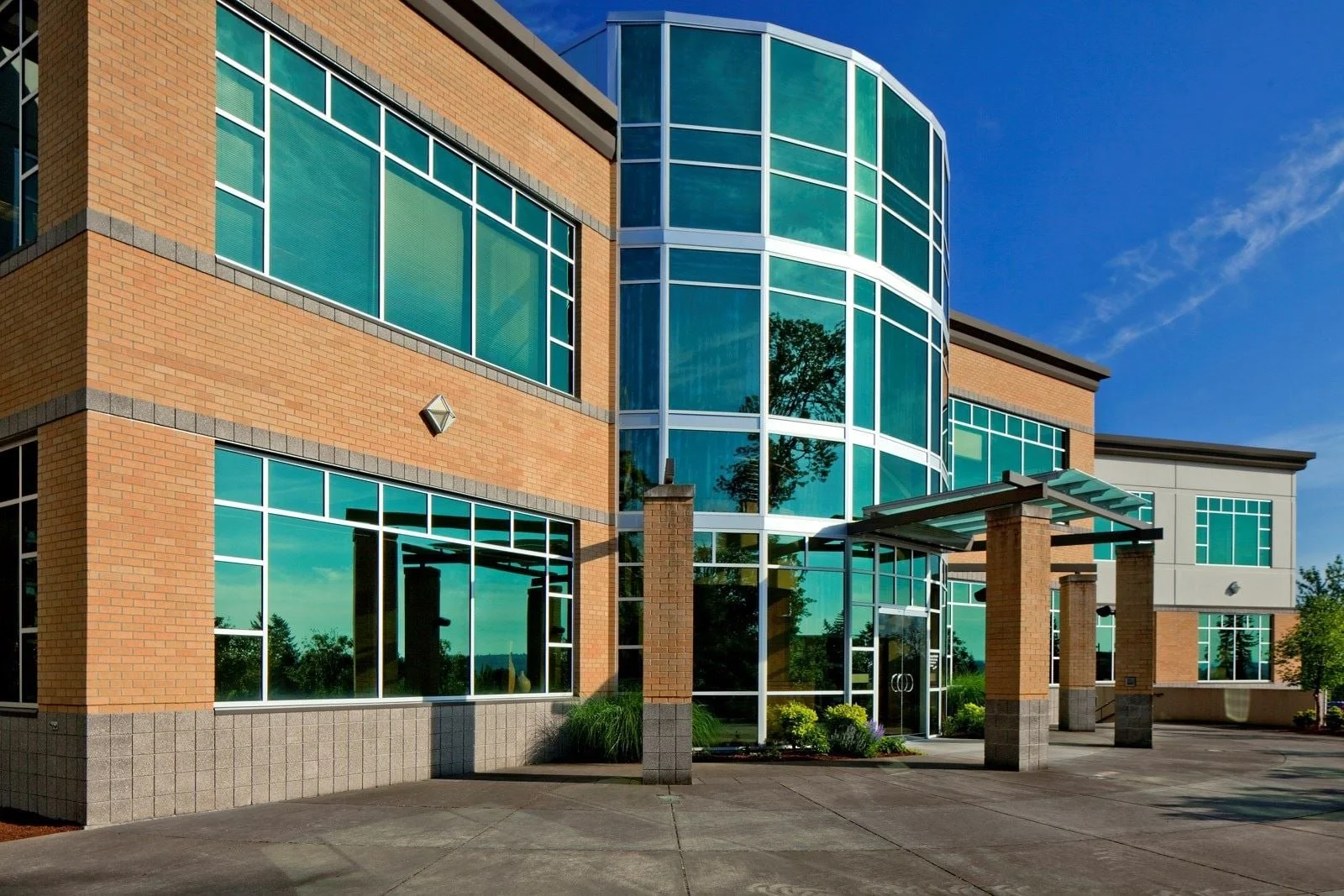
Beaverton & Tigard Office — 217 Corridor
Office leasing guidance for Beaverton, Tigard, and the Highway 217 corridor — pricing tiers, and how to evaluate Beaverton and Tigard office space.
ABOUT 217 CORRIDOR, BEAVERTON & TIGARD
Beaverton and Tigard share the Highway 217 corridor — the Portland metro's broadest suburban office submarket — a mix of Class A campus product, mid-tier Class B professional office, and flex-office space spread along the freeway from Highway 26 south to I-5.
The submarket anchors around a few key nodes: Lincoln Center and the Greenburg Road cluster near Washington Square, the Nimbus Corporate Center campus off Hall Boulevard, Cascade Square along Cascade Avenue in Beaverton, and scattered product along SW 72nd Avenue, Beveland Street, and Pacific Highway. It's not a single corporate park like Kruse Way — it's a corridor with a wider range of building quality, tenant size, and pricing than any other suburban office submarket in Portland.
That range is the submarket's defining feature. Tenants can find Class A space at Lincoln Center for mid-$20s/SF or basic Class B office off Pacific Highway for the mid-teens. For companies that need suburban access, ample parking, and flexibility on build quality, the 217 Corridor offers more options across more price points than Kruse Way, the Sunset Corridor, or Downtown Portland.
WHAT’S DIFFERENT ABOUT THIS SUBMARKET
The Beaverton and Tigard office market doesn't have the concentrated campus identity of Kruse Way or the tech-driven tenant base of the Sunset Corridor. What it has is variety — and that's the advantage for tenants who know how to use it.
Within a five-minute drive along Highway 217, you can tour a 20,000 SF Class A floor plate at Lincoln Center in Tigard, a 3,000 SF plug-and-play suite at Nimbus Corporate Center, and a 5,000 SF value play in an older Beaverton building off Beveland Street. The pricing spread between these options can be $8–$12/SF annually, which means the submarket rewards tenants who shop multiple buildings and negotiate aggressively.
The trade-off is that building quality varies significantly. Some product along the corridor has been well maintained with updated lobbies, HVAC, and common areas. Other buildings — particularly older Class B and C product near Pacific Highway — show deferred maintenance and aging systems. Touring matters more here than in any other Portland office submarket.
LOCATION INFORMATION
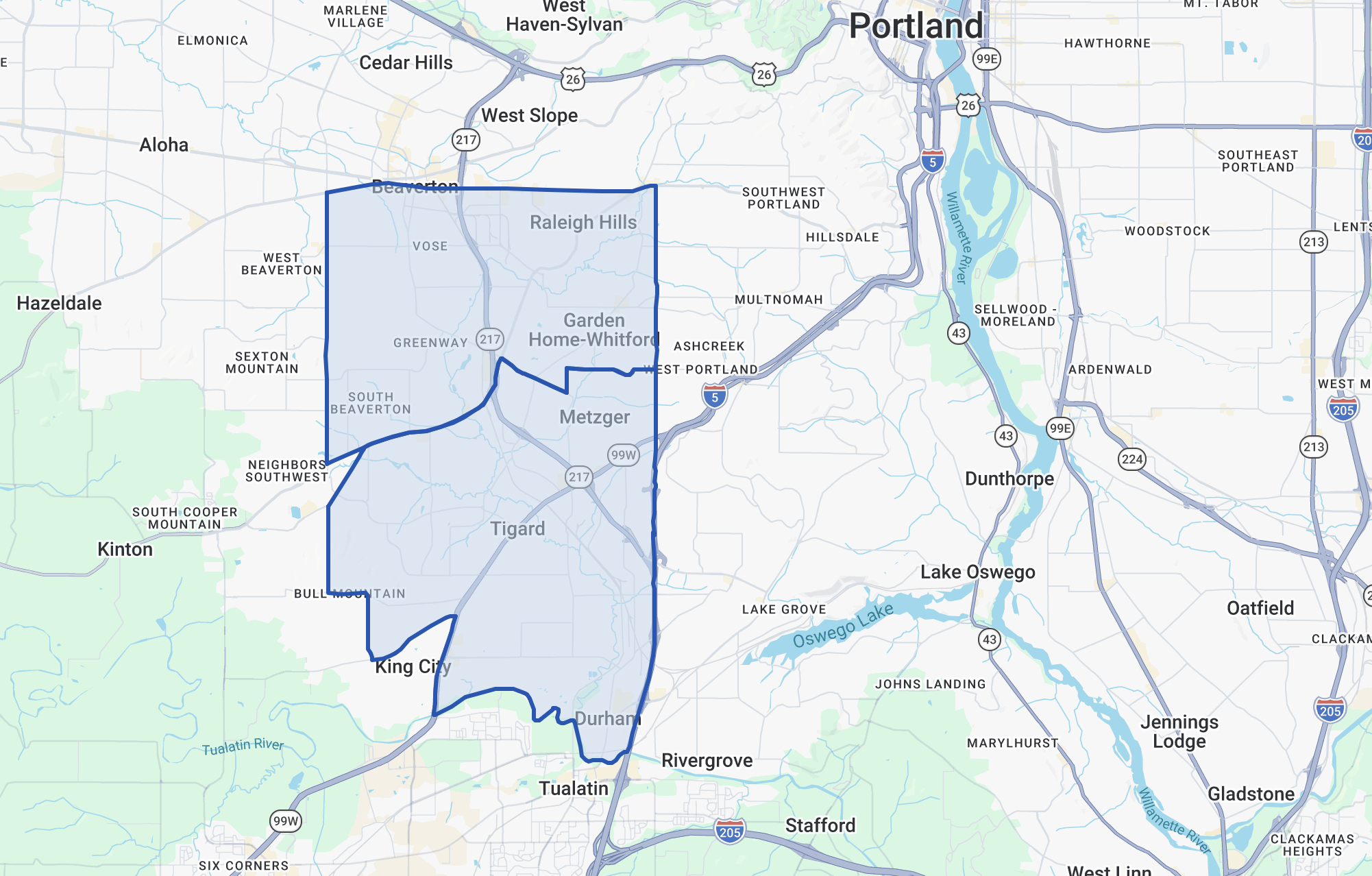
The Beaverton and Tigard office submarket follows Highway 217 from its junction with Highway 26 in Beaverton south through Tigard to the I-5 interchange. Major office concentrations cluster around Washington Square / Greenburg Road, the Nimbus area off Hall Boulevard, Cascade Avenue near the 217/26 interchange, and the Beveland Street / 72nd Avenue node in Tigard.
The corridor offers strong multi-directional freeway access — Highway 217 connects directly to Highway 26 (Sunset Highway to Downtown Portland and Hillsboro), I-5 (south to Wilsonville and north to Downtown), and Highway 99W. Washington Square provides retail and dining amenities, and TriMet's WES commuter rail connects Beaverton, Tigard, and Tualatin with a stop at the Washington Square transit center.
BEAVERTON & TIGARD OFFICE SNAPSHOT
Known For
Widest range of office product types and price points in the Portland suburban market
Lincoln Center — the corridor's marquee Class A campus, directly across from Washington Square
Nimbus Corporate Center — flexible mid-size office suites with campus amenities
Strong freeway access via Highway 217, Highway 26, I-5, and Highway 99W
Lower face rates than Kruse Way and Downtown Portland, especially for Class B product
Typical User Profiles
Technology companies and software firms (smaller than Sunset Corridor anchors)
Insurance, financial services, and professional services
Engineering and environmental consulting
Medical and dental practices (particularly in smaller suites)
Regional sales offices and back-office operations
Small to mid-size law firms serving the west metro
Nonprofits and associations seeking affordable professional space
Best Fits
Tenants who need 1,500–15,000 SF and want suburban pricing with freeway visibility
Companies whose employees commute from Beaverton, Tigard, Tualatin, Hillsboro, or Southwest Portland
Cost-conscious tenants willing to accept Class B finishes in exchange for significantly lower rates
Firms that want proximity to Washington Square retail and dining for employees and clients
Users who need flexible suite sizes — the corridor has more small-bay options than Kruse Way
Common Constraints
Building quality varies widely — some Class B product has deferred maintenance and dated common areas
Highway 217 congestion during peak commute hours can frustrate employees coming from Portland or Hillsboro
No single campus identity — the submarket feels fragmented compared to Kruse Way or Sunset Corridor
Some older buildings lack modern HVAC, access control, and energy efficiency
Limited walkability outside the Washington Square node — most of the corridor is car-dependent
RENT, PRICING, AND DEAL TERMS
Typical Deal Terms
The 217 Corridor has the widest pricing band of any Portland office submarket. Class A product at Lincoln Center and comparable campuses trades in the low-to-mid $20s/SF full-service gross. Well-maintained Class B product in Nimbus, Cascade Square, and similar nodes runs in the high teens to low $20s. Value-oriented Class B and C space along Pacific Highway, Beveland Street, and older Tigard product can price in the mid-teens or below.
Lease structures are predominantly full-service gross and modified gross, with some smaller suites offered on an all-inclusive basis. Concessions are available across the corridor, though not as aggressive as Kruse Way or Downtown — landlords in well-occupied Class A buildings have less pressure to deal, while owners of high-vacancy Class B product are more flexible on TI, free rent, and rate.
Negotiation Levers
Building common areas or restrooms don't meet tenant standards on tour
HVAC or elevator performance issues visible during walkthrough
Landlord unwilling to fund TI for a tenant upgrading from lower-quality space
Parking ratio insufficient for actual headcount (particularly in converted or shared-lot buildings)
Delivery timeline doesn't align with lease expiration at current location
Deal Killers
TI allowance and delivery condition (as-is, refreshed, or turnkey)
Free rent (typically 1–2 months on 3-year deals, 3–6+ months on 5–7 year terms)
Escalation structure (fixed 2.5–3.0% vs. CPI vs. operating expense pass-through)
Parking ratio — most buildings offer 3.5–5.0 per 1,000 SF at no additional cost
Contraction and expansion options (more available in multi-building campuses)
Renewal options with rate caps
Sublease vs. direct deal leverage — sublease inventory creates pricing benchmarks
Comparing Proposals
Compare on total occupancy cost: base rent + estimated operating expense exposure + TI amortization credit + free rent amortized over term. Parking is typically included in the 217 Corridor, so the comparison to Downtown Portland is straightforward — add $4–$7/SF to any Downtown quote to normalize for parking.
The biggest trap in the 217 Corridor is comparing face rates between buildings of different quality and assuming the cheaper option is the better deal. A $16/SF Class C building with aging HVAC, limited after-hours access, and no TI budget may cost more in employee retention and client perception than a $22/SF Class A suite with a professional lobby, updated systems, and a turnkey buildout. Evaluate total cost of occupancy — not just the rate on the sheet.
When comparing between similar-quality buildings, normalize for expense structure, base year vintage, and what's included (janitorial, utilities, after-hours HVAC). Two buildings quoting $21/SF can produce different annual cost trajectories depending on these variables.
Mini Case Example
A 15-person environmental consulting firm outgrew a 2,800 SF suite in an older Tigard building near Pacific Highway. The firm evaluated three options along the 217 Corridor: a similarly priced Class B suite on Beveland Street, a mid-range option at Nimbus Corporate Center, and a Class A suite at Lincoln Center near Washington Square. The Nimbus option offered the best balance — a refreshed buildout, campus amenities including a shared conference facility, free parking at 4.0 per 1,000 SF, and a rate $4/SF below Lincoln Center. The firm signed a 5-year deal with 3 months free rent and a $15/SF TI allowance, upgrading their workspace while keeping total occupancy cost within 10% of their previous lease.
SUBMARKET FAQ
-
Kruse Way offers more concentrated, campus-style Class A product in a single corridor with a consistent corporate identity. The 217 Corridor has a wider range of building quality and pricing — from Class A at Lincoln Center to basic Class B off Pacific Highway. If you're optimizing for prestige and building quality, Kruse Way is the cleaner option. If you're optimizing for rate, flexibility, or a specific suite size, the 217 Corridor gives you more to work with. Parking ratios are comparable between the two submarkets (3.5–5.0 per 1,000 SF typically included), so the comparison comes down to building quality, location preference, and rate.
-
Lincoln Center is the corridor's flagship — a seven-building, 735,000 SF Class A campus on Greenburg Road directly across from Washington Square. It offers institutional-quality common areas, structured parking, on-site amenities, and a tenant roster of professional services and corporate users. The rest of the corridor ranges from well-maintained Class B campuses like Nimbus and Cascade Square down to basic office space in older buildings. Lincoln Center competes more directly with Kruse Way than with the rest of the 217 Corridor. If you're comparing Lincoln Center against Kruse Woods Corporate Park, the decision comes down to micro-location preference and specific suite availability — the product quality is comparable.
-
Yes, during peak commute hours. Southbound 217 backs up from Highway 26 to I-5 in the morning, and the reverse in the evening. Employees commuting from Downtown Portland, the Pearl District, or Northeast Portland will hit this congestion daily. The impact varies by where your specific building sits — properties near the 26/217 interchange have it worst, while Tigard-end buildings near I-5 are less affected. For tenants whose employees live in Beaverton, Tigard, Tualatin, or Hillsboro, the commute is short and the congestion is manageable. If you're pulling employees from across the metro, factor commute impact into your location decision.
-
Sublease inventory along the corridor offers pricing 15–30% below direct asking rates in some cases, particularly for move-in-ready suites where the sublessor has already built out the space. The trade-offs are the same as any sublease: fixed remaining term, limited TI flexibility, and counterparty risk. The 217 Corridor tends to have more small-bay sublease options (1,500–5,000 SF) than Kruse Way, making it a good hunting ground for smaller tenants who can match an existing layout and need to move quickly.
-
Six to nine months before lease expiration for spaces under 5,000 SF. Nine to twelve months for larger requirements. The corridor has enough inventory that you'll find options, but the best suites — particularly in Lincoln Center and Nimbus — move when they're priced right. Even if you plan to renew, running a parallel search gives you leverage. Landlords in multi-tenant buildings know that tenants have options along the corridor, and they'll sharpen their renewal terms if they believe you're seriously considering a move.
-
For companies whose employees primarily drive and where client meetings happen in-office, yes. You'll save significantly on parking costs (included in suburban rates vs. $150–$250/stall/month Downtown), gain easier freeway access, and likely reduce your face rate — especially if you're moving from Class A Downtown to Class A or B+ suburban. You lose transit access, walkable dining density, and the prestige of a CBD address. The 217 Corridor works best for firms whose clients and employees are spread across the west metro, not concentrated in Portland's urban core.
-
The Sunset Corridor is further west along Highway 26 and is anchored by large tech employers — Intel, Synopsys, and other semiconductor and technology companies. Office product there tends to be campus-style, with larger floor plates designed for tech and engineering users. The 217 Corridor has more variety in building size and price point, better access to I-5 and the south metro, and a broader mix of tenant types. If you're a tech company wanting to be near the Hillsboro tech cluster, the Sunset Corridor makes sense. For most other tenants, the 217 Corridor offers more flexibility and better metro-wide access.
WHAT’S YOUR PROPERTY WORTH?
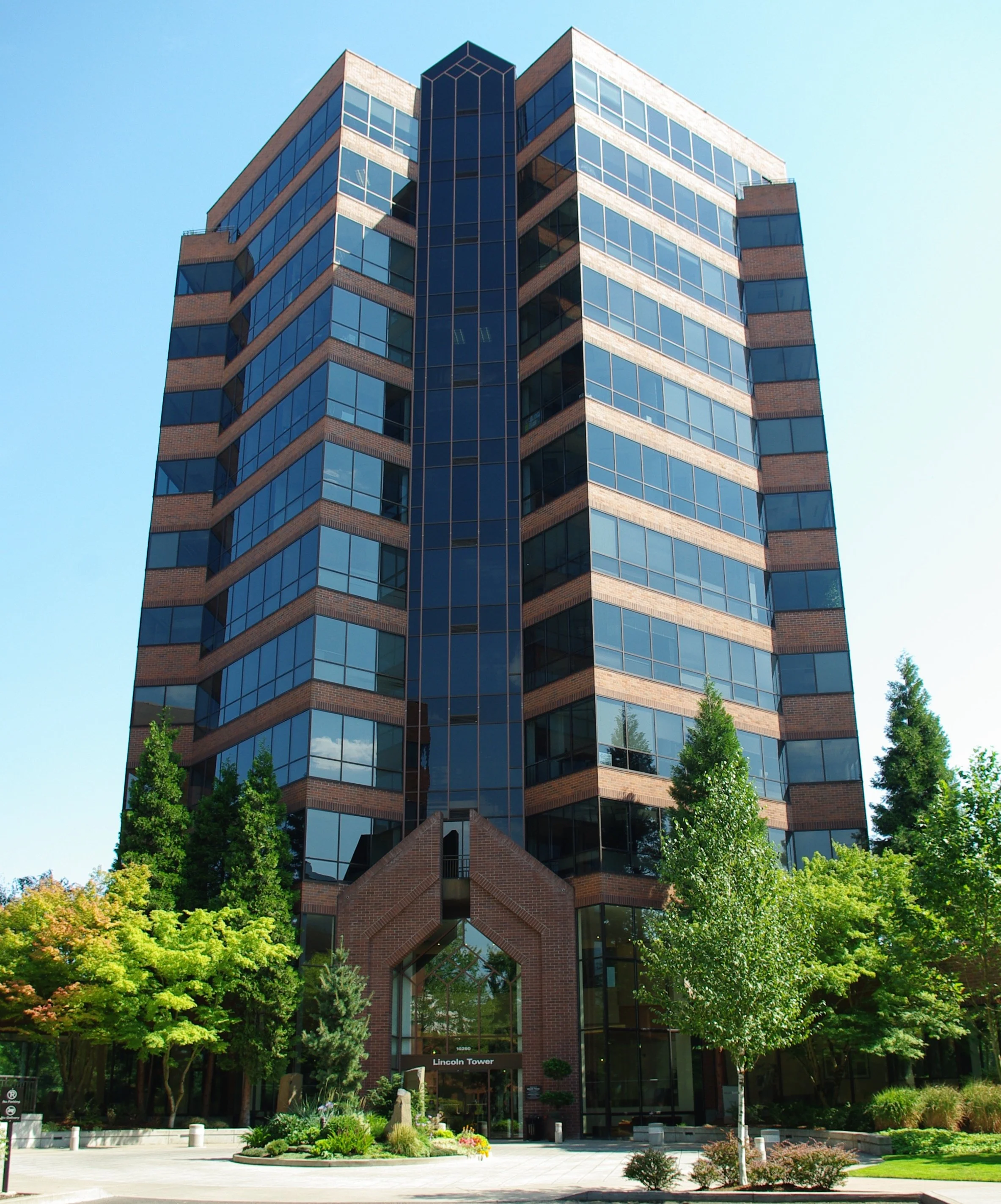
Whether you're benchmarking against recent Beaverton or Tigard office sales, evaluating a hold-vs-sell decision on office product along the 217 Corridor, or preparing for a refinance conversation, a broker opinion of value gives you a clear, comp-based pricing range for your suburban Portland office property.
Every report covers comparable sales, lease comps, vacancy analytics, and a pricing summary — delivered at no cost and no obligation.
ARE YOU PAYING THE RIGHT LEASE RATE?
Whether you're negotiating a new Beaverton or Tigard office lease, approaching a renewal along the 217 Corridor, or evaluating whether your current rate reflects today's market, a lease rate analysis gives you the data to negotiate from a position of strength.
Service includes pulling recent lease comps, concession packages, sublease pricing, and vacancy trends for the 217 Corridor, Beaverton, and Tigard office market.
RELATED
GET IN TOUCH
Whether you're evaluating Beaverton or Tigard office space, comparing options between Lincoln Center, Nimbus, and buildings along Highway 217, or weighing a move from Downtown Portland to suburban Beaverton or Tigard — Matt can help. Share your property type, square footage, location or submarket, timeline, and what decision you're working through.
You'll get a direct response with relevant market data, comparable activity, and clear next steps — no runaround, no generic pitch. Coverage spans the full Portland metro including the 217 Corridor, Beaverton, Tigard, Kruse Way, Sunset Corridor, Downtown Portland, and Southwest Washington.