
Central Eastside & Close-in SE Office
Office leasing guidance for Portland's Central Eastside and Close-In SE — building types, parking realities, deal terms, and how to evaluate this submarket against Downtown and Lloyd alternatives.
ABOUT THE CENTRAL EASTSIDE & CLOSE-IN SE
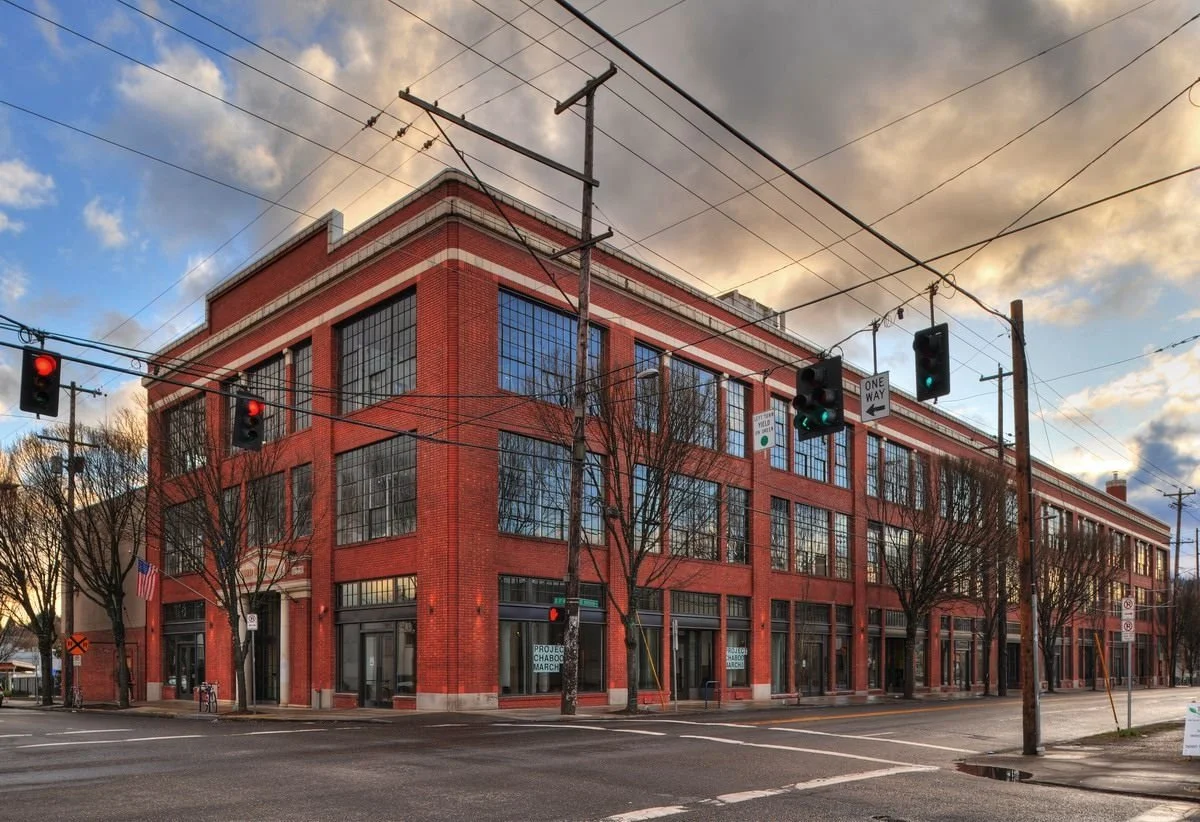
The Central Eastside and Close-In SE is Portland's creative office district — a dense, walkable, transit-connected submarket stretching east from the Willamette River through the Central Eastside Industrial District (CEID) and into the close-in neighborhoods of Buckman, Hosford-Abernethy, and the Hawthorne corridor. Tenants searching for Central Eastside office space find a submarket unlike anything else in the Portland metro: heavy timber warehouses, brick loft buildings, and adaptive reuse projects that produce office environments unavailable Downtown or in the suburbs. It is the only submarket where industrial heritage and office demand genuinely coexist.
The CEID is a city-designated industrial sanctuary zone, which limits residential conversion and preserves the district's mixed-use character. The practical result is a neighborhood where working fabricators, food manufacturers, and distributors operate alongside architecture firms, tech companies, and nonprofits — and where that mix creates a street-level authenticity that speculative office parks can't replicate. For tenants, it also means the building stock will remain land-constrained, which is a long-term supply consideration that benefits those who lock in terms now.
For landlords, the submarket has demonstrated strong resilience. The owner-operator profile and locally-rooted tenant base insulated the CEID from the large-block sublease wave that hit institutional CBD towers hard in 2023 and 2024. Effective rents have held steadier here, and retention among established tenants is high.
WHAT’S DIFFERENT ABOUT THIS SUBMARKET
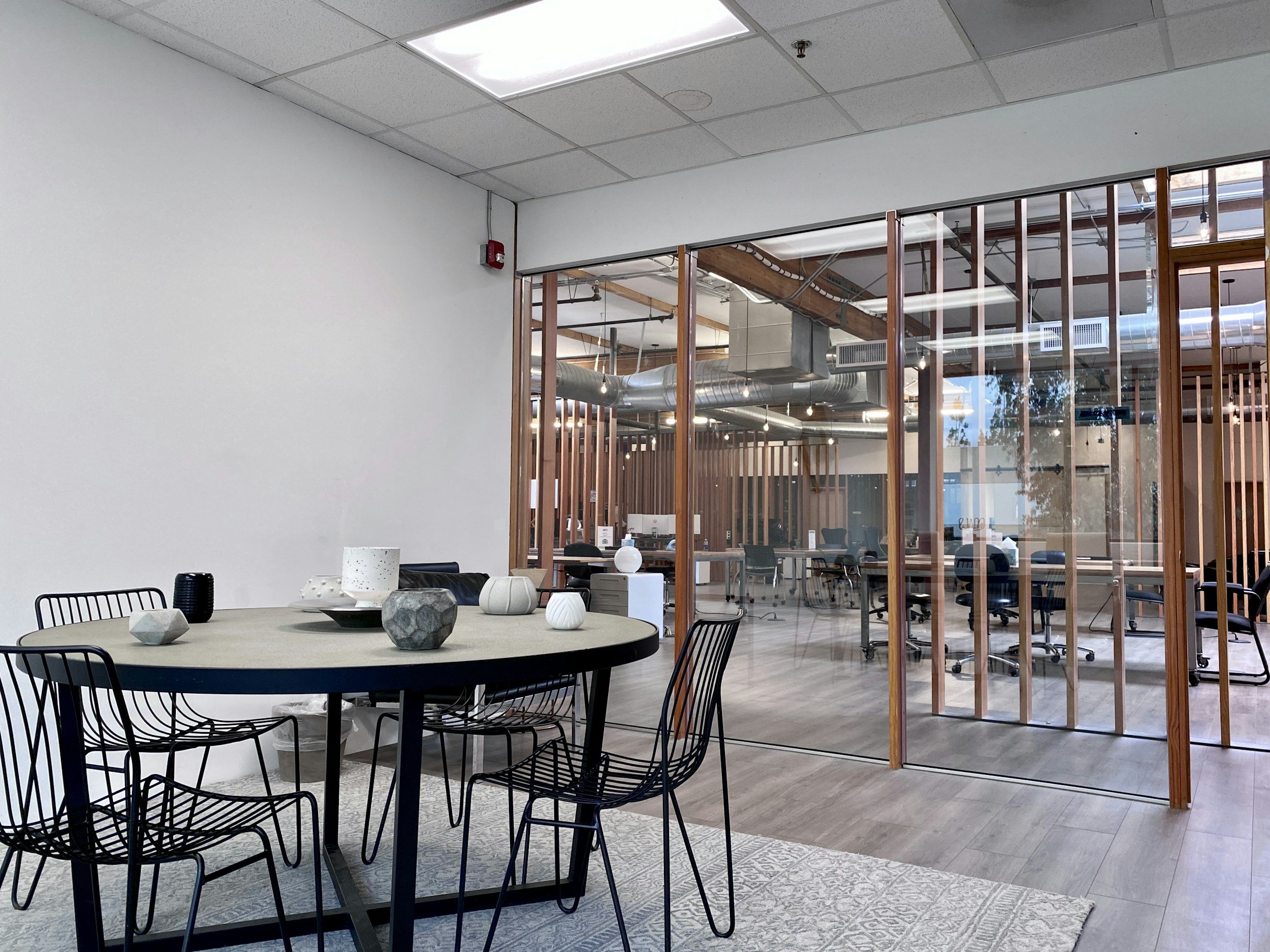
The Central Eastside offers something no other Portland submarket can match at a comparable price point: genuine creative office space — converted timber and brick, high ceilings, concrete floors, operable windows — at rents running $3–$10/SF below Downtown on comparable quality. For tenants who care what their space communicates about their organization, and who have an employee base oriented toward transit and bike commuting, Central Eastside office leasing is frequently the highest-value decision in the metro.
The tradeoff is parking. This is the submarket's most significant operational constraint and it is not a minor one. Most CEID buildings offer limited or no dedicated parking, and street parking is competitive. Tenants whose employees primarily drive should model parking costs explicitly before comparing this submarket against Lloyd or suburban alternatives — the rent delta narrows or disappears once structured parking is factored in. Tenants with transit-oriented or bike-commuting teams, on the other hand, find the CEID's infrastructure genuinely supportive.
The landlord profile also differs meaningfully from the CBD or Lloyd. Most buildings here are held by families, local investors, or small operating companies — not institutional owners. Decisions are made faster, lease structures are more flexible, and you are often negotiating directly with the person who owns the asset. That dynamic creates real opportunity for tenants who come to the table with current market data and a clear ask.
LOCATION INFORMATION
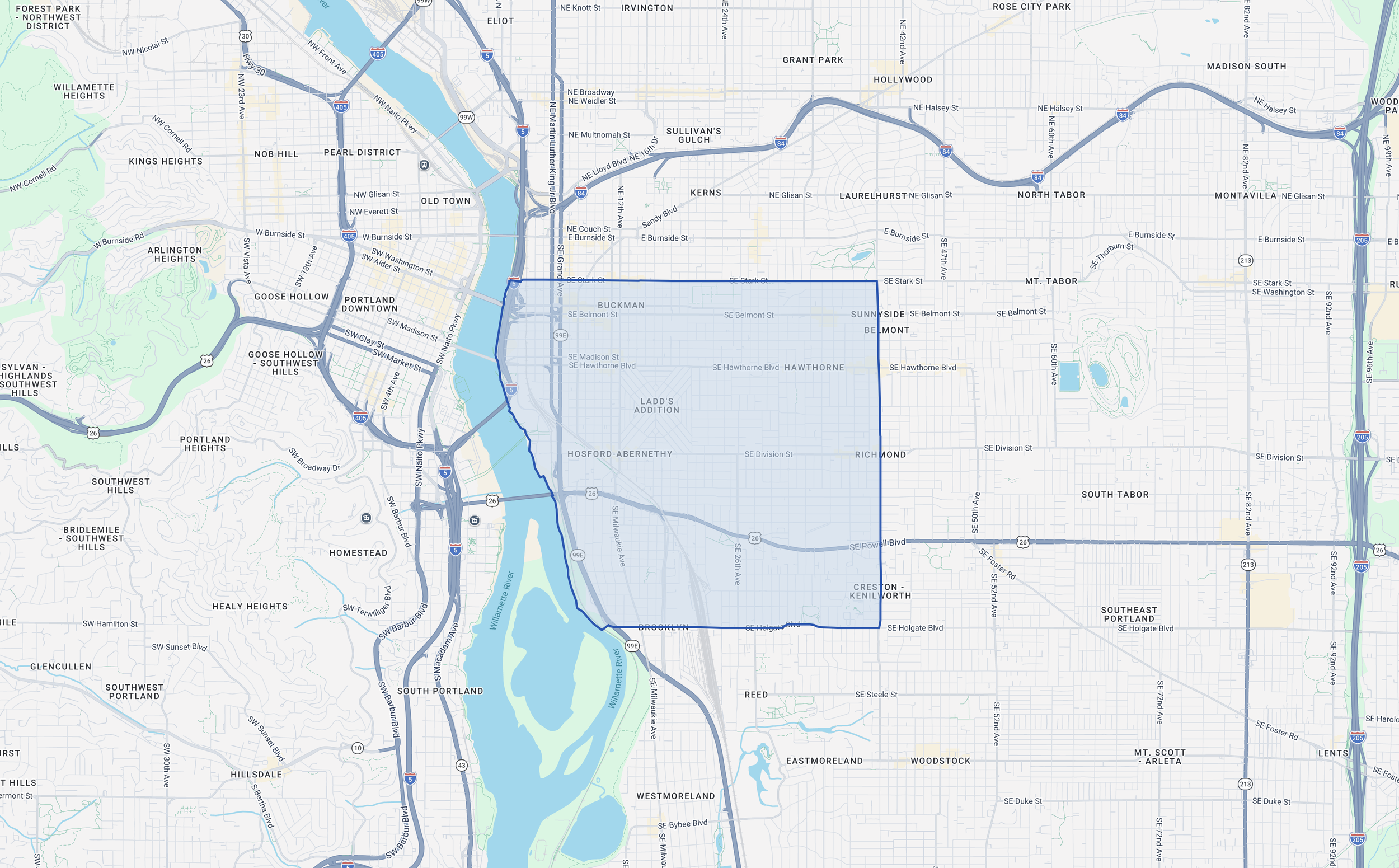
The CEID sits immediately east of the Willamette River, bounded roughly by Burnside to the north, Powell to the south, SE 12th to the east, and the river to the west. Four bridge crossings — the Steel, Burnside, Morrison, and Hawthorne — connect Central Eastside office space directly to Downtown and the Pearl, with typical drive times of 5–10 minutes in normal conditions. The MAX Green and Orange lines run along the eastern boundary of the district, and TriMet bus service runs through the submarket itself. For employees who live in inner SE Portland — Richmond, Woodstock, Sellwood — the CEID is the most convenient office location in the metro: no bridge, no freeway, often bikeable. The Eastbank Esplanade and a mature network of protected lanes and bike boulevards make cycling from most inner Portland neighborhoods practical and safe.
CENTRAL EASTSIDE & CLOSE-IN SE SNAPSHOT
Known For
Converted heavy timber and brick warehouse office — the best creative product in the Portland metro
Owner-operator landlords with faster, more flexible deal-making than institutional ownership
Rents running $3–$10/SF below comparable Downtown product
Strong bike and transit access via four bridge crossings and MAX Green/Orange lines
Portland's highest concentration of independent food, coffee, and after-work amenities
Typical User Profiles
Architecture, design, and engineering firms
Technology and software companies
Nonprofits and foundations
Creative and media agencies
Professional services and healthcare administration
Startups and growth-stage companies who want character space without suburban economics
Best Fits
Tenants priced out of the Pearl or CBD who don't want to move to the suburbs
Organizations with transit-oriented or bike-commuting employee bases
Companies for whom physical environment is a recruiting and branding asset
Tenants in the 1,500–10,000 SF range who can use open-plan or lightly improved space efficiently
Landlords seeking stable, locally-rooted tenants with high retention
Common Constraints
Parking — the single most critical factor; limited structured supply, competitive street parking, $150–$200/stall/month for reliable daily access
Floorplates skew small — few contiguous options above 12,000–15,000 SF
Older building stock with variable HVAC, electrical, and ADA compliance
Industrial sanctuary zoning limits redevelopment upside for investors seeking conversion plays
Fewer spec suites than Lloyd or suburban markets
RENT, PRICING, AND DEAL TERMS
Typical Deal Terms
Central Eastside office leasing deals are typically structured as full-service gross or modified gross leases, with asking rates running $22–$30/SF FSG for Class B creative product and $32–$36/SF for well-renovated, high-demand buildings. This is $3–$8/SF below comparable CBD product, and often more on an effective rate basis once owner-operator flexibility on concessions is applied. Parking is the variable that changes the math: if your team needs stalls, budget $150–$200/stall/month and run a total occupancy cost comparison before concluding this submarket is cheaper than Lloyd or suburban options.
Negotiation Levers
TI allowance: Lower than CBD on a per-SF basis ($15–$35/SF typical), but tenants willing to take as-is or light-work space can offset this with better face rate and free rent
Free rent: 1–3 months market on 3–5 year terms; 3–6 months achievable on longer commitments with creditworthy tenants
Face rate: Owner-operators are more negotiable than institutional landlords — current comp data and a clean counterproposal close deals faster here than anywhere in the Portland market
Lease term: Shorter initial terms with renewal options are achievable; phased buildouts and expansion rights tied to adjacent suites are deal-specific but realistic
Escalation structure: Fixed annual bumps ($0.50–$1.00/SF) are market; push back on CPI-tied escalations in a rising cost environment
Deal Killers
Heavy daily car commutes with no parking solution budgeted — this is a non-starter for car-dependent teams
Large contiguous space requirements above 15,000 SF — inventory simply doesn't exist in meaningful volume
Clients or leadership who expect a formal Class A lobby environment — the converted warehouse aesthetic is a liability for some businesses
Operating expense structures in older buildings with deferred capital — verify mechanical and roof condition before signing
Tenants expecting turnkey spec suite delivery on a short timeline — CEID inventory typically requires some lead time
Comparing Proposals
Run the same total occupancy cost model you'd use for Downtown: base rent + operating expense exposure + parking (stalls × rate × 12) − TI credit − free rent amortized over term. The CEID advantage shows up most clearly in the base rent line — but make sure you're solving the parking question first. A tenant who needs 15 stalls and pays $175/month has effectively added $2.10/SF to their annual cost before a dollar of base rent is compared.
Mini Case Example
A Portland architecture firm evaluating lease expiration in the Pearl ran a parallel search across three CEID buildings. Parking was manageable — their team was primarily bike and transit — so the comparison was clean: $7/SF lower effective rate than their Pearl renewal proposal, $22/SF TI (sufficient for their open-plan needs), three months free rent on a 5-year term, and a landlord who committed to HVAC servicing in the lease. The firm relocated and reduced annual occupancy cost by over $35,000 on a 3,800 SF lease without sacrificing proximity, transit access, or the environment their employees expected.
SUBMARKET FAQ
-
The CEID is a city-designated industrial sanctuary that prohibits residential conversion and limits non-industrial uses to protect the district's employment base. For tenants evaluating Central Eastside office space, this means the neighborhood character that makes the CEID valuable is protected — you're not leasing into a district that's one development cycle away from displacement. For investors, it constrains upside on conversion plays but preserves the supply scarcity that keeps rents stable.
-
The CEID works best for tenants in the 1,500–10,000 SF range. Most buildings have floorplates in the 3,000–12,000 SF range, and large contiguous blocks above 15,000 SF are scarce. Tenants needing a single floor of 20,000 SF or more should be looking at Lloyd District, the CBD, or suburban markets. For smaller requirements, the CEID offers some of the best product-to-price value in the metro.
-
Model it explicitly before comparing options. Most CEID buildings offer limited or no dedicated parking, and structured options typically run $150–$200/stall/month — higher than Lloyd and comparable to some CBD locations. If your team is primarily driving, run a total occupancy cost comparison that includes parking before concluding the CEID is economically advantaged. If you have employees who could shift to transit or bike with the right incentives, the submarket's infrastructure makes that transition more viable than almost anywhere else in the metro.
-
Very few. The building stock is predominantly Class B and creative Class B — buildings that score well on environment and character but don't offer the formal lobby presence or full-service amenities that Class A typically implies. There is some Class A-adjacent product in newer mixed-use developments near the waterfront, but it's a small share of total inventory. If your organization requires a traditional Class A environment, Lloyd District or the CBD is the right search area.
-
Term lengths are similar — 3 to 7 years for most commercial tenants. The meaningful difference is in structure and speed. Owner-operators in the CEID make decisions faster and negotiate more directly than institutional landlords in the CBD. Non-standard provisions — phased buildouts, expansion rights, shorter initial terms with options — are more achievable because you're dealing with the actual decision-maker. In the CBD, those same provisions often require committee approval and can be categorically unavailable.
-
It depends on your client profile. For companies whose clients are in tech, creative, nonprofit, or local business sectors, the CEID reads as intentional and professional in a way that a suburban park cannot. For businesses that serve corporate or institutional clients who associate traditional lobbies with credibility, the converted warehouse aesthetic can create friction. Know your client base and what your environment communicates before committing.
-
Nine to twelve months before expiration for most tenants; 18 months for spaces above 8,000 SF or with meaningful buildout requirements. CEID buildings have smaller contractor pools than institutional CBD buildings, which can affect TI delivery timelines. Running a parallel market search — even if renewal is the likely outcome — is the correct move. Owner-operators here will negotiate harder when they know you have alternatives actively in play.
WHAT’S YOUR PROPERTY WORTH?
If you own office property in the Central Eastside or Close-In SE and want to understand its current market value or achievable lease rate, I provide broker opinions of value for office assets across this submarket. A BOV gives you a defensible rent or value range grounded in current comp data — without the cost or timeline of a formal appraisal.
ARE YOU PAYING THE RIGHT LEASE RATE?
If you're a tenant evaluating space in the Central Eastside or negotiating a renewal on an existing lease, a lease rate analysis tells you whether the number on the table is at market, above market, or leaving money on the table before you respond. I run these analyses for tenants across Portland's office submarkets using current comp data and deal structure context. It typically takes 24–48 hours.
RELATED
GET IN TOUCH
Contact Matt Lyman at Norris & Stevens about leasing, renewing, or evaluating office space in the Central Eastside and Close-In SE. Whether you're a tenant comparing the CEID against Downtown or Lloyd District options, a landlord assessing pricing and concession strategy for your building, or an investor evaluating acquisition targets in this submarket, share your situation and Matt will follow up with current market context and a recommended approach.
Include your space requirements — size range, parking needs, building type preferences, budget parameters, and timeline — and Matt will respond with current Central Eastside availability, recent lease comps, and clear next steps.