
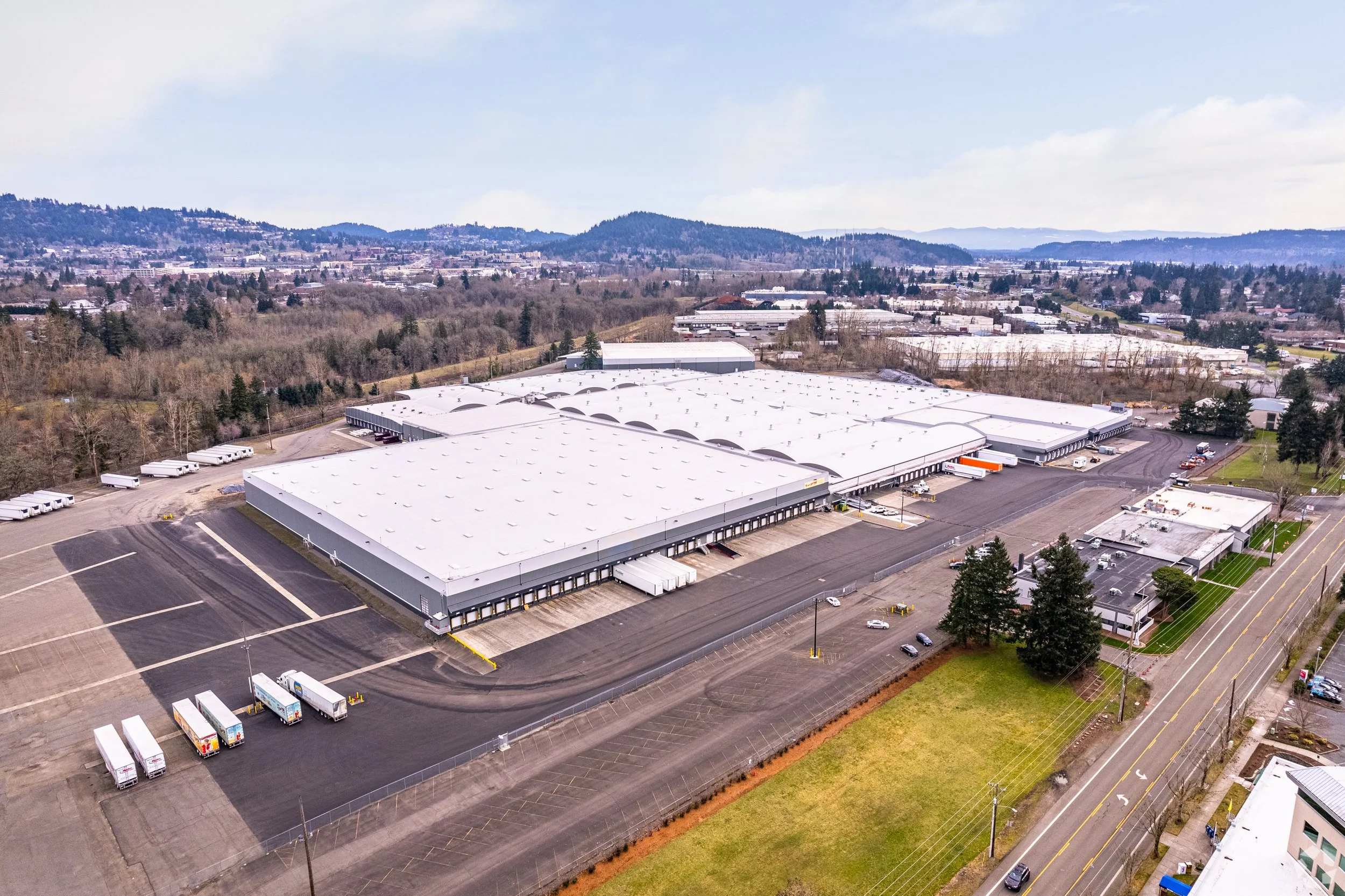
Clackamas & Outer SE Industrial
Clackamas/Outer SE industrial guidance for contractor and service users needing practical access, parking utility, and functional warehouse layouts.
ABOUT CLACKAMAS & OUTER SE INDUSTRIAL
Clackamas and Outer Southeast Portland form one of the metro’s most active industrial corridors for contractor/service users, functional warehouse space, and light industrial operations. The area is often chosen for practical site utility—parking, grade loading, and workable layouts—plus strong access to the south and east metro. This page outlines what typically fits here, how to evaluate options quickly, and the deal terms that most affect total occupancy cost.
WHAT’S DIFFERENT ABOUT THIS SUBMARKET
Clackamas and Outer SE skew more function-first than most Portland industrial areas. The corridor is a common fit for contractor/service fleets, suppliers, and light industrial users that need real parking, grade loading, and workable circulation—not just a nice façade. Inventory ranges widely in age and condition, so outcomes are often driven by site utility (yard/staging/parking), power and sprinkler adequacy, and maintenance scope more than headline rent. The fastest way to narrow options is to confirm parking/fleet needs, yard permissions, and loading setup first, then diligence systems and expense language to avoid late surprises.
LOCATION INFORMATION
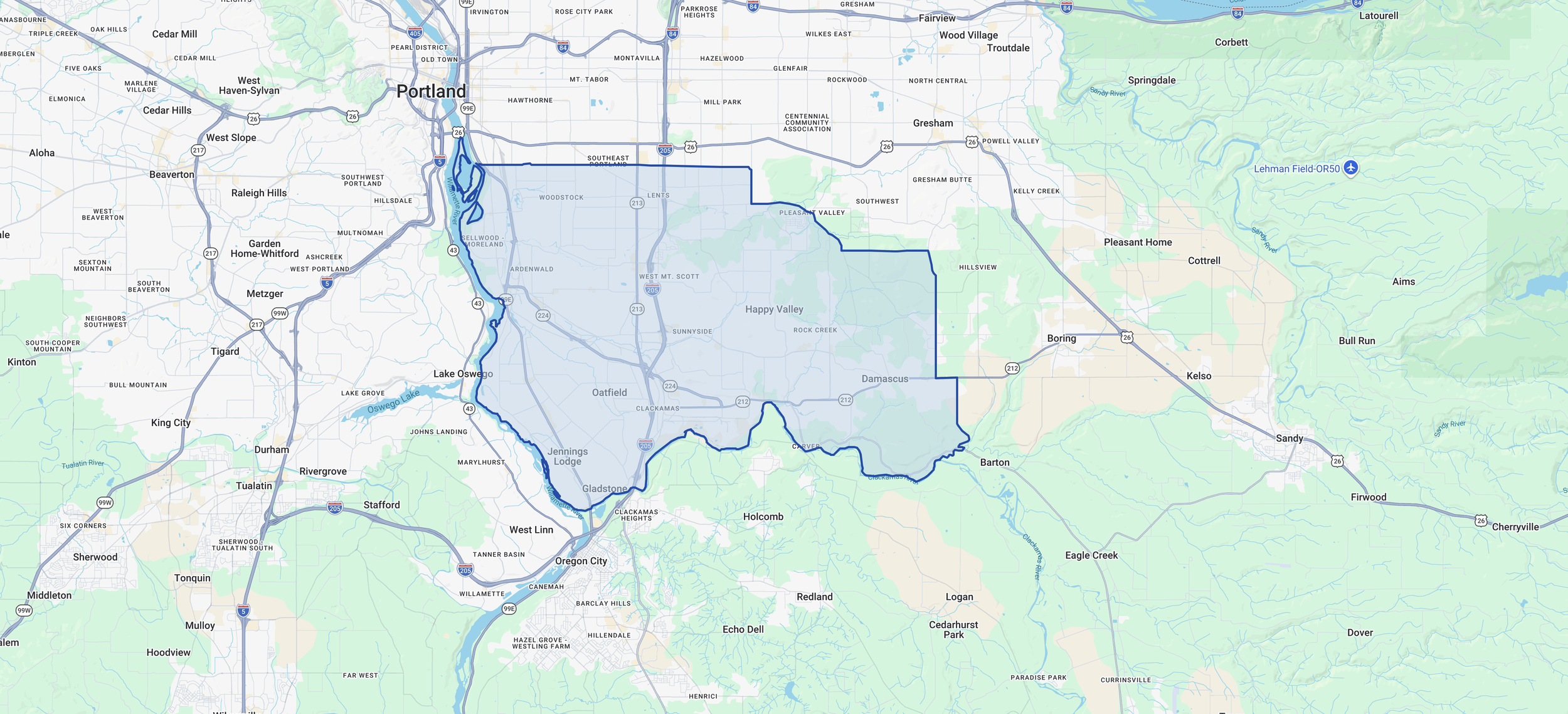
Clackamas/Outer SE generally refers to industrial areas east and southeast of Portland’s core, including Clackamas and nearby outer-SE corridors with strong regional connectivity to I-205 and key arterials serving the south and east metro. Boundaries vary by listing, but the practical focus is functional industrial inventory with good access, parking, and serviceable layouts.
QUICK SNAPSHOT
Known For
Large base of contractor/service and light industrial users
Functional warehouse and flex inventory with varied building ages
Practical site utility: parking, grade access, and workable circulation
Typical User Profiles
Contractors, service fleets, and suppliers
Light manufacturing, assembly, and distribution
Businesses needing warehouse + office/flex functionality
Best Fits
Users prioritizing function, access, and parking over close-in location
Operations needing grade loading and straightforward logistics
Tenants looking for a broad mix of sizes and building types
Common Constraints
Condition and systems vary widely—diligence on roof/HVAC/power matters
Yard/trailer/parking availability differs by property—verify early
Expense and maintenance responsibility language can materially change the deal
RENT, PRICING, AND DEAL TERMS
Negotiation Levers
Concessions: free rent, TI/turnkey packages for office/workflow changes
NNN/CAM language: inclusions/exclusions, admin/management fees, capital items
Caps + audit rights: especially on controllable expenses
Maintenance responsibilities: roof/structure/HVAC/parking lot scope and standards
Options: renewal/expansion/termination rights where operational continuity matters
Comparing Proposals
Compare total occupancy cost using effective economics: base rent + operating expenses + concessions amortized over term + tenant costs (improvements, moving, downtime). In practical industrial product, maintenance scope, expense definitions, and site utility often drive the real outcome.
Deal Killers
Fleet parking or yard use assumed—but prohibited or not exclusive.
Condition issues (roof, paving, drainage) surface late and aren’t addressed in the lease.
Operating expense language shifts major lot/repair costs onto the tenant.
Typical Deal Terms
Clackamas/Outer SE is function-first: concessions commonly target practical improvements (lighting, basic buildout, door/yard condition) and clear maintenance responsibilities. Because users often have fleets, leases frequently need precision around parking allocations, yard permissions, and pavement/lot repair language.
Mini Case Example
Compare total occupancy cost using effective economics: base rent + operating expenses + concessions amortized over term + tenant costs (improvements, moving, downtime). In practical industrial product, maintenance scope, expense definitions, and site utility often drive the real outcome.
SUBMARKET FAQ
-
Contractor/service, light industrial, and warehouse users prioritizing practical access, parking, and functional layouts.
-
The area supports a wide mix of manufacturers, logistics providers, and industrial services. Notable examples in the broader Clackamas County industrial base include PCC Structurals, Warn Industries, Pacific Seafood, US Reddaway, Emmert International, and Oregon Iron Works.
-
It’s more feasible than close-in submarkets, but it varies widely—confirm permitted use, exclusivity, and lease language early.
-
Clackamas generally offers more yard and outdoor storage options than Airport Way, with larger sites and fewer constraints on outside use. Sites along the 82nd Avenue and Johnson Creek corridors tend to have more flexible yard provisions than tighter Airport Way locations. If secured yard, outdoor equipment storage, or trailer staging is a hard requirement, Clackamas usually provides more options at better value — the trade-off is distance from PDX and the north metro freeway network.
-
Clackamas has a wide range. Older functional product from the 1970s-80s along 82nd, McLoughlin, and Johnson Creek sits alongside newer construction closer to I-205 and Sunrise Corridor. Building condition varies significantly — two buildings at the same asking rate can have very different roof, HVAC, and slab conditions. Physical inspection and maintenance history review matter more in this submarket than in corridors with more homogeneous inventory.
-
Some Clackamas corridor properties sit in unincorporated Clackamas County rather than within Portland city limits. Permitting, business licensing, and land use regulations differ from the City of Portland. For uses that require conditional use permits, design review, or environmental compliance, the jurisdiction matters — and the timeline and cost for approvals can vary. Confirm which jurisdiction your building is in before assuming Portland rules apply.
-
Start 12–18 months before expiration. Clackamas has enough inventory depth that tenants can usually build real alternatives, but the best-functional spaces with good yard and loading move quickly. Starting early gives you time to tour, compare options on total occupancy cost, and build the leverage that drives better renewal or relocation economics.
WHAT’S YOUR PROPERTY WORTH?
Whether you're benchmarking against recent warehouse and distribution sales, evaluating a hold-vs-sell decision, or preparing for a refinance conversation, a broker opinion of value gives you a clear, comp-based pricing range for your Airport Way or Columbia Corridor industrial property. I'll deliver a 50–80+ page report covering comparable sales, lease comps, vacancy analytics, and a pricing summary with conservative, probable, and optimistic values — at no cost and no obligation.
ARE YOU PAYING THE RIGHT LEASE RATE?
Whether you're negotiating a new warehouse lease, approaching a renewal in the Columbia Corridor, or evaluating whether your current rate reflects today's market, a lease rate analysis gives you the data to negotiate from a position of strength. I'll pull recent lease comps, concession packages, and vacancy trends for Airport Way and Columbia Corridor industrial space — so you know exactly what tenants like you are paying and where there's room to negotiate.
RELATED
GET IN TOUCH
Contact Matt Lyman at Norris & Stevens about leasing or buying industrial space in Clackamas and Outer Southeast Portland. Whether you're a contractor needing yard and shop space, a light manufacturer looking for functional inventory with I-205 access, or a service business optimizing for southeast metro coverage, share your situation and Matt will follow up with current availability and comps.
Include your space requirements — size range, yard/outdoor storage needs, loading, power, and timeline — and Matt will respond with Clackamas and SE options that fit.