
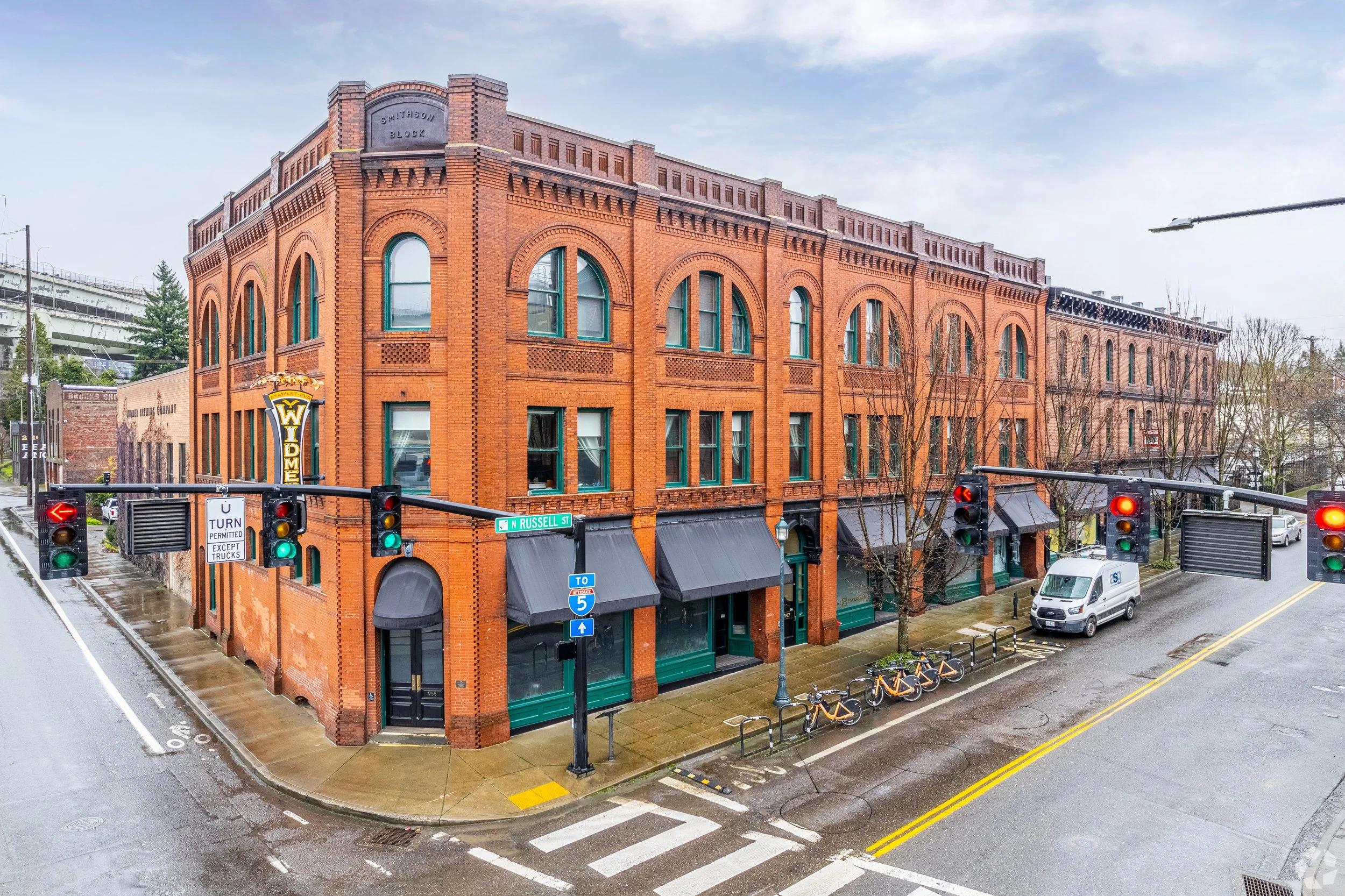
Gateway & NE Close-In Office
Office leasing guidance for Portland's Gateway and NE Close-In corridor — building types, transit access, deal terms, and how to evaluate this submarket against Lloyd District and suburban alternatives.
ABOUT THE GATEWAY & NE CLOSE-IN SUBMARKET
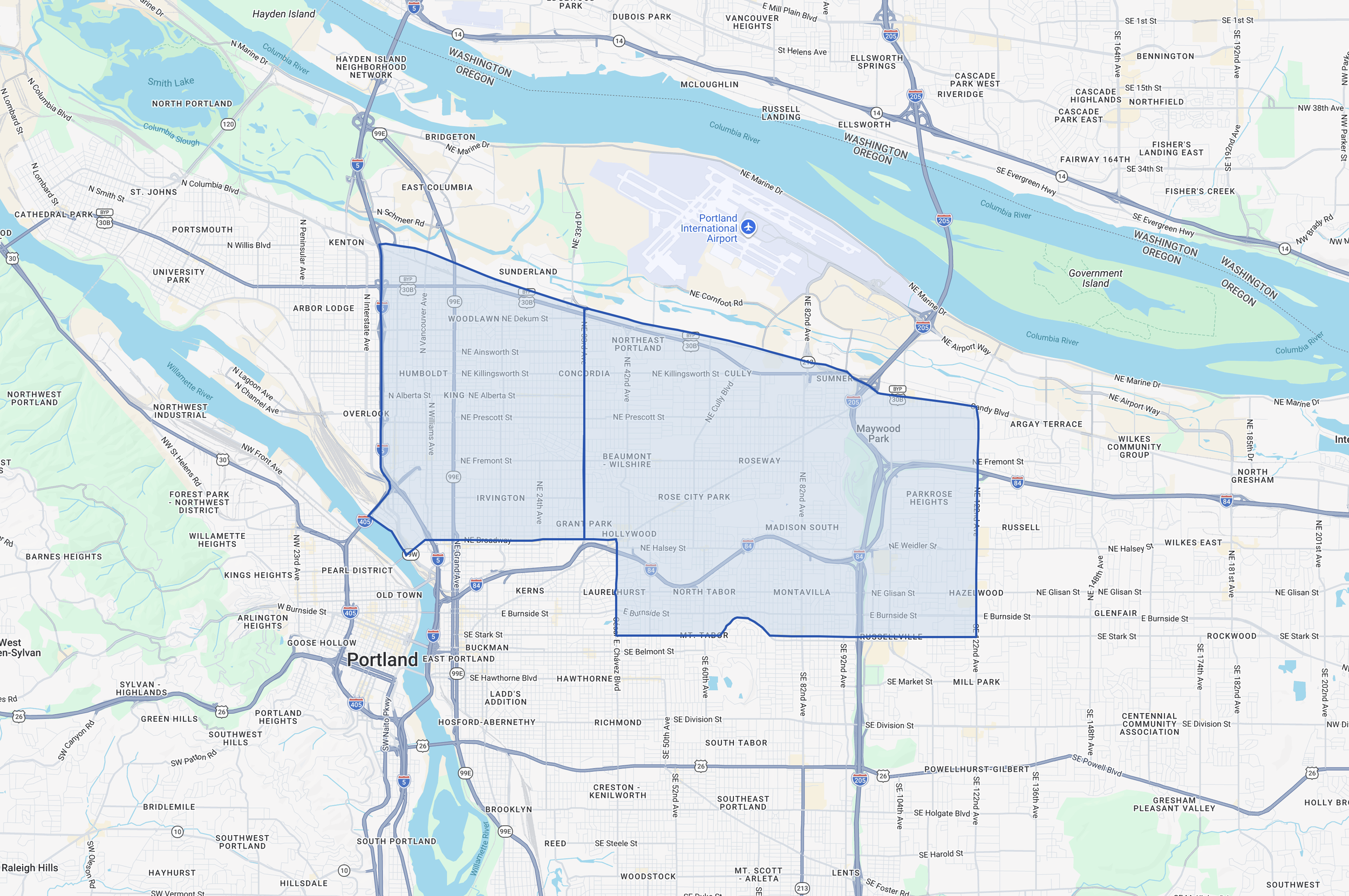
Gateway and NE Close-In is Portland's most underutilized office submarket — and for the right tenant, one of its most economical. Stretching along the NE 99th Avenue and I-205 corridor through Gateway, and westward through the Hollywood, NE Broadway, and inner Northeast neighborhoods, this submarket occupies the eastern edge of Portland's urban core. It offers MAX light rail access comparable to Lloyd District at asking rents that typically run $5–$10/SF below what tenants pay for similar product closer in.
The submarket is not glamorous. Building stock ranges from functional 1980s and 1990s low-rise office to older converted retail and mixed-use product along NE Broadway and Fremont. There is no trophy product here, no institutional landlords with amenity programs, and no concentration of marquee tenants. What the Gateway and NE Close-In corridor offers instead is value, accessibility, and a stable tenant base of government agencies, social service organizations, healthcare operators, educational institutions, and locally-rooted professional services firms that have found the economics difficult to match elsewhere in the metro.
For landlords, the submarket serves a consistent and largely recession-resistant demand pool. Government and nonprofit tenants sign long-term leases, maintain their spaces responsibly, and rarely vacate without substantial notice. For tenants, the combination of MAX connectivity, reasonable parking ratios, and rents well below the urban core makes Gateway and NE Close-In worth a serious look before defaulting to a suburban park or stretching the budget for Lloyd District.
WHAT’S DIFFERENT ABOUT THIS SUBMARKET
Gateway and NE Close-In office leasing operates differently than nearly every other Portland submarket, and the differences cut both ways.
The value proposition is real. Asking rents in this corridor run $18–$26/SF FSG for Class B product — the lowest of any urban-adjacent Portland office submarket. Tenants who compare Gateway against Lloyd on a pure occupancy cost basis, accounting for base rent, parking, and operating expenses, frequently find a $4–$8/SF annual advantage that funds meaningful operational capacity. For organizations with cost-sensitive budgets — nonprofits, government contractors, healthcare administrators, educational operators — that delta is often the deciding factor.
The tradeoff is perception and amenities. Gateway does not read as a prestigious business address, and for client-facing organizations whose clients associate location with credibility, that matters. Street-level amenities in the Gateway core are limited — improving, but not yet at the density of Lloyd or the Hollywood District further west. Tenants whose employees are internally-focused and whose clients rarely visit the office find the perception issue largely irrelevant. Tenants who host regular client visits or want to use their office address as a business development asset should weigh this carefully.
The Hollywood and NE Broadway corridor — the western portion of this submarket — splits the difference. Addresses along NE Broadway or near the Hollywood MAX station carry better street presence, walkable lunch and coffee options, and a neighborhood feel that compares favorably with parts of the Lloyd District at a lower price point.
LOCATION INFORMATION
The Gateway submarket anchors around the Gateway/NE 99th Ave MAX station on the Red and Blue lines, with I-205 providing immediate freeway access to the airport corridor, Vancouver, and outer east Portland. The NE Close-In portion of the submarket runs west along NE Broadway, Hollywood, and the Fremont corridor to approximately NE 28th Avenue, encompassing the Hollywood Transit Center — one of TriMet's busiest hubs — with connections to the Red and Blue MAX lines and multiple bus routes. For employees commuting from Gresham, Troutdale, outer SE Portland, or Vancouver, the Gateway corridor is among the most accessible office locations in the metro. Drive time to Downtown Portland is 15–20 minutes in normal conditions. Drive time to PDX is under 15 minutes via I-205, making this submarket uniquely positioned for organizations with frequent travel or airport-adjacent operations. Parking ratios throughout the submarket run 3.0–5.0 per 1,000 SF — substantially better than Lloyd, the CEID, or Downtown — and structured parking is generally free or included in most multi-tenant leases.
GATEWAY & NE CLOSE-IN SNAPSHOT
Known For
Lowest office rents of any urban-adjacent Portland submarket — $18–$26/SF FSG typical
Strong MAX access via Red and Blue lines at Gateway and Hollywood Transit Center
Favorable parking ratios — 3.0–5.0 per 1,000 SF, typically included in lease
PDX proximity via I-205 — under 15 minutes to the airport
Stable tenant base of government, nonprofit, healthcare, and educational users
Typical User Profiles
Government agencies and public sector organizations
Nonprofits, social service organizations, and foundations
Healthcare operators, federally qualified health centers, and behavioral health providers
Educational institutions and training organizations
Insurance back-office and claims operations
Professional services firms serving east Portland and outer metro clientele
Best Fits
Tenants with cost-sensitive budgets that cannot justify Lloyd or CBD rents
Organizations whose clients or constituents are concentrated in east Portland, Gresham, or Vancouver
Operations requiring strong airport access for frequent traveler employees
Tenants with car-dependent workforces who need parking included in their lease economics
Landlords seeking stable, mission-driven tenants with long lease terms and low turnover
Common Constraints
Limited Class A product — building stock is predominantly Class B and functional Class C
Street-level amenity density lags Lloyd and the CEID, particularly in the Gateway core
Address perception — NE 99th or Gateway addresses carry lower prestige than inner Portland locations
Limited large contiguous blocks above 20,000 SF in well-maintained product
Some older building stock has deferred capital in mechanical and electrical systems
RENT, PRICING, AND DEAL TERMS
Typical Deal Terms
Gateway and NE Close-In office space deals are typically structured as full-service gross or modified gross leases, with asking rates running $5–$10/SF below comparable Lloyd District product. Concession packages are generally more modest than in the urban core — landlords here carry lower vacancy rates than Downtown or Lloyd, reducing pressure to compete aggressively on TI and free rent. Parking is a meaningful differentiator: stalls are typically included or available at $0–$50/stall/month, versus $75–$130 in Lloyd and $175–$250+ Downtown. For tenants with significant parking requirements, that delta frequently closes the apparent rent gap between this submarket and more expensive alternatives entirely.
Negotiation Levers
Client-facing businesses whose clients associate address with credibility — Gateway is a difficult sell for this profile
Tenants needing Class A lobby presence, full building amenities, or modern mechanical systems — product simply doesn't exist at scale here
Organizations recruiting from inner Portland neighborhoods whose employees are unwilling to commute east — this submarket pulls from east Portland, outer SE, and Vancouver; it does not pull from the Pearl or inner SE
Large contiguous requirements above 20,000 SF in well-maintained product — options are limited
Tenants on short timelines needing move-in-ready spec suites — inventory is thinner than Lloyd or suburban markets
Deal Killers
TI allowance: Modest by urban standards ($10–$25/SF typical), but lower face rents reduce the relative importance of TI to total deal economics
Free rent: 1–2 months market on 3–5 year terms; less available than in high-vacancy urban submarkets
Parking: Stall counts and rates are generally negotiable; push for reserved allocation and rate caps in longer terms
Lease term: Landlords in this submarket often prefer longer terms (5–7 years) given the stable tenant profile — use term length as a negotiating lever for better rate and parking
Operating expenses: Verify base year vintage and cap exposure in older buildings where deferred capital can create unpredictable cost escalation
Comparing Proposals
Run the same total occupancy cost model you'd use for any Portland submarket: base rent + operating expense exposure + parking (stalls × rate × 12) − TI credit − free rent amortized over term. The Gateway advantage shows up most clearly in the base rent and parking lines — but verify building condition and mechanical systems before signing. Two Gateway buildings with similar asking rates can produce materially different cost trajectories over a 5-year term depending on the age and maintenance history of HVAC, roof, and electrical systems.
Mini Case Example
A Portland-area nonprofit evaluating lease expiration in the Lloyd District ran a parallel search across three Gateway and NE Close-In options. The organization's clients and constituents were concentrated in east Portland and Gresham — making Gateway a better location for service delivery than Lloyd in the first place. The comparison was straightforward: $7/SF lower effective rent, parking included rather than $100/stall, and a 5-year term with a landlord motivated to retain a stable nonprofit tenant. The organization relocated and redirected over $45,000 in annual occupancy savings directly into programming.
SUBMARKET FAQ
-
Government agencies, nonprofits, social service organizations, healthcare operators, and educational institutions make up the majority of the stable tenant base. The submarket also attracts insurance back-office operations, professional services firms serving east Portland clientele, and mission-driven organizations that prioritize cost efficiency and community proximity over address prestige. It is not a submarket dominated by tech companies, law firms, or client-facing professional services.
-
For most tenants, Gateway is meaningfully cheaper on a total cost basis. Base rents run $5–$10/SF below comparable Lloyd product, and parking is typically included rather than billed separately at $75–$130/stall/month. A tenant with 8,000 SF and 15 parking stalls saves $50,000–$100,000 per year in total occupancy cost compared to a Lloyd District alternative — a significant number for any cost-sensitive organization. The tradeoff is building quality, amenity density, and address perception.
-
For employees commuting from outer east Portland, Gresham, and Troutdale, the Red and Blue lines through Gateway are the most direct MAX connection in the metro. For employees commuting from inner Portland, the Hollywood Transit Center provides good connections but adds travel time versus Lloyd or Downtown. The honest answer: Gateway MAX access is excellent for an east-oriented workforce and functional for most of inner Portland. It is not the right submarket for organizations whose employees predominantly commute from Washington County or the southwest corridor.
-
Predominantly Class B and functional Class C. There is no meaningful Class A inventory in this submarket. Class B product ranges from well-maintained 1980s and 1990s low-rise buildings with updated systems to older mixed-use product along NE Broadway and Hollywood. Class C is functional but often carries deferred maintenance in HVAC, electrical, and common areas. Tenants should inspect mechanical systems carefully before committing, particularly in buildings constructed before 1990.
-
Less so than Downtown or Lloyd, where elevated vacancy has pushed landlords to compete aggressively on TI and free rent. Gateway and NE Close-In landlords generally carry lower vacancy, reducing pressure to offer large concession packages. TI allowances of $10–$25/SF are market; free rent of 1–2 months is achievable on 3–5 year terms. The submarket's value proposition is in the base rent and parking lines, not concession depth. Tenants expecting Lloyd-level TI packages at Gateway rents will be disappointed.
-
It depends entirely on who your clients are. Organizations whose clients are east Portland residents, Medicaid recipients, government agencies, or community members concentrated in outer Portland find Gateway to be the right location — accessible, community-proximate, and affordable. Organizations whose clients are corporate, institutional, or inner Portland-based and who associate address with credibility will find Gateway a difficult positioning. Know your client base before committing to an address.
-
Nine to twelve months before expiration for most tenants; 18 months for larger spaces or tenants with significant buildout requirements. The submarket's lower vacancy means fewer move-in-ready options at any given time than Lloyd or suburban markets, and quality spaces lease quickly when they come available. Running a parallel search early — even if renewal is the expected outcome — gives you leverage and ensures you know the market before sitting down to negotiate with your existing landlord.
WHAT’S YOUR PROPERTY WORTH?
If you own office property in the Gateway or NE Close-In corridor and want to understand its current market value or achievable lease rate, I provide broker opinions of value for office assets across this submarket. A BOV gives you a defensible rent or value range grounded in current comp data — without the cost or timeline of a formal appraisal. Whether you're evaluating a sale, refinancing, or considering a lease-up strategy, this is where to start.
ARE YOU PAYING THE RIGHT LEASE RATE?
If you're a tenant evaluating Gateway or NE Close-In office space, or negotiating a renewal on an existing lease, a lease rate analysis tells you whether the number on the table is at market, above market, or leaving money on the table before you respond. I run these analyses for tenants across Portland's office submarkets using current comp data and deal structure context. It typically takes 24–48 hours.
RELATED




GET IN TOUCH
Contact Matt Lyman at Norris & Stevens about leasing, renewing, or evaluating office space in the Gateway and NE Close-In corridor. Whether you're a tenant comparing Gateway against Lloyd or suburban options, a landlord assessing pricing and concession strategy for your building, or an investor evaluating acquisition targets in this submarket, share your situation and Matt will follow up with current market context and a recommended approach.
Include your space requirements — size range, parking needs, building class preferences, budget parameters, and timeline — and Matt will respond with current Gateway and NE Close-In availability, recent lease comps, and clear next steps.Include your space requirements — size range, parking needs, building type preferences, budget parameters, and timeline — and Matt will respond with current Central Eastside availability, recent lease comps, and clear next steps.