
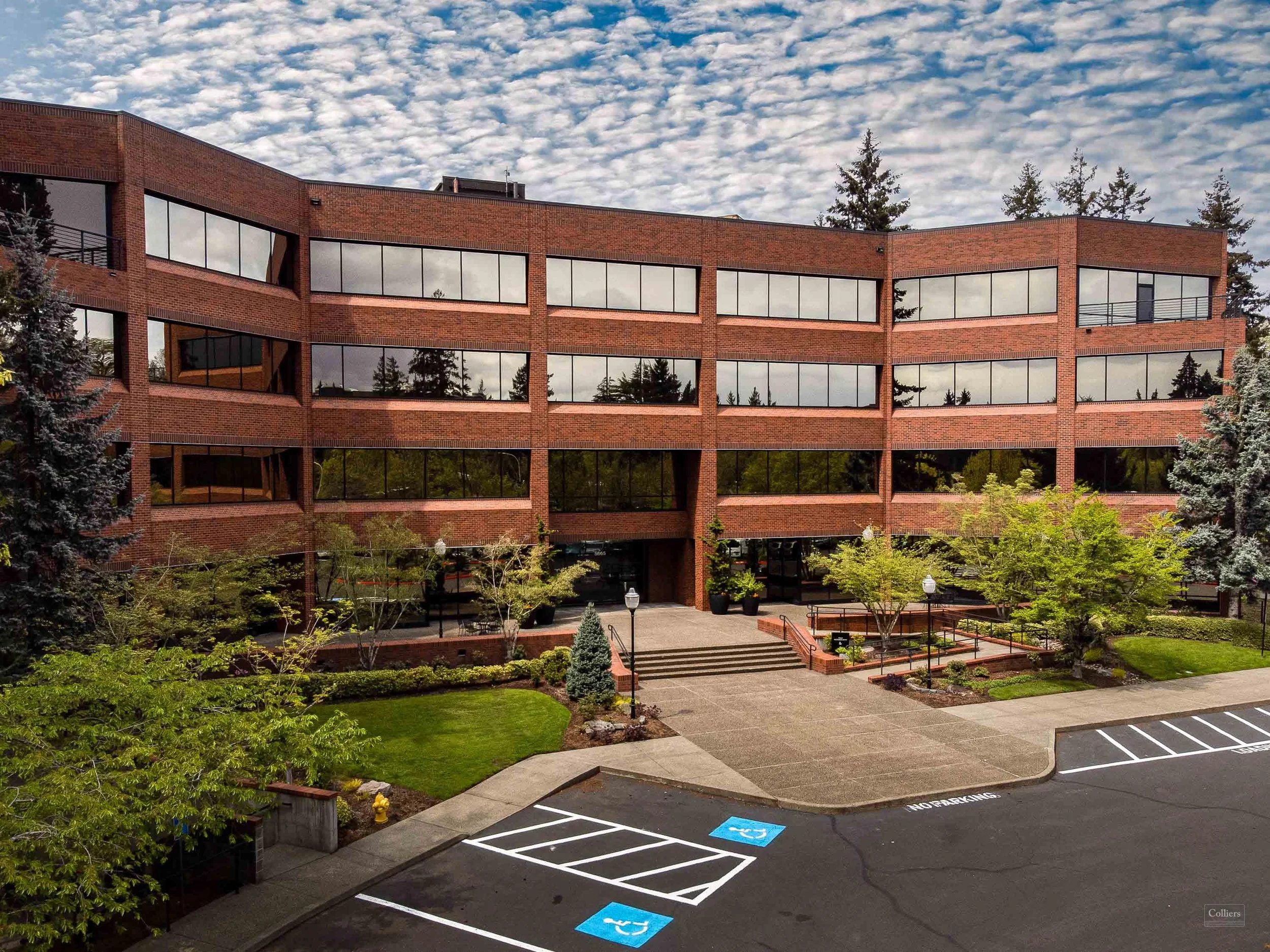
Lake Oswego & Kruse Way Office
Office leasing guidance for Lake Oswego and the Kruse Way corridor — suburban Class A positioning, parking advantages, tenant concessions, and how to evaluate Kruse Way against Downtown Portland and the 217 Corridor.
ABOUT LAKE OSWEGO & KRUSE WAY
Lake Oswego's Kruse Way corridor is the Portland metro's premier suburban office address. Roughly 3.1 million square feet of office product lines Kruse Way and Boones Ferry Road, anchored by Kruse Woods Corporate Park, Kruse Oaks, and Meadows Road — predominantly Class A and upper-tier Class B product built for mid-size and larger users.
The submarket draws tenants who want institutional-quality office space without Downtown Portland's parking costs, transit dependency, or street-level concerns. Financial services firms, insurance companies, engineering groups, and professional services tenants cluster here because the corridor offers a credible corporate address, strong freeway access via I-5 and Highway 217, and a residential talent base in Lake Oswego, West Linn, and Tualatin.
WHAT’S DIFFERENT ABOUT THIS SUBMARKET
Kruse Way is the closest thing Portland has to a true suburban office campus district. Unlike scattered suburban product along the 217 Corridor or in Beaverton, Kruse Way buildings sit in a concentrated node with a cohesive corporate identity — landscaped campuses, structured parking, and floor plates designed for professional services tenants.
But the submarket is in transition. Vacancy along Kruse Way and Boones Ferry Road is running around 22.5%, driven by post-pandemic rightsizing and shadow space from tenants waiting out lease expirations. Several buildings are advertising subleases, and at least one owner — Shorenstein Properties — has filed to rezone an underperforming office site for residential conversion. That means the supply picture is shifting: some product is leaving the market entirely, which will tighten availability over time. For tenants leasing now, the concession window is wide open.
LOCATION INFORMATION
The Lake Oswego / Kruse Way office submarket centers on Kruse Way, running east from I-5 to Boones Ferry Road, with additional office concentrations extending south along Boones Ferry toward Tualatin and north into Meadows Road. The corridor sits roughly 8 miles south of Downtown Portland with direct I-5 access via the Kruse Way interchange.
Key features include free surface and structured parking at suburban ratios (typically 3.5–5.0 stalls per 1,000 SF), proximity to Lake Oswego's town center retail and restaurants, and easy access to I-5, Highway 217, and I-205 — making the location viable for employees commuting from nearly any direction in the metro.
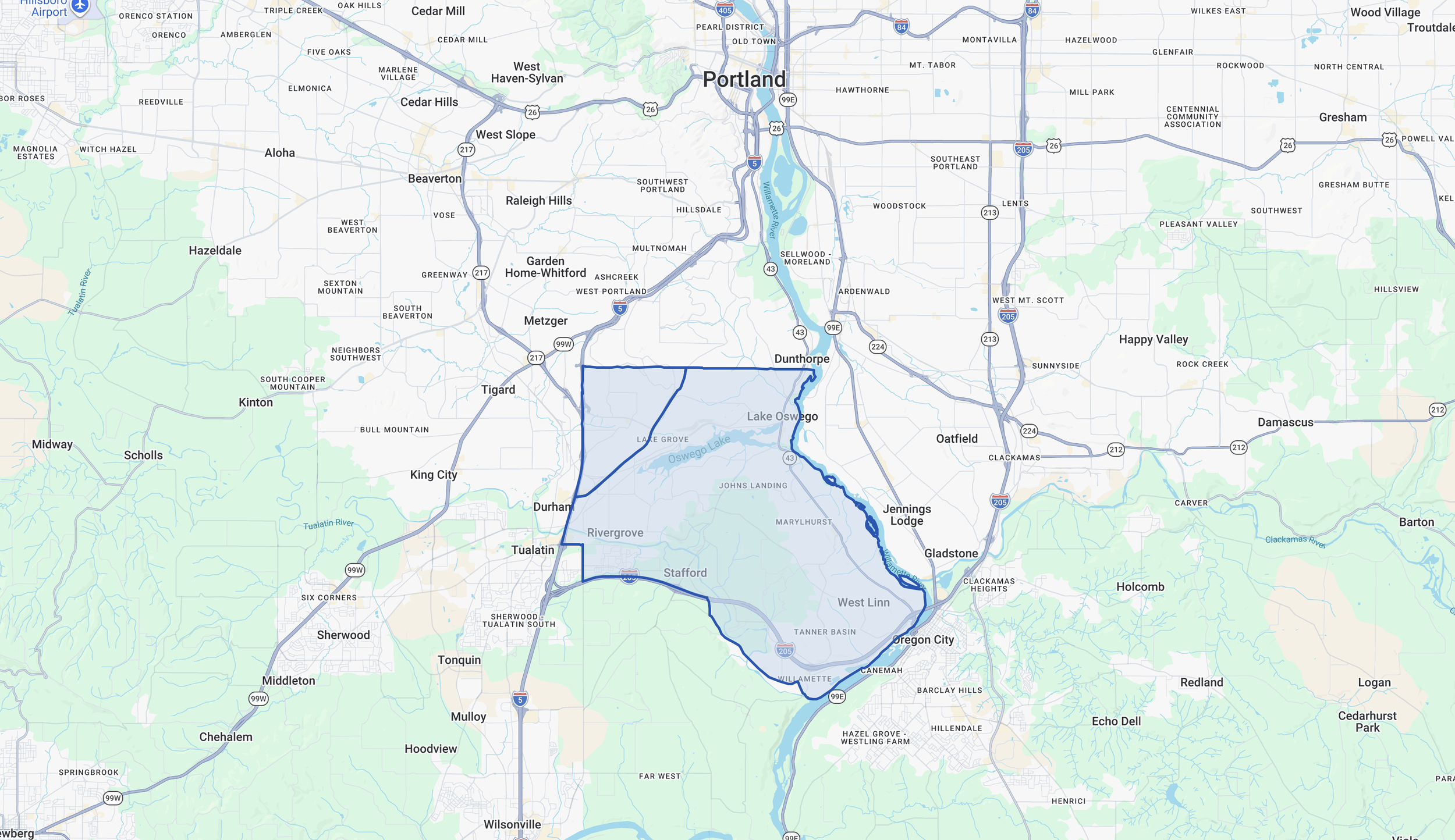
LAKE OSWEGO & KRUSE WAY SNAPSHOT
Known For
Portland metro's highest concentration of suburban Class A office product
Generous parking ratios included in lease rates — typically 3.5 to 5.0 per 1,000 SF
Campus-style settings with landscaped grounds and structured parking
Strong tenant concession environment driven by elevated vacancy and sublease availability
Proximity to affluent residential communities in Lake Oswego, West Linn, and Tualatin
Typical User Profiles
Financial services, wealth management, and insurance
Engineering, architecture, and environmental consulting
Law firms serving the south metro corridor
Technology companies seeking suburban campus environments
Corporate back-office and regional operations centers
Healthcare administration and medical device companies
Best Fits
Tenants who need 3,000–25,000+ SF of Class A space with ample parking
Companies relocating from Downtown Portland to reduce occupancy cost and improve employee commute access
Firms whose employees drive to work and need reliable, free parking
Users who want a professional corporate address without CBD pricing
Tenants willing to commit to longer terms in exchange for aggressive concession packages
Common Constraints
Limited transit access — TriMet bus service exists but the corridor is fundamentally car-dependent
Vacancy is elevated at ~22.5%, which signals tenant leverage but may concern some users about building vitality
Some older product has aging mechanical systems and common areas that haven't been refreshed
Sublease space competing with direct deals can create pricing confusion
Fewer dining and amenity options within walking distance compared to Downtown or the Pearl District
RENT, PRICING, AND DEAL TERMS
Typical Deal Terms
Kruse Way office leases are typically structured as full-service gross or modified gross, with base year expense stops. Asking rates for Class A product generally range from the low-to-mid $20s per SF annually, but effective rates after concessions — free rent, TI allowance, and escalation concessions — can drop significantly below asking for creditworthy tenants on longer terms.
The current concession environment along Kruse Way is among the most tenant-favorable in the metro. Landlords competing against sublease inventory and elevated vacancy are offering packages that would have been unthinkable five years ago. Tenants with flexibility on timing and willingness to tour multiple options are in the strongest negotiating position.
Negotiation Levers
Building common areas or mechanical systems don't meet tenant standards after tour
Landlord unwilling to match concession packages offered by competing buildings with higher vacancy
Parking ratio insufficient for tenant's actual headcount
Delivery timeline doesn't align with lease expiration at current location
Sublease term too short to justify buildout investment
Deal Killers
TI allowance and delivery condition (shell vs. turnkey)
Free rent scaled to lease term (6–12+ months on 5–7 year deals)
Escalation structure (fixed 2.5–3.0% vs. CPI-linked vs. operating expense pass-through)
Parking ratio and reserved stall allocation
Early termination and contraction options
Renewal options and rate reset mechanisms
Sublease vs. direct deal positioning for rate leverage
Comparing Proposals
Compare on total occupancy cost: base rent + estimated operating expense exposure + parking value (Kruse Way typically includes parking, which is worth $4–$7/SF annually compared to Downtown) + TI amortization credit + free rent amortized over term.
Kruse Way's biggest pricing advantage over Downtown Portland is parking. A 5,000 SF tenant needing 15–20 stalls pays $0 in additional parking cost on Kruse Way. The same stall count Downtown adds $31,500–$60,000 annually to occupancy cost. That difference alone can offset a higher face rate.
When comparing between Kruse Way buildings, normalize for expense structure, base year vintage, and TI delivery condition. Two buildings quoting $24/SF can produce meaningfully different total cost profiles depending on these variables.
Mini Case Example
A 12-person financial advisory firm evaluated renewing in aging Class B space on Boones Ferry Road against two Class A options in Kruse Woods Corporate Park. The Class A buildings, facing 25%+ vacancy, offered TI packages and free rent that brought effective rates below the firm's existing Class B renewal quote. The firm upgraded to Class A with a better parking ratio, newer building systems, and a more professional client-facing presence — at a lower effective annual cost than staying in place.
SUBMARKET FAQ
-
The headline rates can look similar — Kruse Way Class A in the low-to-mid $20s/SF versus Downtown Class A in the upper $20s to low $30s. But the real gap is in parking and total occupancy cost. A typical Kruse Way lease includes parking at 3.5–5.0 per 1,000 SF at no additional charge. Downtown parking runs $150–$250+ per stall per month, adding $4–$7/SF or more annually. Once you factor in parking, operating expense differences, and Kruse Way's current concession environment, total occupancy cost along the corridor is often 20–30% below comparable Downtown product.
-
Both, depending on perspective. Vacancy near 22.5% means some buildings feel quieter than tenants prefer, and a few owners are exploring conversion to residential — which signals long-term uncertainty for those specific assets. But for tenants leasing now, it's an opportunity: landlords are competing aggressively on concessions, sublease inventory creates additional pricing leverage, and creditworthy tenants have more negotiating power than they've had in decades. The key is choosing buildings with stable ownership, strong property management, and a credible path to improved occupancy.
-
Sublease space along Kruse Way can offer significant rate discounts — sometimes 20–40% below direct asking rates — especially for tenants who can work within the existing buildout and remaining term. The trade-offs are less flexibility on TI, a fixed term (you inherit the remaining lease), and counterparty risk if the sublessor defaults. For tenants who need space quickly and can match an existing floor plan, sublease is a strong play. For those who need custom buildout or a term longer than 3–4 years, direct deals are usually better despite the higher rate.
-
The corridor's tenant mix includes SAIF (Oregon's workers' compensation insurer), Hoffman Construction (which relocated from Downtown Portland), Directors Mortgage, and a range of financial services, insurance, and professional services firms. The submarket tends to attract established, mid-size companies that value a corporate campus environment, ample parking, and proximity to the south metro residential base.
-
Nine to twelve months before lease expiration for spaces under 10,000 SF. Twelve to eighteen months for larger requirements or significant buildouts. Even if you plan to renew in place, running a parallel market search creates leverage — landlords along Kruse Way know tenants have options in this vacancy environment, and they'll sharpen their renewal terms if they believe you're genuinely evaluating alternatives.
-
For companies whose employees primarily drive to work and where client meetings happen in-office rather than at courthouses or government buildings, yes. The parking economics alone justify the move for many tenants. You lose MAX light rail and streetcar access, walkable dining density, and the perception of a CBD address — but you gain reliable parking, lower total occupancy cost, campus-quality common areas, and an address that resonates with clients and employees in the south and west metro. Firms that have made this move recently include Hoffman Construction and several mid-size professional services groups.
-
Kruse Way offers more concentrated, campus-style Class A product in a single corridor. The 217 Corridor has more scattered inventory with a wider range of building quality — from newer Class A near Washington Square to older Class B flex-office product. Kruse Way parking ratios and building quality tend to be higher, but 217 Corridor can offer lower face rates on Class B product. For tenants prioritizing prestige and building quality, Kruse Way wins. For those optimizing on rate, 217 Corridor is worth evaluating.
WHAT’S YOUR PROPERTY WORTH?
Whether you're benchmarking against recent office sales in Lake Oswego, evaluating a hold-vs-sell decision on Kruse Way office product, or preparing for a refinance conversation, a broker opinion of value gives you a clear, comp-based pricing range for your suburban Portland office property.
Every report covers comparable sales, lease comps, vacancy analytics, and a pricing summary — delivered at no cost and no obligation.
ARE YOU PAYING THE RIGHT LEASE RATE?
Whether you're negotiating a new office lease along Kruse Way, approaching a renewal on Boones Ferry Road, or evaluating whether your current rate reflects today's market conditions in Lake Oswego, a lease rate analysis gives you the data to negotiate from a position of strength.
Service includes pulling recent lease comps, concession packages, sublease pricing, and vacancy trends for the Lake Oswego and Kruse Way office corridor.
RELATED

GET IN TOUCH
Whether you're evaluating office space along Kruse Way, considering a relocation from Downtown Portland to Lake Oswego, or exploring a renewal on Boones Ferry Road — Matt can help. Share your property type, square footage, location or submarket, timeline, and what decision you're working through. You'll get a direct response with relevant market data, comparable activity, and clear next steps — no runaround, no generic pitch.
Coverage spans the full Portland metro including Lake Oswego, Kruse Way, 217 Corridor, Downtown Portland, Lloyd District, Central Eastside, and Southwest Washington.