
Commercial Property Taxes in Portland Oregon: What Owners and Investors Need to Know
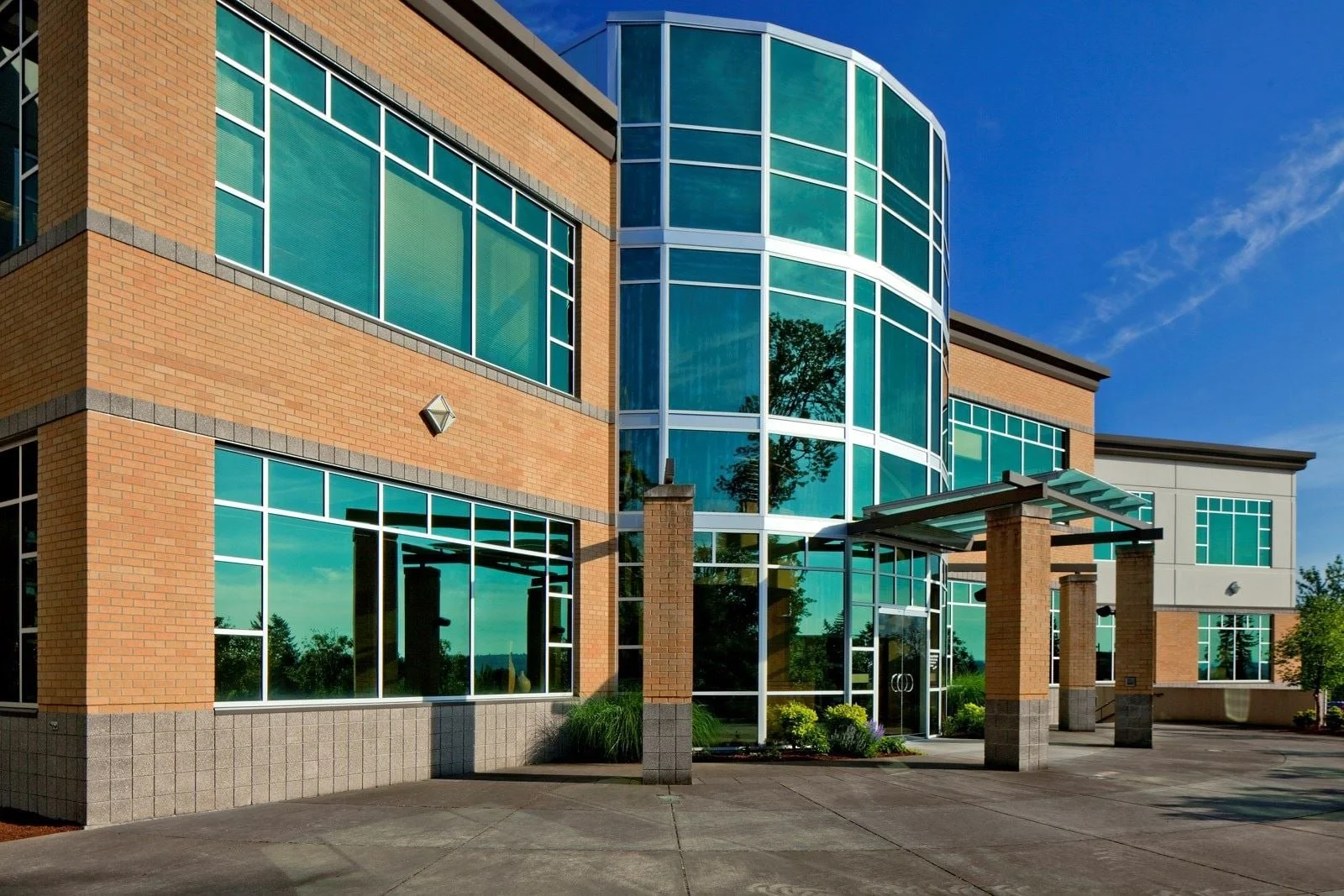
Oregon's property tax system is unlike most other states — and the difference matters if you own or invest in commercial real estate in Portland. Thanks to Measures 5 and 50, your tax bill is based on assessed value, not market value, and that gap can be significant. Whether you are evaluating an acquisition, projecting hold costs on a warehouse in the Columbia Corridor, or deciding whether to sell a downtown office building, understanding how property taxes actually work in Oregon gives you a material edge in underwriting and negotiation.
This guide breaks down the mechanics of commercial property taxes in Portland — how assessed value is calculated, what tax rates look like across the metro, and what owners and investors should watch for in 2026.
Portland Oregon Commercial Property Tax FAQ
Q: How are commercial property taxes calculated in Portland, Oregon?
A: Commercial property taxes in Portland are calculated by multiplying the assessed value (not market value) by the total tax rate for the property's levy code area. Oregon's Measure 50 caps assessed value growth at 3% per year, so assessed value is often well below real market value.
Q: What is the commercial property tax rate in Multnomah County?
A: Total tax rates in Multnomah County for commercial properties typically range from $20 to $30 per $1,000 of assessed value, depending on the specific levy code area and taxing districts. Properties inside the City of Portland generally fall toward the higher end of that range due to additional local levies.
Q: Why is my assessed value so much lower than market value in Oregon?
A: Oregon's Measure 50 (passed in 1997) froze assessed values at 1995 levels minus 10% and limits annual increases to 3%. Over time, market values have outpaced this cap significantly, creating a growing gap between what a property is worth and what it is taxed on.
Q: Do commercial property taxes reset to market value when a building sells in Portland?
A: No. Unlike states with reassessment-on-sale rules, Oregon does not reset assessed value when a commercial property changes hands. The buyer inherits the seller's assessed value and the 3% annual cap continues. This is a major advantage for investors acquiring properties with large assessed-to-market value gaps.
How Oregon's Property Tax System Works for Commercial Real Estate
Oregon's property tax framework is governed by two voter-approved measures that fundamentally changed how taxes are assessed and collected.
Measure 5 (1990) capped the total tax rate on any property at $15 per $1,000 of real market value — split between $5 for education and $10 for general government. This was the first constraint on Oregon property taxes.
Measure 50 (1997) went further. It created a new concept called Maximum Assessed Value (MAV), which was set at each property's 1995 real market value minus 10%. MAV can only increase by 3% per year unless there is new construction, a major improvement, or a change in use. The assessed value (AV) used on your tax bill is the lesser of MAV or real market value.
For most commercial properties in Portland that were built before 1997, the assessed value is substantially below market value — often 40% to 60% lower. This means a warehouse worth $5 million on the open market might have an assessed value of $2.5 million, and the tax bill reflects that lower number.
Portland Metro Commercial Property Tax Rates by County
Property tax rates in Oregon are expressed as dollars per $1,000 of assessed value. The total rate depends on which taxing districts overlap at a given property's location — county, city, school district, fire district, urban renewal area, and various special districts all contribute.
For commercial properties in the Portland metro, typical total tax rates fall in these ranges: Multnomah County properties inside the City of Portland generally see rates between $23 and $28 per $1,000 of assessed value. Washington County properties in Beaverton, Tigard, and the 217 Corridor typically range from $18 to $24 per $1,000. Clackamas County properties in Milwaukie, Oregon City, and the I-205 corridor tend to fall between $17 and $23 per $1,000. Clark County, Washington (Vancouver) uses a different system entirely — Washington state has no income tax but generally higher property tax rates, and assessed value is based on market value without Oregon's Measure 50 cap.
These ranges shift based on urban renewal areas, bond measures, and local operating levies that change from year to year. The exact rate for any property is determined by its levy code, which you can find on the county assessor's website.
Assessed Value vs. Market Value: What Portland CRE Investors Should Know
The gap between assessed value and real market value is one of the most important — and most misunderstood — dynamics in Portland commercial real estate. Here is why it matters.
When you acquire a commercial property in Oregon, you inherit the existing assessed value. There is no reassessment triggered by sale. If a building has been held for 20 years and its MAV has only grown at 3% annually, the assessed value may be a fraction of the purchase price. Your property tax bill stays low relative to what you paid.
This is a meaningful advantage over states like California (which reassesses on sale under Proposition 13's change-of-ownership rules) or states with no assessment caps at all. In Oregon, the buyer gets the benefit of the seller's legacy assessed value.
Conversely, newly constructed commercial buildings start with an assessed value set at their Measure 50 equivalent — essentially, what a comparable 1995-era property would have been assessed at, adjusted forward. In practice, new construction often has a smaller gap between assessed and market value, which means higher relative tax bills compared to older buildings.
For investors running underwriting models, this distinction can meaningfully change projected returns. A 1980s-era industrial building in the Airport Way and Columbia Corridor submarket with a low assessed value will carry lower annual property tax expense than a brand-new speculative warehouse — even if the market values are similar.
How New Construction and Improvements Affect Portland Commercial Property Taxes
The 3% annual cap on assessed value growth has exceptions. When new construction is added or significant capital improvements are made, the county assessor adds the value of those improvements to the existing MAV.
The key distinction is between maintenance and improvement. Replacing a roof with the same material is maintenance — it does not increase assessed value. But adding a mezzanine to a warehouse, converting office space to lab space, or constructing a new building on a vacant parcel all trigger assessed value increases.
For landlords planning tenant improvements, this matters. Standard TI build-outs (paint, carpet, cubicle reconfiguration) typically do not trigger reassessment. But structural changes — new HVAC systems, building additions, seismic upgrades — may.
The county assessor's office reviews building permits to identify improvements that warrant assessed value changes. If you are planning a major renovation or repositioning of a commercial property, factor the potential property tax increase into your pro forma.
Urban Renewal Areas and Commercial Property Taxes in Portland
Portland has multiple active urban renewal areas (URAs) managed by Prosper Portland (formerly the Portland Development Commission). URAs use tax increment financing (TIF), which captures the growth in property tax revenue within a defined district and redirects it to fund infrastructure, development incentives, and public improvements within that district.
For commercial property owners inside a URA, the practical impact is that your tax rate includes a tax increment component that funds the renewal district. This can add $2 to $5 per $1,000 of assessed value on top of the base rate, depending on the district and its outstanding debt.
Active URAs that affect commercial real estate include the Central Eastside, the River District (Pearl District and Old Town), the Interstate Corridor, Lents, and Gateway. If you own or are acquiring property in any of these areas, check whether the URA is nearing its expiration date — when a URA sunsets, the tax increment goes away, which can reduce your overall tax rate.
Owners evaluating properties in the Central Eastside or Pearl District should factor URA timelines into their hold period analysis.
How to Appeal Commercial Property Tax Assessments in Oregon
If you believe your property's real market value (RMV) as determined by the county assessor is too high, you can file an appeal. While appeals do not change your MAV or the 3% growth cap, they can reduce your assessed value if the RMV drops below the MAV — which happens during market downturns.
The appeal process starts with the county Board of Property Tax Appeals (BOPTA). Filing deadlines are typically December 31 for the current tax year. You will need comparable sales, income capitalization analysis, or cost approach data to support your claimed value.
For commercial properties, the income approach is most common — and most persuasive. If your building's net operating income supports a lower value than the assessor's RMV, an appeal may succeed. A property valuation analysis with recent comparable sales and income data is the foundation for any credible appeal.
After BOPTA, you can escalate to the Oregon Tax Court (Magistrate Division) if the initial ruling is unfavorable. Many commercial property owners engage property tax consultants or attorneys for larger assets where the potential savings justify the cost.
What Portland Commercial Property Owners Should Watch in 2026
Several factors are shaping the property tax landscape for commercial real estate in Portland heading into 2026 and beyond.
First, the market value decline in downtown Portland office buildings has created situations where real market value has dropped below assessed value for some properties. If your building's RMV is now lower than its MAV, your assessed value automatically drops to the lower number — and so does your tax bill. This is happening on some of the large office towers that have seen significant value erosion since 2019.
Second, new bond measures and local option levies continue to push total tax rates higher in some jurisdictions. School bonds, fire district levies, and Metro regional measures all add incremental cost. Owners should review their annual tax statements for new line items.
Third, the ongoing gap between assessed and market value on well-located industrial properties remains a meaningful competitive advantage for long-term holders. If you own a warehouse in the Columbia Corridor or Clackamas submarket that has been held for a decade or more, your effective tax rate as a percentage of market value is likely well below what a new buyer would face on a comparable new-construction building.
Understanding how commercial property taxes work in Oregon is not optional — it directly affects your underwriting, your hold cost projections, and your negotiating leverage on both the buy and sell side. If you are evaluating a commercial property purchase, sale, or hold decision in the Portland metro, a clear picture of the tax position is part of the analysis.
Need help evaluating the tax position on a Portland commercial property? A broker opinion of value includes comparable sales, income analysis, and the market context you need to make an informed decision. Contact Matt Lyman at Norris & Stevens to get started.