
Office-to-Residential Conversion in Portland: What It Means for Commercial Real Estate
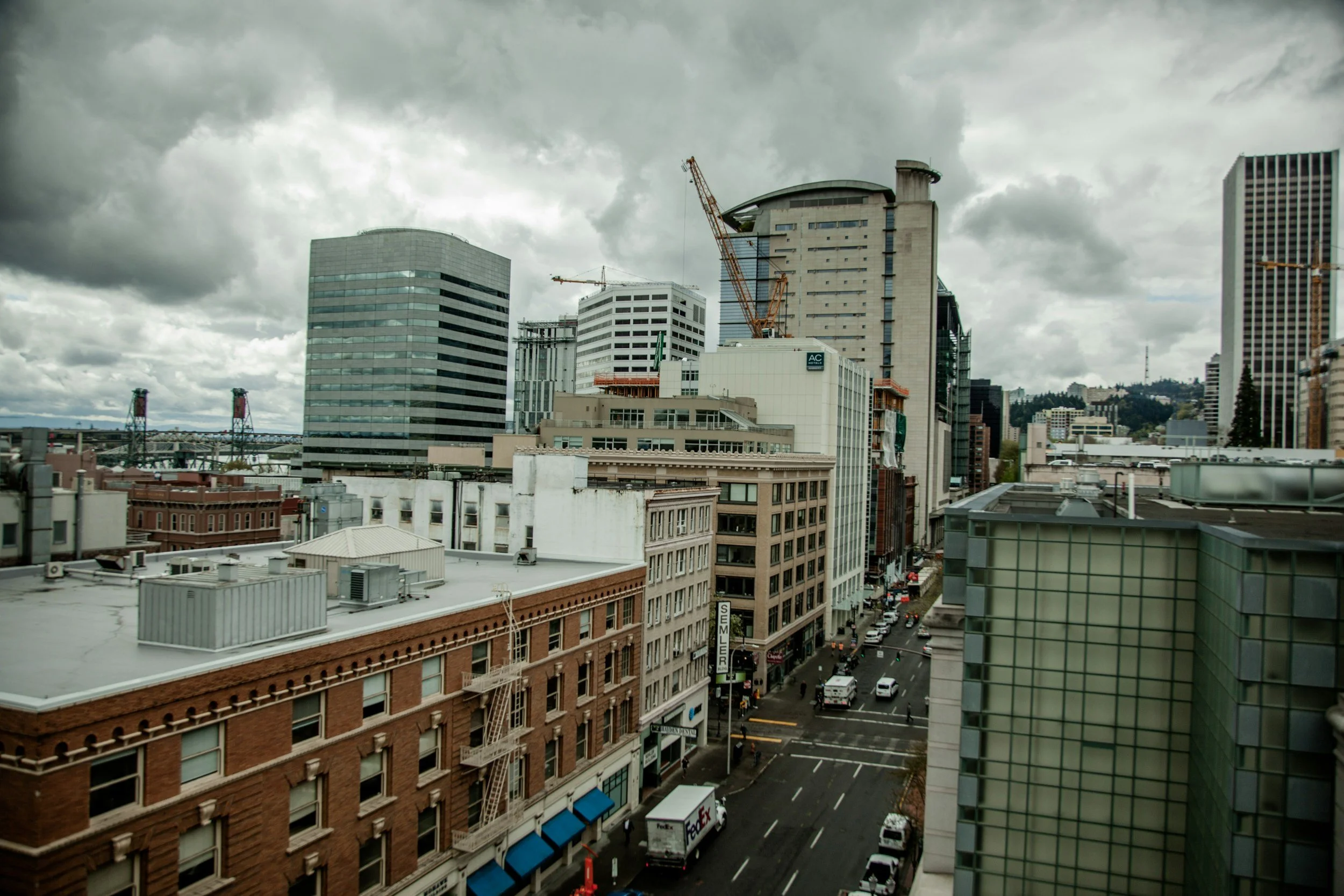
Portland’s downtown office vacancy hit 34 percent in early 2026 — the highest rate in the city’s history and one of the highest in the nation. At the same time, the metro area faces a well-documented housing shortage. The math seems obvious: convert empty offices into apartments. But the reality is far more complicated than the headlines suggest. Here is what Portland’s office-to-residential conversion push actually looks like, what it means for commercial real estate owners and investors, and why most office buildings will never become apartments.
Portland Office-to-Residential Conversion FAQ
Q: Is Portland funding office-to-residential conversions?
A: Yes. Prosper Portland launched the Central City Building Conversion – Embodied Carbon Loan program in October 2025, funded through the Portland Clean Energy Community Benefits Fund. Mayor Wilson has also committed $15 million for office-to-middle-income-housing conversions in the central city.
Q: How much does it cost to convert an office building to residential in Portland?
A: Conversion costs typically range from $300 to $500+ per square foot, depending on building condition, floor plate, and seismic requirements. Nationally, the average cost to purchase and convert an office building runs around $685 per square foot — often more expensive than new construction.
Q: What percentage of Portland’s office stock can realistically be converted?
A: Roughly 11 percent. Most office buildings have floor plates, mechanical systems, and structural characteristics that make conversion either technically impractical or financially infeasible. Class B and C buildings with smaller floor plates and older construction tend to be the best candidates.
Q: What does this mean for Portland office building owners?
A: For owners of buildings that fit the conversion profile, city-backed funding and policy incentives have created a new exit strategy. For owners of buildings that do not fit, the conversion trend is unlikely to materially reduce downtown vacancy in the near term — but it does signal the city’s commitment to revitalizing the central core.
Portland Downtown Office Vacancy and the Conversion Opportunity
Portland’s office market has been under sustained pressure since 2020. The metro-wide vacancy rate reached approximately 27 percent by the end of 2025, with roughly 70 percent of that empty space concentrated in the central business district. The CBD vacancy rate climbed to 34 percent in early 2026, driven by remote work adoption, federal workforce reductions, and ongoing concerns about downtown safety and livability.
For context on how the downtown Portland office market reached this point, the broader trends are covered in detail in the downtown Portland office market outlook. The scale of value loss has been significant — Portland’s largest office buildings have shed more than $2 billion in assessed value since 2019.
This level of vacancy has created a structural problem that conventional leasing alone is unlikely to solve in the near term. Office-to-residential conversion has emerged as one potential tool for absorbing some of that excess space, and both state and city government have moved to support it.
Portland Office Conversion Programs and Incentives
Portland has built a layered set of programs aimed at making conversion projects pencil.
The most significant is the Central City Building Conversion – Embodied Carbon Loan, launched by Prosper Portland in partnership with the Portland Clean Energy Community Benefits Fund (PCEF). Approved by Prosper Portland’s board in October 2025, this program provides low-cost loan funding for conversion pilot projects in the central city. The program is working with development-ready projects and has limited funding available.
Mayor Keith Wilson has committed an additional $15 million in PCEF funding specifically for office-to-middle-income-housing conversions. Governor Tina Kotek and Mayor Wilson jointly announced plans to fast-track 5,000 housing units in Portland and streamline the permitting process for conversion projects.
On the regulatory side, Portland City Council adopted two ordinances in March 2023 that directly support conversions. The first provides a limited exemption from system development charges (SDCs) when office-to-residential conversions include seismic retrofits. The second modified seismic design requirements for conversions to meet a life-safety standard — a lower bar than new construction, which reduces upgrade costs.
The city also established a streamlined permitting pathway. Building owners can contact Portland’s Process Management Team for an initial site assessment, followed by a multi-bureau walk-through and early assistance meeting before formal permit submission.
Which Portland Office Buildings Are Candidates for Conversion
Not every vacant office building is a viable conversion candidate. A 2023 feasibility study commissioned by Prosper Portland — led by ECOnorthwest and Gensler, with structural engineering by KPFF and cost estimates by Turner Construction — found that building-specific characteristics drive feasibility more than any other factor.
Gensler developed a scoring algorithm that weights five categories: building form (30 percent), floor plate (30 percent), servicing and parking (20 percent), site context (10 percent), and building envelope (10 percent). The takeaway: floor plate size and building shape matter most.
The buildings that work best for conversion share several characteristics. They tend to be Class B or C office buildings — as one design firm put it, “bad office makes good residential.” Smaller floor plates (under roughly 15,000 square feet per floor) allow for natural light penetration to interior units. Older buildings with operable windows and high ceilings offer residential appeal that modern office towers cannot match. Buildings that have already undergone seismic upgrades eliminate what is typically the single largest conversion cost.
In January 2023, real estate expert Peter Andrews of Melvin Mark Brokerage compiled a list of 14 Portland office buildings recommended to the mayor’s office as potential conversion candidates. The list included notable properties like the Commonwealth Building at 421 SW 6th, the Dekum Building at 509 SW 3rd, and the RiverTec Building at 902 NW 13th in the Pearl District.
The buildings that do not work — which is most of Portland’s office inventory — tend to be post-1980s construction with deep floor plates (25,000+ square feet), central cores, curtain-wall facades, and mechanical systems designed exclusively for open-plan office use. Converting these buildings would require gutting them to the structure, at costs that exceed new construction.
The Falcon Building: Portland’s First Major Office-to-Residential Conversion
The most advanced conversion project in Portland is the Falcon Building at 321 NW Glisan in Old Town. Prosper Portland has committed $16 million to convert this seven-story, 1926-built office building into 59 apartments — a mix of market-rate and affordable units.
The Falcon Building is an ideal conversion candidate for several reasons. It is narrow from front to back, giving every unit access to natural light. It has high ceilings and large windows. Most importantly, the building underwent a full seismic upgrade roughly a decade ago as an office property, which included new high-performance windows, a whole-building energy recovery ventilator, and a radiant slab heating and cooling system. That prior investment eliminates the most expensive variable in the conversion equation.
If successful, the Falcon Building will serve as a proof of concept for Portland’s broader conversion strategy. Building owners and investors watching this project should pay attention to final per-unit costs, lease-up pace, and whether the financial model works without the level of public subsidy this project is receiving.
Why Office-to-Residential Conversion Will Not Solve Portland’s Vacancy Problem
Here is the reality check. With only about 11 percent of Portland’s office stock realistically suitable for conversion, this strategy will absorb a fraction of the city’s 10+ million square feet of vacant office space. Even an aggressive conversion program would likely remove a few hundred thousand square feet from the office inventory over the next several years — meaningful, but not transformative.
The cost economics remain challenging. At $300 to $500+ per square foot for conversion — and with seismic upgrades often pushing costs even higher — most projects do not pencil without significant public subsidy, reduced acquisition costs, or both. The Falcon Building works in part because of $16 million in public funding. Replicating that level of subsidy across dozens of buildings is not realistic given current budget constraints.
For office landlords evaluating their options, the honest assessment is that conversion makes sense for a narrow set of buildings in specific circumstances: older Class B/C properties with favorable floor plates, existing seismic work, and locations where residential rents support the investment. For everyone else, the path forward still runs through repositioning, re-tenanting, or — in some cases — selling at adjusted pricing to investors with longer time horizons.
Landlords navigating this environment should also be thinking about how to position vacant office space for lease-up in the current market. The tactics that worked in a 10 percent vacancy market do not work at 34 percent.
What Portland Office-to-Residential Conversion Means for Investors
For commercial real estate investors, Portland’s conversion push creates several dynamics worth watching.
On the investment side, buildings that fit the conversion profile may command a premium over comparable office assets — particularly if they have existing seismic upgrades and are located in the central city where PCEF funding is available. The Falcon Building’s $16 million in public support demonstrates that the right project can attract significant subsidy.
The broader signal is that Portland’s city government is actively investing in downtown recovery. The combination of conversion funding, SDC exemptions, streamlined permitting, and the governor’s commitment to fast-tracking 5,000 housing units represents a coordinated effort to stabilize the central city. For investors evaluating Portland, this policy environment is a factor worth weighing alongside market fundamentals.
For a broader view of where capital is flowing in Portland commercial real estate, the investment outlook for 2026 covers the current landscape across property types.
The conversion trend also has implications for office valuations. If the most obsolete buildings in the inventory are removed — either through conversion, demolition, or permanent decommissioning — the remaining office stock becomes more competitive. Over time, this supply reduction should support tighter vacancy and stronger rents for well-positioned buildings that remain in office use.
What Tenants Should Know About Portland Office Conversions
If you are a commercial tenant in Portland, the conversion trend is mostly a background factor — but one worth understanding.
In the near term, conversions will not meaningfully tighten the office market. Vacancy will remain elevated through at least mid-2026, and tenants will continue to have strong negotiating leverage on lease terms, tenant improvement allowances, and concession packages.
Over the longer term, if conversion and obsolescence remove a meaningful share of the lowest-quality office stock from the inventory, the market dynamics shift. Fewer available options in the central city could push rents higher for the remaining quality space — particularly the character office and creative space in neighborhoods like the Pearl District and Central Eastside that tenants actively prefer.
For tenants weighing their options across Portland’s submarkets, the current environment still favors aggressive negotiation and careful evaluation of competing lease proposals.
What to Expect from Portland Office Conversions Through 2026 and Beyond
The Falcon Building conversion will be the bellwether project. If it delivers units on budget and leases up at projected rents, expect additional conversion projects to move forward — particularly in Old Town, the West End, and along the SW 6th Avenue corridor where several candidate buildings are clustered.
The city’s $15 million PCEF allocation for middle-income housing conversions should result in at least one or two additional funded projects by late 2026 or early 2027. The PCEF program’s recent expansion — City Council approved an increase to $78.7 million over five years for carbon-reducing measures in affordable housing at their March 11, 2026 meeting — signals sustained public investment in this space.
But the fundamental constraint remains: most office buildings cannot be economically converted. Portland’s office recovery will ultimately depend on job growth, return-to-office momentum, and the city’s ability to address the livability concerns that have weighed on downtown demand. Conversion is one piece of a much larger puzzle.
Need help evaluating a Portland office building — whether for lease-up, repositioning, sale, or conversion potential? A broker opinion of value and competitive market analysis is a good starting point for understanding your options.
Landlords whose buildings don’t fit the conversion profile need a different playbook. See our guide on how to position vacant office space in 2026.