
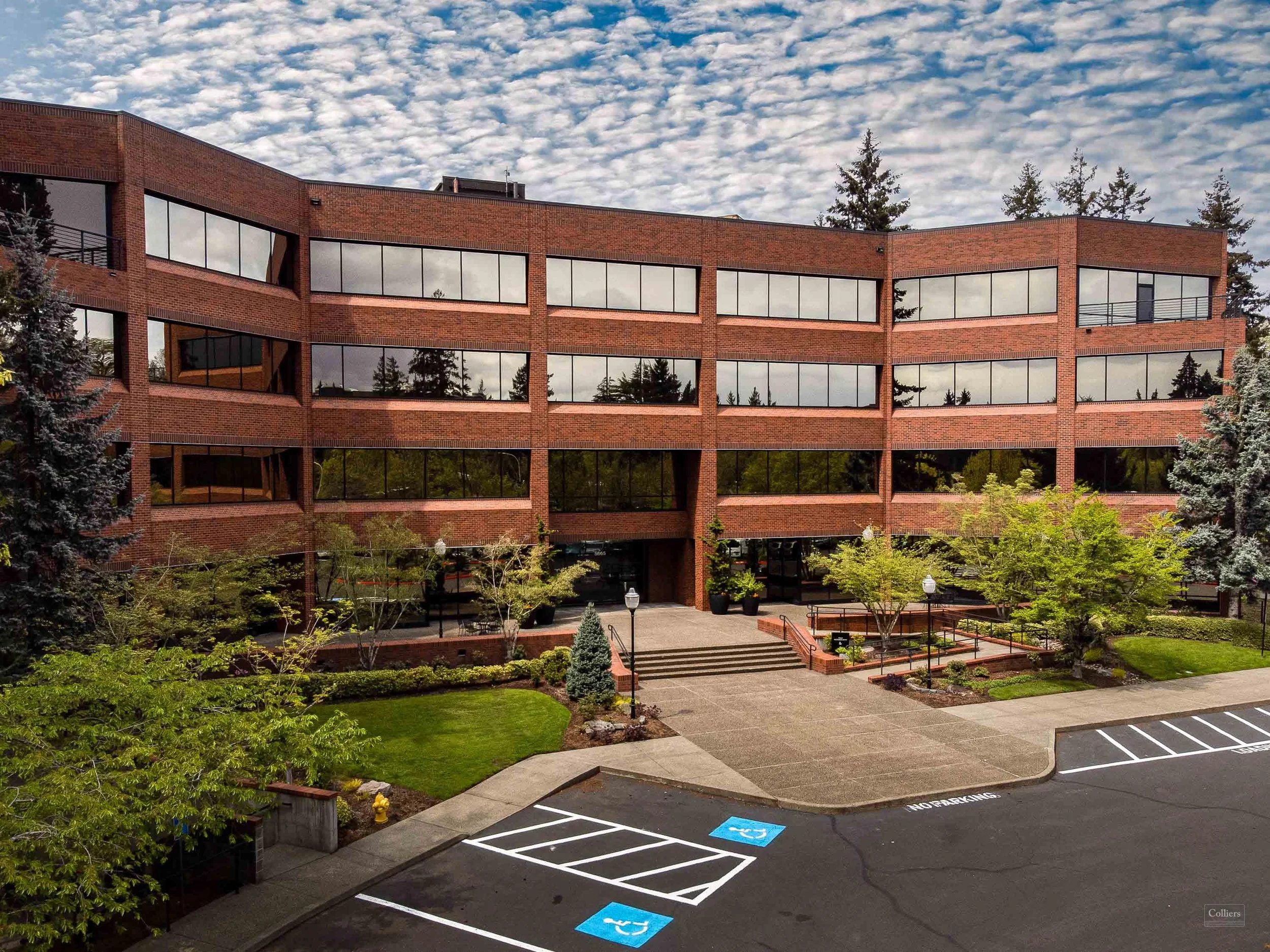
Tualatin, Wilsonville & Sherwood Office
Office leasing guidance for the I-5 South corridor through Tualatin, Wilsonville, and Sherwood — building stock, pricing tiers, commute dynamics, and how to evaluate this submarket against Kruse Way and the 217 Corridor.
ABOUT TUALATIN, WILSONVILLE & SHERWOOD
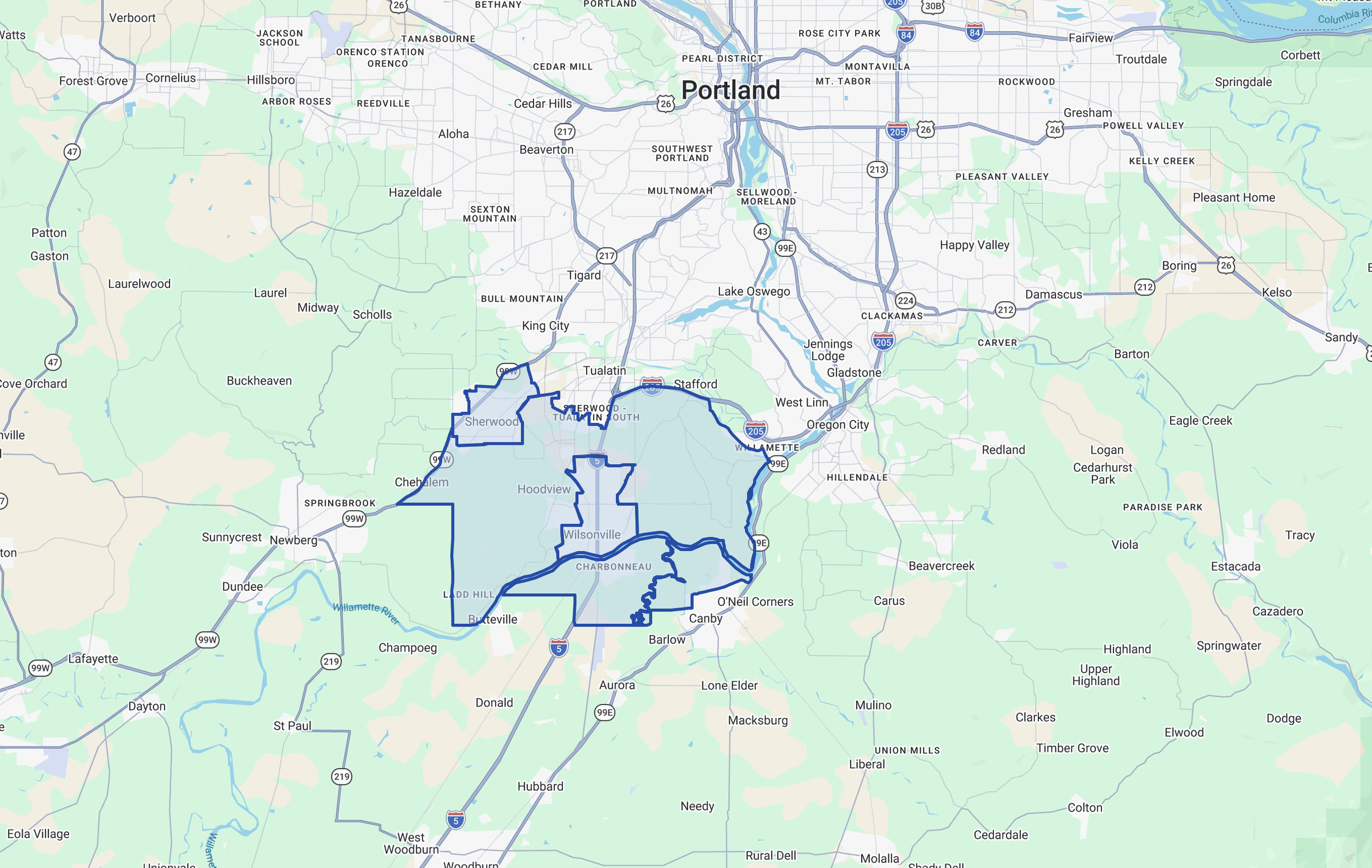
Tualatin, Wilsonville, and Sherwood form the southern reach of Portland's suburban office market — a loose corridor of standalone office buildings, flex-office product, and small business parks strung along I-5 and Tualatin-Sherwood Road between Kruse Way and the Willamette Valley.
This isn't a campus submarket. There's no signature corporate park or concentrated office node. Instead, the corridor offers scattered professional office product clustered around a few key locations: Leveton Drive and lower Boones Ferry Road in Tualatin, the Town Center Loop and Parkway Avenue area in Wilsonville, and the Tualatin-Sherwood Road corridor connecting the two communities through Sherwood.
The submarket's draw is practical — low rents, ample parking, easy I-5 access, and proximity to a workforce that lives south of the metro core. Tenants here aren't paying for prestige or campus amenities. They're paying for functional space in a location that works for their employees and their operating budget. For companies whose people commute from Tigard, Sherwood, Newberg, Canby, or the northern Willamette Valley, this corridor eliminates the drive into Portland entirely.
WHAT’S DIFFERENT ABOUT THIS SUBMARKET
The I-5 South corridor occupies a distinct position in the Portland office market: it's the most affordable fully suburban option with direct interstate access, but it lacks the institutional office identity of Kruse Way or the product variety of the 217 Corridor.
Most office product here is Class B or functional Class C — single-story and two-story buildings in business parks originally developed alongside industrial and flex uses. Building lobbies are modest, common areas are utilitarian, and amenity packages are essentially nonexistent. Tenants choosing this submarket aren't expecting a polished corporate environment — they're optimizing for cost, parking, and employee commute patterns.
Wilsonville stands slightly apart from Tualatin and Sherwood in character. The Town Center area offers newer mixed-use development, a walkable retail core, and several mid-rise office buildings with better finishes than typical corridor product. Wilsonville also benefits from SMART — the city's independent transit system — which provides local circulator service and connections to Salem and the WES commuter rail in Tualatin.
The key trade-off is isolation. This submarket sits 15–20 miles south of Downtown Portland. Client-facing businesses that need to host visitors from the urban core will find the drive inconvenient. And recruiting employees who live in inner Portland, the east side, or North Portland is harder — the commute works against you. The submarket performs best when your workforce already lives south.
LOCATION INFORMATION
The Tualatin, Wilsonville, and Sherwood office submarket follows the I-5 corridor south from its junction with I-205 in Tualatin through Wilsonville, with Sherwood extending west along Tualatin-Sherwood Road. Office concentrations cluster around Leveton Drive and the Sagert Street area in Tualatin, Town Center Loop and Parkway Avenue in Wilsonville, and the Tualatin-Sherwood Road commercial corridor.
Freeway access defines the submarket's transportation profile. I-5 provides direct north-south connectivity to Portland, Lake Oswego, Tigard, and Salem. I-205 is accessible from Tualatin, connecting to Clackamas, Oregon City, and the airport corridor. Highway 99W links Sherwood to Tigard and Newberg.
Parking is a non-issue — ratios run 4.0–6.0+ stalls per 1,000 SF across the corridor, virtually all surface and free. For tenants leaving Downtown Portland or Kruse Way structured parking environments, the difference is immediate and measurable.
The submarket's retail amenities have improved significantly. Bridgeport Village in Tualatin provides upscale dining and shopping, Wilsonville's Town Center offers walkable restaurants and services, and the Nyberg Woods and Nyberg Rivers retail centers in Tualatin add daily convenience options. Sherwood's Old Town has a growing local restaurant and retail scene along Highway 99W.
TUALATIN, WILSONVILLE & SHERWOOD SNAPSHOT
Known For
Lowest office rents in the Portland metro's I-5 corridor — typically $19–$26/SF FSG for Class B product
Generous parking ratios — 4.0–6.0+ per 1,000 SF, surface, and free
Strong I-5 and I-205 freeway access connecting south metro, Salem, and the airport corridor
Proximity to a large south-metro and northern Willamette Valley workforce
Bridgeport Village and Wilsonville Town Center providing improved retail and dining amenities
Typical User Profiles
Engineering, environmental, and construction management firms
Insurance back-office, claims processing, and regional operations
Technology companies and SaaS firms with distributed or remote-hybrid workforces
Manufacturing and distribution companies needing adjacent office-to-warehouse proximity
Professional services firms serving clients in the south metro, Salem, and Willamette Valley
Healthcare administration, dental practices, and specialty medical offices
Financial advisory and wealth management practices serving Lake Oswego, West Linn, and Tualatin residents
Best Fits
Limited Class A product — most buildings are functional Class B or C with modest finishes
Distance from Portland's urban core makes recruiting inner-city employees difficult
No concentrated office district identity — product is scattered across business parks and commercial strips
Transit options are limited outside Wilsonville's SMART system and the Tualatin WES station
Some older product along Tualatin-Sherwood Road and in Tualatin business parks shows deferred maintenance
Very few large contiguous blocks above 15,000 SF in office-only product
Common Constraints
Tenants needing 1,000–10,000 SF of functional office space at the metro's lowest suburban rates
Companies whose employees commute from Sherwood, Newberg, Canby, Woodburn, or Salem
Firms that need office space adjacent to industrial or warehouse operations in Tualatin's industrial core
Organizations where parking availability and commute simplicity outweigh address prestige
Back-office and operations teams that don't require client-facing space or corporate lobby presentation
RENT, PRICING, AND DEAL TERMS
Typical Deal Terms
Tualatin, Wilsonville, and Sherwood office deals typically structure as full-service gross or modified gross leases. Asking rates for maintained Class B product range from $19–$26/SF annually, with value-tier product in older business parks and flex-office conversions pricing in the mid-to-high teens. Wilsonville's newer Town Center product commands the submarket's top rates, occasionally reaching the high $20s for better-finished suites.
Concessions are less aggressive than Kruse Way or Downtown Portland. The tenant base here is cost-driven and sticky — landlords know turnover is low and are less inclined to give away free rent or fund extensive buildouts, particularly on smaller deals. On a 7,500 SF lease, the rent spread alone versus Kruse Way ($22/SF here versus $26–$27/SF) delivers $30,000–$37,500 in annual savings before the free-parking differential adds another $12,000–$18,000.
Negotiation Levers
Client-facing businesses needing a prestigious address or polished lobby — the product doesn't support it
Tenants recruiting from inner Portland or close-in east side neighborhoods — the commute kills it
Large requirements above 15,000 SF seeking contiguous Class A space — options are extremely limited
Deal Killers
TI allowance: Modest — $5–$15/SF typical. Leverage increases on 5+ year terms or long-vacant spaces
Free rent: 1–2 months on 3–5 year terms; less available than in higher-vacancy submarkets
Lease term: Offering 5–7 years unlocks better rates and TI packages — landlords here value stability
Operating expenses: Scrutinize base year and cap structures in older buildings where aging HVAC and roof systems drive unpredictable expense spikes
Comparing Proposals
Anchor on five-year total occupancy cost, not face rent — project base rent across the full term, layer in operating expense escalations, spread TI amortization across monthly equivalents, and normalize free rent months. Since parking is free here, add per-stall costs back into any Kruse Way or Downtown competing proposal to see the true gap. The biggest trap in this corridor is comparing face rates without inspecting building condition — a $19/SF lease with deferred HVAC and no TI budget can cost more in operational disruption than a $24/SF Wilsonville Town Center suite with updated systems and a turnkey buildou
Mini Case Example
A 15-person environmental consulting firm with field staff based throughout the south metro evaluated three options: renewing in aging flex-office space on Leveton Drive in Tualatin at $18/SF, upgrading to a newer suite on Town Center Loop in Wilsonville at $25/SF, and relocating to a Class A building on Kruse Way at $24/SF with structured parking.
After normalizing for parking ($0 in Tualatin and Wilsonville versus $60/stall/month on Kruse Way), TI packages, and operating expense structures, the Wilsonville option produced the lowest five-year total occupancy cost — and offered the best employee commute profile, since most staff lived in Sherwood, Canby, and Newberg. The firm relocated to Wilsonville, reduced average employee commute time by 12 minutes, and secured a turnkey buildout funded by the landlord on a six-year term.
SUBMARKET FAQ
-
Headline asking rates can look similar — $19–$26/SF in this corridor versus low-to-mid $20s on Kruse Way. But the real separation is in building quality and parking economics. Kruse Way delivers Class A campus product with structured parking typically included at 3.5–5.0 per 1,000 SF. This corridor delivers functional Class B space with surface parking at 4.0–6.0+ per 1,000 SF — also free — but at a lower face rate. For tenants who don't need Class A finishes or a corporate campus address, the I-5 South corridor saves $3–$8/SF annually on a pure occupancy cost basis.
-
Engineering and environmental firms, insurance back-office operations, construction management companies, and professional services practices whose clients are in the south metro or Willamette Valley. The common thread is organizations that value function over image — tenants whose employees and clients are already south of Portland and don't need a prestige address to win business. Companies with adjacent warehouse or field operations in Tualatin's industrial core also benefit from keeping office and operations in the same area.
-
Yes. Wilsonville's Town Center area has newer mixed-use development, better building finishes, walkable retail and restaurants, and a more cohesive commercial identity than anything in Tualatin or Sherwood. Asking rates are higher — high $20s versus low $20s — but the product quality justifies the premium for tenants who want a more professional environment. Wilsonville also operates SMART, its own transit system, which provides local service and connections to Salem. Tualatin and Sherwood offer lower rates but more utilitarian product in business park settings.
-
Limited. Tualatin has a WES commuter rail station connecting to Beaverton, and Wilsonville's SMART system provides local circulator service plus a connection to Salem. But this corridor is fundamentally car-dependent. TriMet bus routes serve the area, but frequency and coverage don't support transit-reliant commutes for most employees. If your workforce drives, this is a non-issue. If you need transit access as a recruiting tool, look at Kruse Way, Lloyd District, or Downtown instead.
-
Tualatin is one of the best locations in the metro for that. The city's industrial core along Leveton Drive, SW Herman Road, and Tualatin-Sherwood Road has a dense concentration of warehouse, distribution, and manufacturing space. Keeping your office within a few minutes of your warehouse operations eliminates the split-site coordination headaches that companies face when their office is in Portland or on Kruse Way and their warehouse is 20 miles south.
-
Six to nine months before expiration for spaces under 5,000 SF. Nine to twelve months for larger requirements or spaces that need significant buildout. Inventory turns over less frequently here than in higher-vacancy submarkets like Kruse Way or Downtown, so fewer options are available at any given time. Starting early gives you enough runway to evaluate the limited inventory and negotiate without deadline pressure.
WHAT’S YOUR PROPERTY WORTH?
Whether you're benchmarking against recent south metro office sales, weighing a hold-versus-sell decision on a Tualatin business park asset, or preparing for a refinance conversation, a broker opinion of value gives you a clear, comp-based pricing range for your property. I'll deliver a comprehensive report covering comparable sales, lease comps, vacancy analytics, and a pricing summary with conservative, probable, and optimistic values — at no cost and no obligation.
ARE YOU PAYING THE RIGHT LEASE RATE?
Whether you're negotiating a new lease along the I-5 South corridor, approaching a renewal in Tualatin or Wilsonville, or benchmarking your current rate against what comparable tenants are paying, a lease rate analysis gives you the data to negotiate from a position of strength. I'll pull current comps, identify concession packages in play, and show you where your deal stands relative to the market — so you're not negotiating blind.
RELATED


GET IN TOUCH
Contact Matt Lyman at Norris & Stevens about leasing, renewing, or evaluating office space in Tualatin, Wilsonville, or Sherwood. Whether you're a tenant comparing the I-5 South corridor against Kruse Way or the 217 Corridor, a landlord assessing pricing and concession strategy for your building, or an investor evaluating acquisition targets in the south metro, share your situation and Matt will follow up with current market context and a recommended approach.
Include your space requirements — size range, parking needs, building class preferences, budget parameters, and timeline — and Matt will respond with current I-5 South corridor availability, recent lease comps, and clear next steps.