
Wilsonville & Sherwood
South-metro industrial guidance for modern flex and warehouse users who need I-5 access, truck circulation, and room to grow.
ABOUT WILSONVILLE & SHERWOOD
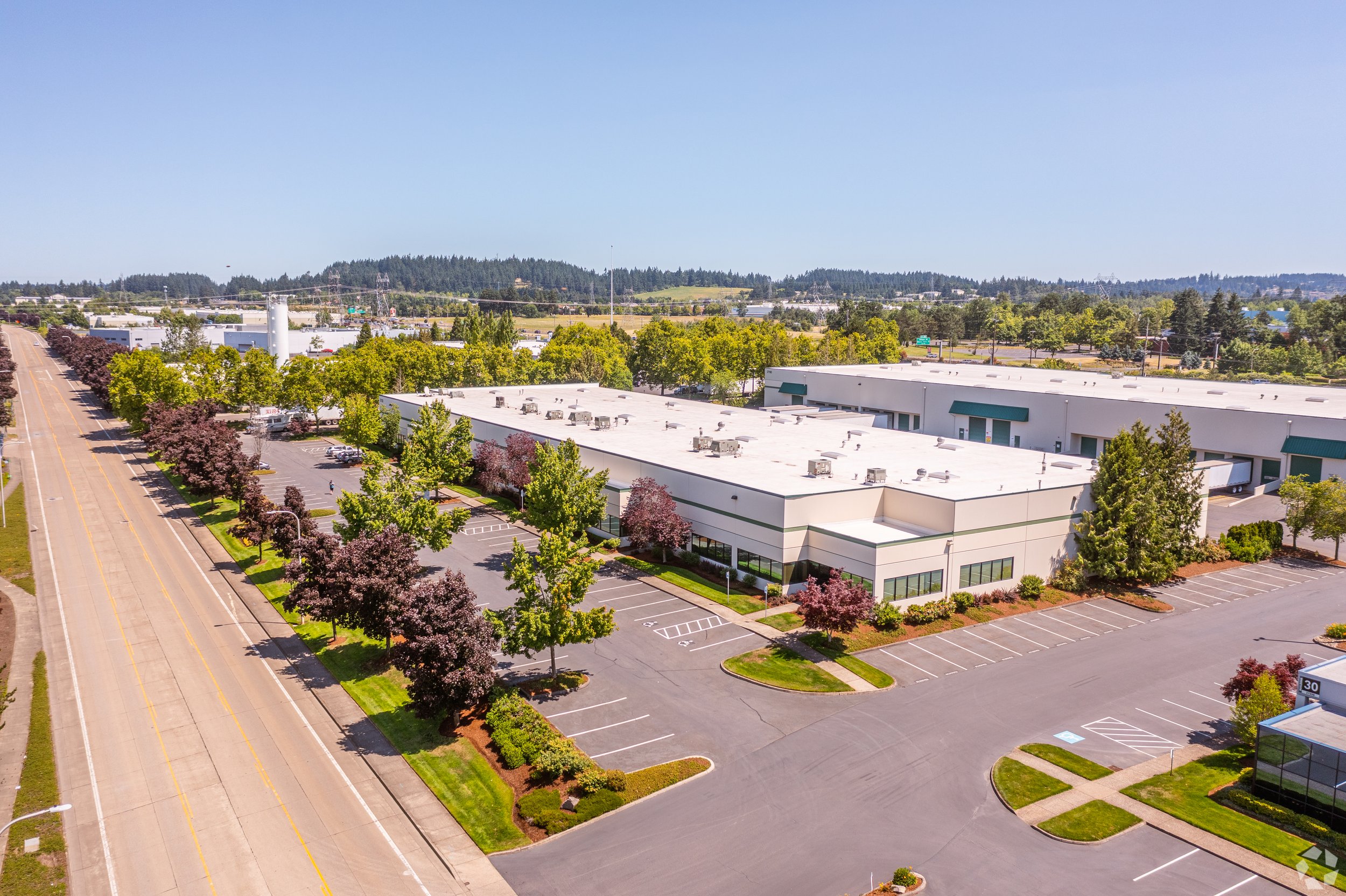
Wilsonville and Sherwood form one of the Portland metro’s most active growth corridors for industrial and distribution space. Located along I-5 south of Portland, this submarket supports regional logistics, manufacturing, and flex industrial users that require modern buildings, truck access, and expansion potential. Compared to Portland’s infill industrial areas, Wilsonville and Sherwood offer newer inventory, larger sites, and more development opportunities.
WHAT’S DIFFERENT ABOUT THIS SUBMARKET
Wilsonville and Sherwood skew more modern, business-park industrial than most Portland submarkets, with a higher share of newer flex/warehouse inventory and larger site layouts. Decisions here are often driven by clear height, dock/grade loading mix, and truck circulation, plus business-park rules around vehicle/trailer staging, outdoor storage, signage, and operating hours. The fastest way to narrow options is to confirm loading/circulation and any park restrictions first, then evaluate parking ratios, power/sprinklers, and expense/maintenance language.
LOCATION INFORMATION
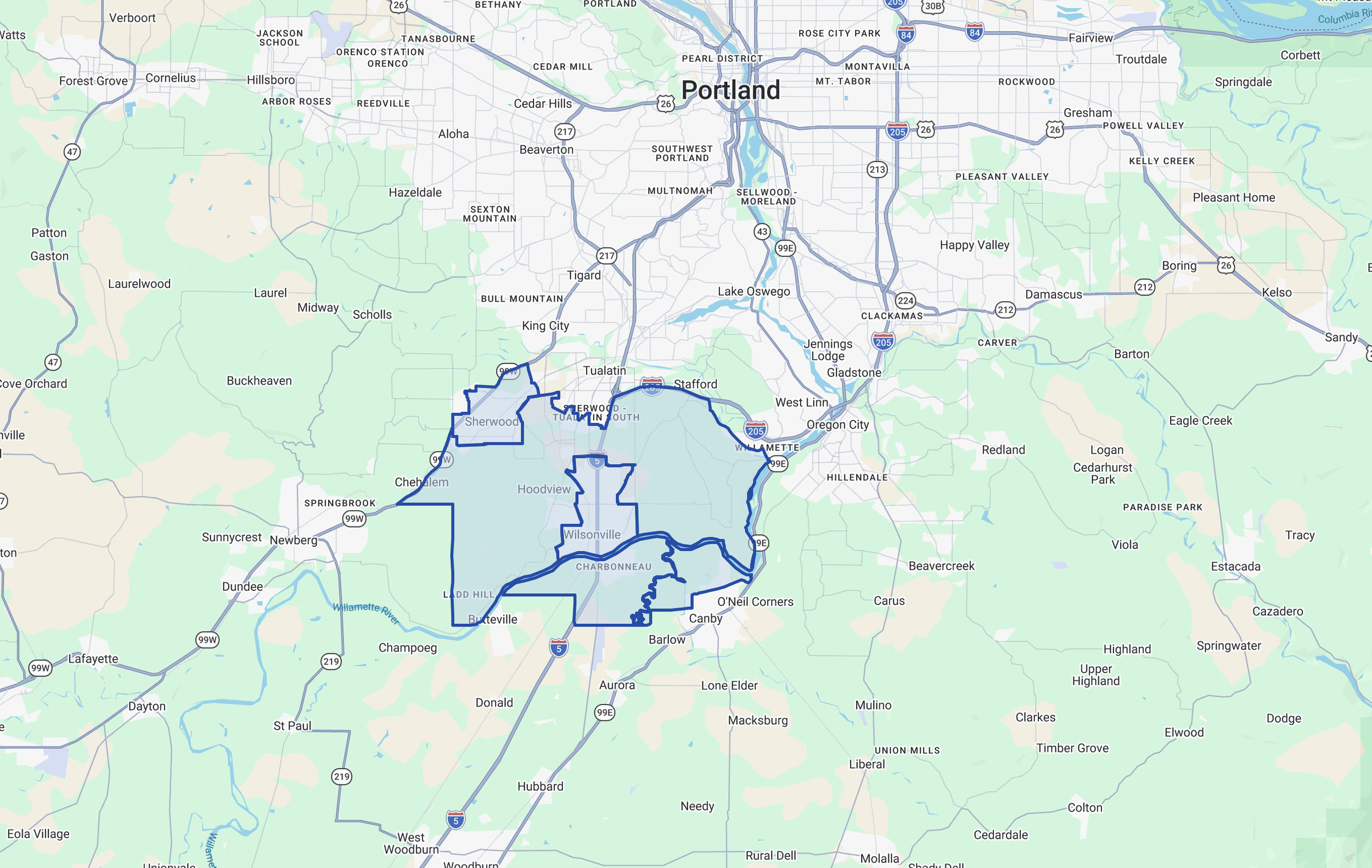
Wilsonville and Sherwood sit in the southwest Portland metro, along the I-5 corridor between Tigard/Tualatin and Salem, with fast access to I-205 via the Wilsonville area and regional routes serving the south metro. Industrial inventory is concentrated around I-5 interchanges and business parks in Wilsonville, with additional light industrial and flex pockets near Sherwood’s edges and the Tualatin/Sherwood boundary. In practice, this submarket serves companies that need south-metro access, truck-friendly circulation, and modern flex/warehouse options without being in the close-in Portland corridors.
QUICK SNAPSHOT
Known For
Modern distribution and warehouse facilities
Newer industrial parks and build-to-suit sites
Large footprints with expansion potential
Manufacturing and production space
Strong I-5 freeway access and logistics positioning
Typical User Profiles
Regional Distributors & Logistics Operators
Manufacturing & Assembly Companies
E-commerce & Fulfillment
Construction & Building Suppliers
Office-Warehouse & Flex Industrial Users
Best Fits
Regional Distribution & Logistics Users:
Manufacturing & Production Companies
Large-Format Warehouse Tenants
E-commerce & Fulfillment Operations
Companies Planning for Expansion or Long-Term Growth
Common Constraints
Limited Small-Bay Inventory — While Wilsonville and Sherwood offer larger modern buildings, smaller units under 10,000 SF can be harder to find and lease quickly when available.
Development Timing & Infrastructure — New projects continue to come online, but site delivery timelines, utilities, and permitting can affect availability for expanding tenants.
Truck & Traffic Planning — Growth along the I-5 corridor has increased truck traffic and commute times during peak hours, making site circulation and freeway proximity important factors.
RENT, PRICING, AND DEAL TERMS
Typical Deal Terms
Wilsonville/Sherwood tends to be newer business-park industrial. Concessions often focus on TI for office finish, delivery condition, and clear rules for vehicle/trailer staging. Since this corridor is chosen for scalability, options and expansion language can be more valuable than squeezing base rent.
Negotiation Levers
Concessions: Free rent and concessions vary by building size and age. Larger blocks and new construction may offer incentives during slower leasing periods, while modern distribution buildings with strong demand often lease with limited concessions.
NNN/CAM language: Most leases are triple-net with tenants responsible for property taxes, insurance, maintenance, and management fees. Newer institutional properties often provide clearer operating expense structures and predictable cost increases.
Expense controls: Controllable CAM caps, base-year structures, and audit rights are more common in newer industrial parks and institutional ownership. Longer lease terms typically improve negotiating leverage.
Comparing Proposals
Industrial proposals in Wilsonville and Sherwood can look similar on base rent but differ significantly in operating costs, improvement allowances, and expansion flexibility. Tenants should compare total occupancy cost, building functionality, and long-term growth potential. Modern buildings may carry higher base rents but often provide operational efficiency, better truck circulation, and lower long-term maintenance risk.
Deal Killers
Business-park rules restrict staging, storage, or operating patterns.
Loading/circulation works for vans but not for true truck patterns.
Parking looks fine until the staffing model + visitors are added.
Mini Case Example
A growing operator targeted modern flex with strong circulation and future growth capacity. Properties were screened by loading/circulation + rules before tours. Negotiations prioritized expansion/renewal protections and documented staging allowances.
SUBMARKET FAQ
-
This corridor tends to fit distribution, light manufacturing, service operations, and flex users who want south-metro access with a more business-park, truck-friendly environment than close-in Portland.
-
Generally, yes. Wilsonville has the larger concentration of modern industrial and flex inventory clustered near I-5 interchanges and business parks. Sherwood has smaller flex/industrial pockets, often closer to the Tualatin/Sherwood boundary.
-
Modern flex and warehouse product is common in Wilsonville, often with higher office finish levels than functional close-in industrial. Loading varies by asset—confirm dock vs grade, door counts, and circulation early.
-
Very. Many sites are designed around business-park circulation rules and specific delivery patterns. Confirm turning, staging, delivery hours, and any restrictions that could impact operations.
-
Sometimes, but it’s not automatic. Trailer/van parking policies vary widely by property and park rules. Confirm what’s permitted, where it can occur, and whether it’s exclusive.
-
Loading configuration (dock/grade), clear height (if relevant), power availability, sprinkler adequacy, parking ratio, and any restrictions on outdoor storage, fleet vehicles, or after-hours operations.
-
Pricing is often driven by newer construction, office finish levels, and site utility (parking/circulation). Effective economics can change materially based on concessions, operating expenses, and maintenance responsibility.
-
Wilsonville sits directly on I-5 south of Portland, which makes it a strong fit for regional distribution serving both Portland metro and the I-5 corridor toward Salem and Eugene. The trade-off is distance from PDX and the north metro — if your freight patterns are heavily north- or east-oriented, Airport Way or East Columbia Corridor may serve better. For south-oriented distribution lanes or customers along the I-5/99W corridor, Wilsonville/Sherwood is often the right fit.
-
Wilsonville has seen more industrial development activity than most Portland submarkets in recent years, including spec distribution buildings and build-to-suit projects. Sherwood has less new construction but some newer business park inventory. New product typically commands premium rates but offers modern specs — 32-foot clear, ESFR sprinklers, full dock loading, and LED lighting — that older inventory can't match. If you need modern specs and are willing to pay for them, this is one of the few submarkets where they're available.
-
Wilsonville and Sherwood are separate municipalities with different permitting processes, business license requirements, and land use regulations. Wilsonville generally has a more established commercial/industrial development framework. Sherwood's industrial base is smaller and newer. SDC (system development charges) and utility connection costs can differ meaningfully between jurisdictions. Confirm which city your building is in and understand the regulatory implications before committing.
WHAT’S YOUR PROPERTY WORTH?
Whether you're benchmarking against recent warehouse and distribution sales, evaluating a hold-vs-sell decision, or preparing for a refinance conversation, a broker opinion of value gives you a clear, comp-based pricing range for your Airport Way or Columbia Corridor industrial property. I'll deliver a 50–80+ page report covering comparable sales, lease comps, vacancy analytics, and a pricing summary with conservative, probable, and optimistic values — at no cost and no obligation.
ARE YOU PAYING THE RIGHT LEASE RATE?
Whether you're negotiating a new warehouse lease, approaching a renewal in the Columbia Corridor, or evaluating whether your current rate reflects today's market, a lease rate analysis gives you the data to negotiate from a position of strength. I'll pull recent lease comps, concession packages, and vacancy trends for Airport Way and Columbia Corridor industrial space — so you know exactly what tenants like you are paying and where there's room to negotiate.
RELATED

GET IN TOUCH
Contact Matt Lyman at Norris & Stevens about leasing or buying industrial space in Wilsonville and Sherwood. Whether you're a regional distributor needing I-5 access, a manufacturer looking for functional sites south of Portland, or an investor evaluating south metro industrial, share your situation and Matt will follow up with current availability and recent comps.
Include your space requirements — size range, loading, yard, power, I-5 access needs, and timeline — and Matt will respond with Wilsonville and Sherwood options that match.